Build the notice around affected operations
Start by identifying which loads and groups may be affected, then tailor each notice to what recipients need to do. Operations staff may need a list of processes to shut down; IT teams may need time to protect servers and networks; tenants may need advance notice of elevator, access, or building-service interruptions. State the anticipated outage window, affected areas, known dependencies, and the date by which recipients should raise conflicts.
Avoid presenting an estimated duration as a guaranteed restoration time. Explain that the schedule depends on approved work steps and site conditions, and identify when the next update will arrive even if the plan has not changed. Use a consistent project name, outage date, time zone, and revision date across email, work orders, posted notices, and contractor instructions so recipients can distinguish current information from superseded plans.
Approve the sequence before communicating a commitment
The outage sequence should be developed and approved by the responsible facility and electrical engineering teams, with input from the qualified contractor and other parties whose work or authorization is required. Confirm the planned isolation boundaries, switching responsibilities, equipment replacement or installation steps, inspection and testing hold points, and conditions for re-energization. The equipment supplier can provide scope and configuration information for the new assembly, but site-specific switching instructions require review by those responsible for the installation and system.
Before distributing a firm notice, resolve dependencies such as utility coordination, permits, access, equipment delivery, lifting or staging arrangements, and any required operational approvals. Ask whether work can be divided into phases or must occur in one continuous window, and what work is permitted if a hold point or test result prevents the next step. Keep approval records with the latest sequence and make clear who can authorize a schedule change.
Name escalation contacts and decision authority
Create a contact path that works during the outage, not just during normal office hours. Identify the site incident or outage lead, the person authorized to approve operational decisions, the electrical contractor’s on-site lead, facilities operations, and any utility or building representatives who must be reached. For each role, record a primary contact, backup, preferred method, and the issue that should trigger escalation. Distribute the controlled list to the people coordinating the work.
Set decision boundaries in advance. For example, clarify who may approve a revised work window, who informs affected departments of a delay, and who communicates a stop-work condition. Do not rely on a general group mailbox or assume a person is available because they attended planning meetings. Confirm contact details and coverage shortly before the outage, while keeping safety, switching, and energization decisions with the qualified personnel and authorities assigned to those responsibilities.
Set a useful update cadence
Tell stakeholders when they will hear from the project team: before work begins, at defined milestones, when the schedule changes, and when restoration is confirmed. Updates should distinguish planned, in-progress, delayed, and complete work. Include the time of the update, what has changed, the affected areas or services, the next decision point, and when another update is expected. If there is no new information, say so rather than allowing silence to create conflicting assumptions.
Prepare short message templates for a delayed start, extended outage, unexpected constraint, and successful restoration. Keep technical detail appropriate to the audience, but do not omit the operational consequence or the next action. A restoration notice should report the status confirmed by the responsible site team; it should not imply that every connected process is ready to resume. Departments should follow their own restart and verification procedures before returning equipment or production to service.
Coordinate equipment scope and Georgia delivery
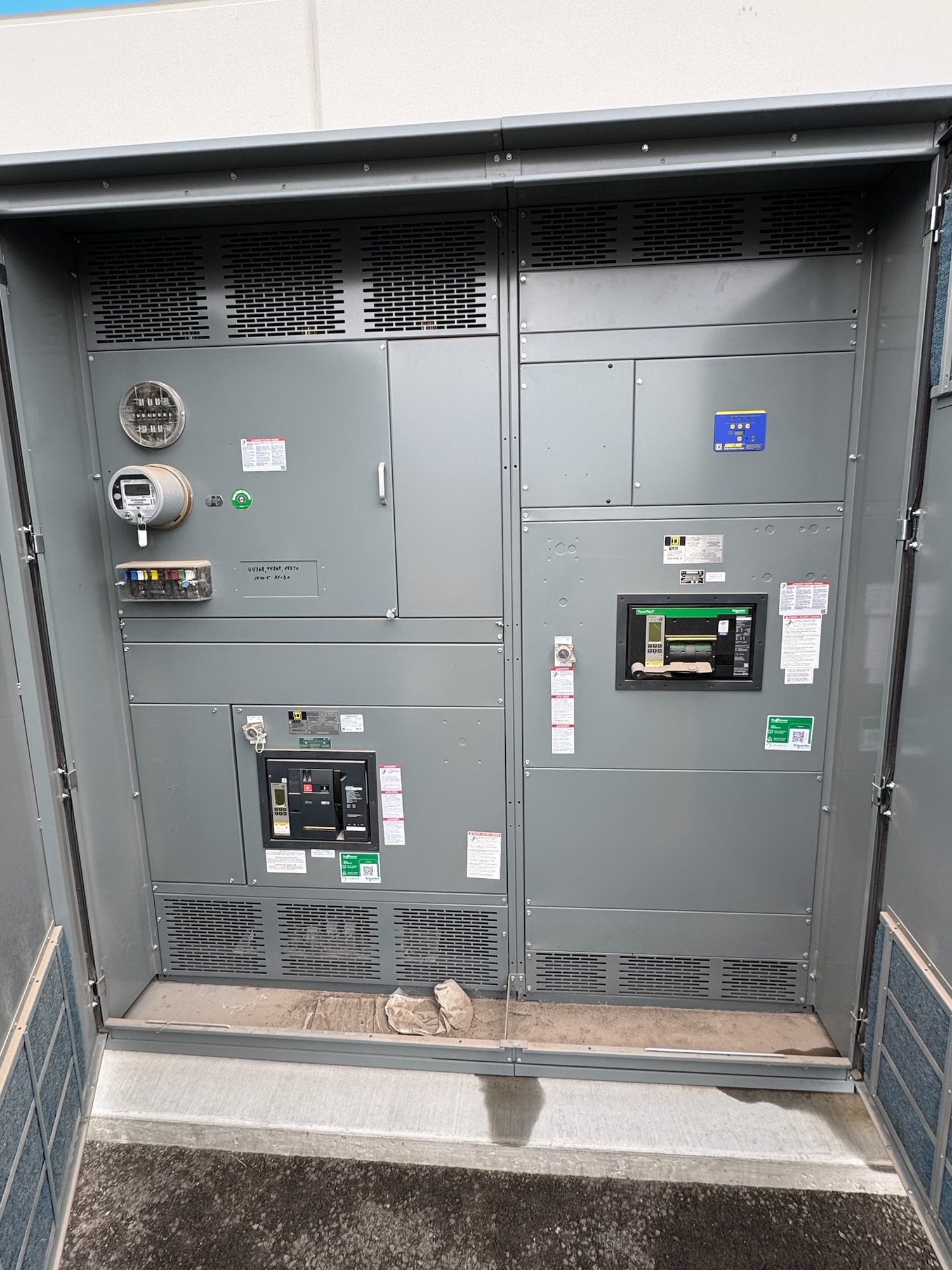
For a quote tied to an outage plan, share the facility location in Georgia, required equipment type and configuration, existing drawings or available nameplate information, load and system details known to the project team, and the intended installation window. Include access limits, delivery receiving hours, unloading or staging constraints, and any coordination milestones that affect when the new assembly must arrive. For a UL 891 switchboard assembly, identify the requested scope and options; the standard applies to switchboards, not as a blanket listing for medium- or high-voltage switchgear.
Discuss which components are American-made, what configuration is being requested, and what availability and production schedule can be confirmed for the specific order. Georgia delivery planning should account for the site’s receiving arrangements and the approved outage sequence, not just the target arrival date. Confirm scope, availability, and timing before communicating them as commitments, and keep procurement, engineering, and the outage coordinator aligned when specifications or dates change.
Close the handoff with a controlled record
Before the outage, issue one current package containing the approved sequence, stakeholder distribution, escalation contacts, update cadence, and revision history. Identify who maintains it and how changes reach contractors and affected departments. At handoff, confirm that recipients have acknowledged critical notices, delivery and site access are coordinated, and any unresolved dependencies have an owner and decision date.
After the work, record the actual outage and restoration times, significant schedule changes, status messages, and open follow-up items. Use that record to reconcile the project schedule and improve future notices without treating an estimated restoration window as a performance guarantee. Begin by naming an outage coordinator, listing affected groups, and sharing the site and equipment scope needed to align a new switchgear quote with the approval and communication plan.