Set the supply boundary before requesting a quote
Start by identifying who selects, approves, purchases, receives and installs each part of the electrical assembly. The owner may purchase a new switchboard while the contractor provides feeders, conduit, anchorage, terminations and field testing; however, actual responsibilities depend on the contract documents. State whether the equipment supplier’s scope includes only the assembly or also items such as transition sections, metering provisions, control wiring within the assembly, spare spaces or shipping splits.
Ask the engineer and contractor to review the boundary together. A one-line diagram may define electrical functions but not resolve who supplies incoming lugs, interconnecting conductors, floor channels or external control devices. Record these decisions in the project scope and quote request. This gives the manufacturer a defined configuration to price and helps prevent assumptions from becoming field changes.
Resolve the design inputs that shape the assembly
Provide the current one-line diagram, equipment schedule and applicable specification, along with the intended system voltage, phase and wire arrangement, main and feeder device requirements, and available fault-current information. Identify the service or distribution role, metering needs, enclosure environment and any required communication or control interfaces. The engineer must establish and approve the design criteria; a supplier quote should not substitute for project engineering or authority review.
Confirm physical and connection details that affect layout: available wall and floor space, access for operation and maintenance, cable entry direction, conductor sizes and termination space, busway or transformer connections, and the route from unloading point to final position. Share room drawings and equipment clearances when available. If dimensions, utility requirements or the one-line are still changing, identify them as open items so the parties can assess their effect before order release.
Coordinate submittals and approval authority
Establish who reviews manufacturer drawings, who consolidates comments, and who gives written approval to proceed. The owner may manage purchasing, but the engineer typically must evaluate design intent and the contractor must confirm installation interfaces. Name the controlling drawing revision and set a process for resolving conflicting markups. Approval responsibilities should follow the project’s contracts and specifications, not an assumption that purchasing authority equals technical approval.
For UL 891 switchboard assemblies, identify the applicable project requirements and confirm the proposed assembly scope with the manufacturer. UL 891 applies to switchboards; it does not establish a blanket listing for medium- or high-voltage switchgear. Ask which documents, labels and configuration details apply to the quoted equipment, and have the engineer determine whether the proposed equipment meets project requirements. Confirm the treatment of substitutions, deviations and options before approval.
Assign installation and commissioning interfaces
Clarify which party is responsible for foundations or housekeeping pads, anchoring, joining shipping sections, making field power and control connections, grounding, protective-device settings and coordination studies. The contractor should receive the approved drawings and installation instructions early enough to plan labor, access and cable work. Identify whether the project requires factory or field testing, who specifies each test, who performs it and how results are documented.
Do not treat equipment supply as authorization to install or energize it. Installation, inspection, testing and commissioning belong to qualified personnel under the project’s approved procedures and applicable authority requirements. If the contractor’s installation method depends on a detail not shown in the equipment documents, raise it for engineering and manufacturer resolution before work proceeds. Keep responsibility for system design and field conditions with the parties assigned by the project.
Plan Georgia delivery around site readiness
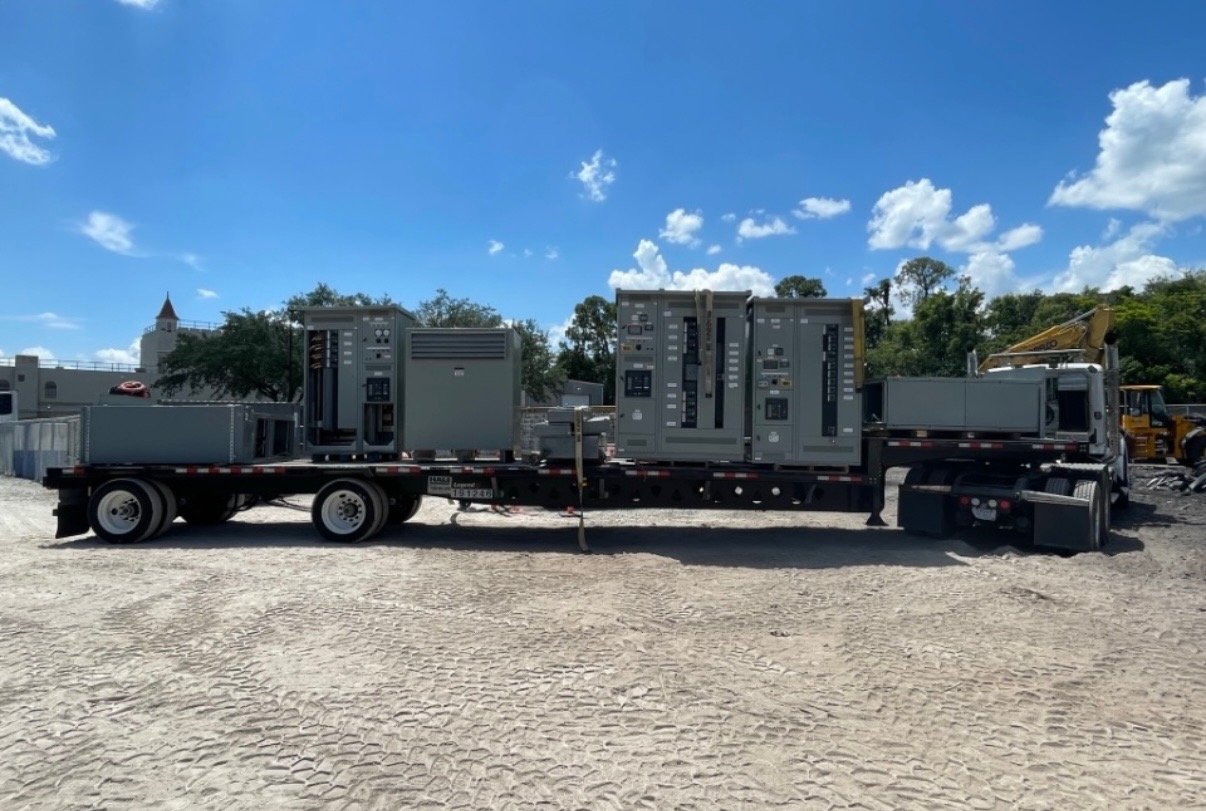
For delivery in Georgia, provide the project address, requested delivery window, receiving contact, site access limits and any restrictions on truck size, unloading equipment or delivery hours. State whether the site can receive and protect the assembly immediately or whether a designated storage location is needed. Confirm the number and approximate arrangement of shipping sections with the supplier, then check that the route from unloading area to electrical room can accommodate them.
Coordinate the delivery date with construction progress rather than treating shipment as a standalone milestone. The owner should align the purchase schedule with the contractor’s readiness, storage responsibility and installation sequence. Delivery options, availability and timing depend on the specific order and are confirmed during procurement; do not assume a particular lead time or shipping arrangement until it is documented.
Make the purchase package actionable
For a useful quote, send the project location, one-line diagram, specification, equipment schedule, target installation date, required submittal milestones and known site constraints. Include the intended supplier-versus-contractor scope, preferred delivery arrangement, and a list of unresolved engineering decisions. Identify who can approve technical submittals and who can authorize commercial changes. These details let the manufacturer identify information gaps and define a configuration for review without guessing at the project’s design.
Before issuing the purchase order, attach or reference the accepted scope, approved configuration, drawing revision, exclusions, delivery assumptions and change process. Then distribute the same controlled documents to the engineer, contractor and receiving team. This gives each party a clear basis for coordinating equipment with field work. Ask the project team to close open interface items before release and confirm the final delivery plan against the contractor’s installation schedule.