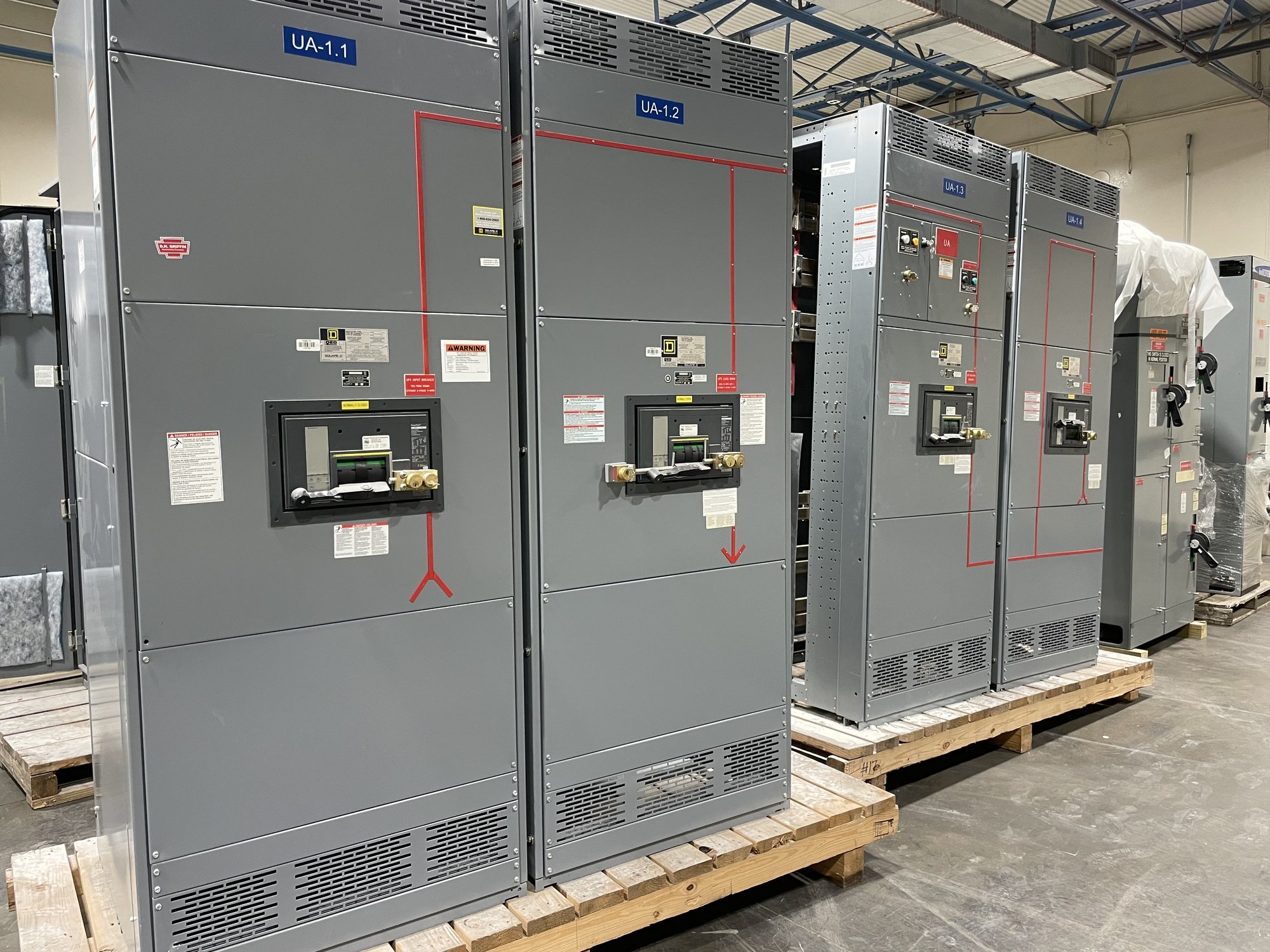
What break-before-make means
In an open-transition scheme, the transfer device disconnects the load from its present source before connecting it to the alternate source. The sources are not intentionally paralleled during the changeover. This separation is central to the operating sequence: there is a period when neither source supplies the transferred load, even when both supplies are available.
The interruption is not one fixed duration for every installation. Detection settings, control logic, switching-device operation, source availability, and any programmed delay affect the interval. Specify the intended sequence and allowable interruption rather than assuming the equipment will transfer instantaneously. The final timing and configuration depend on the selected equipment and engineering review.
What connected loads may experience
A momentary loss of supply can cause some loads to stop, reset, drop out, or require a restart. Control power supplies and electronic equipment may ride through a short interruption, while other devices may lose state or trip. Whether a load tolerates the break depends on its design, stored energy, controls, settings, and operating condition; a general transfer description cannot establish that for a particular device.
Motors deserve specific attention. A motor can slow during the interruption, and residual voltage or a changed phase relationship at reconnection can affect the restart response. Variable-frequency drives, process controls, contactors, and coordinated equipment may respond according to their own undervoltage, restart, or fault logic. Have the responsible engineer and equipment suppliers assess critical loads and define which loads can transfer, which need a controlled restart, and which require another continuity strategy.
Choose the sequence around the application
Clarify whether transfer is initiated manually, automatically, or through a defined control scheme, and identify the conditions that permit transfer to the alternate source. Discuss source qualification, transfer and retransfer behavior, time delays, operator indications, and what the system should do if the alternate source is unavailable. These decisions shape the control requirements and should match the facility’s operating procedures.
Also define whether all loads transfer together or whether the distribution is arranged for staged restoration. A process with a large motor load, sensitive controls, or dependencies between systems may need sequencing developed by the project engineer. Open transition describes the break-before-make relationship; it does not, by itself, specify load priority, restart coordination, or uninterrupted service.
Resolve source and equipment details
For a manufacturer quote, provide the one-line diagram or a clear description of the sources, the loads served, and the intended transfer points. Share system voltage, phase, frequency, available fault-current information, required continuous current, enclosure and installation conditions, and relevant control or communications requirements. Identify whether the assembly is a switchboard and whether UL 891 applies to the requested switchboard assembly; that standard is not a blanket listing for medium- or high-voltage switchgear.
Call out unusual operating requirements early, including source interlocks, bypass or isolation needs, metering, remote status, environmental conditions, and constraints on footprint or cable entry. Do not infer that a requested rating, feature, or certification is available from a general description. The engineering scope, equipment arrangement, applicable standards, and availability must be confirmed for the specific order and reviewed against project requirements.
Plan procurement and project handoff
Procurement teams can reduce avoidable revisions by sending the latest drawings, load information, control narrative, and required submittal documents together. Identify the decision-maker for transfer logic and note any unresolved questions, such as permissible load interruption or restart responsibility. A written sequence of operation gives the manufacturer, engineer, installer, and commissioning team a shared basis for reviewing the proposed configuration.
For a Georgia project, provide the delivery site, receiving constraints, requested schedule, and any coordination needs for site access or unloading. New equipment is built to the confirmed scope, and delivery timing and availability are established for each order; do not base a construction schedule on an assumed lead time. Before release, reconcile approved submittals with the one-line, control sequence, and site requirements so the handoff reflects the design the project team intends to install.
Make the interruption an explicit design input
Before requesting a quote, identify the most interruption-sensitive loads, the acceptable outage or restart behavior, the source-transfer conditions, and whether loads must return in stages. Include available electrical data, drawings, required assembly scope, Georgia delivery details, and the project’s submittal and schedule needs. Ask the project engineer to validate load response and operating sequence, then use the confirmed requirements to review the proposed equipment configuration before purchase and installation.