Start with the building service and distribution plan
For a new office building or a major distribution upgrade, begin with the electrical one-line diagram and the intended path from the utility service to main distribution, risers, and tenant areas. Identify service voltage, phase, frequency, available fault-current information, main-device requirements, feeder quantities, and any metering or monitoring provisions. These inputs help establish what equipment is needed without assuming a configuration that may not match the engineer’s design.
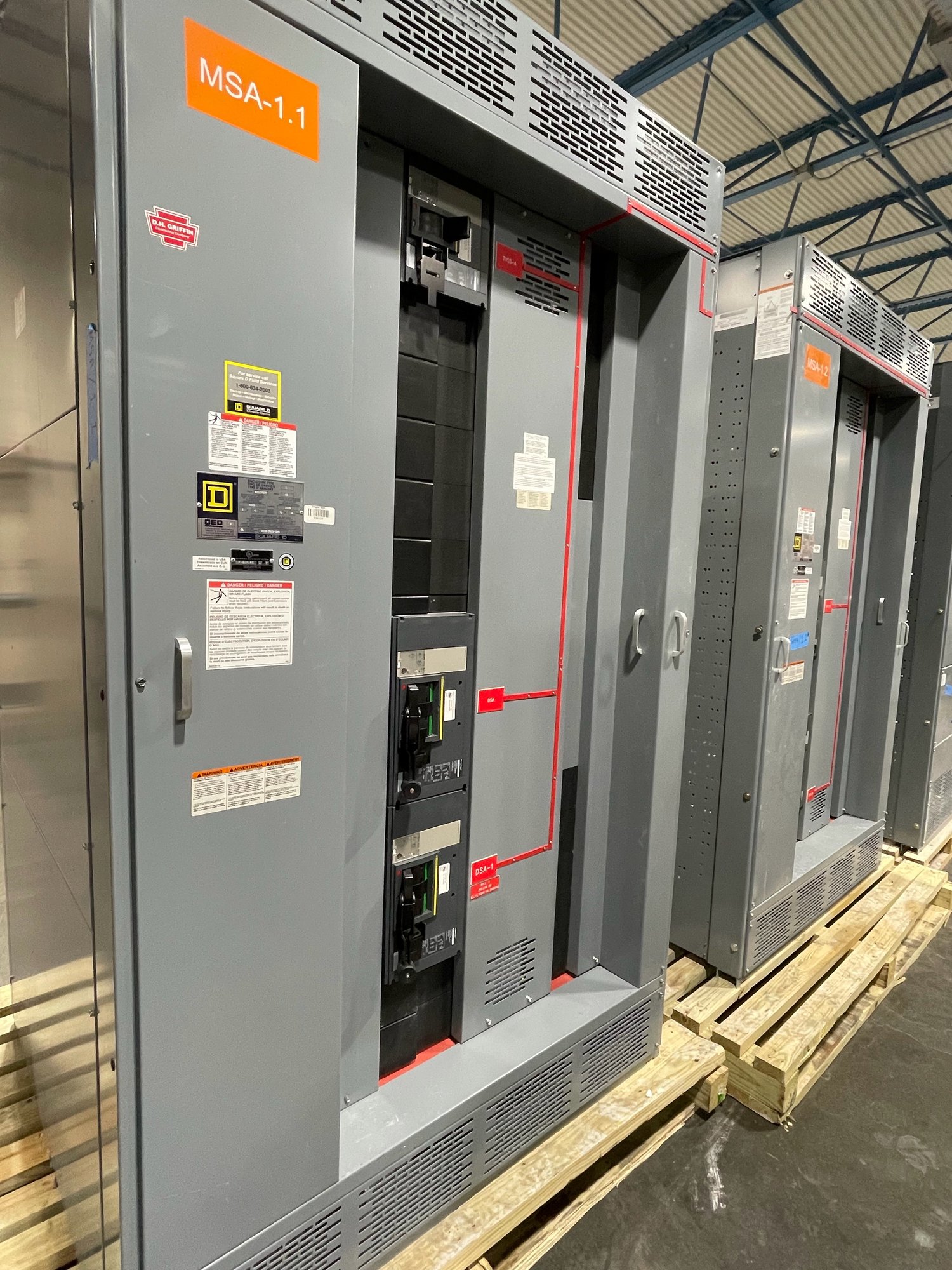
Clarify whether the project calls for a service switchboard, distribution switchboards, or other switchgear assemblies within a broader system. UL 891 applies to switchboard assemblies; it does not establish a blanket listing for medium- or high-voltage switchgear. The engineer should identify applicable equipment standards and ratings for each part of the system, with final design and approval coordinated through the responsible professionals and authorities.
Plan for tenant changes without guessing future loads
Tenant improvements can change connected loads, feeder destinations, metering needs, and the space available for distribution equipment. For each affected area, provide known load schedules, anticipated tenant growth assumptions, feeder sizes and routes, and any required separation between base-building and tenant distribution. If future provisions are requested, describe their intended use and design basis rather than relying on a general request for “room to grow.”
Ask the engineer to distinguish existing conditions from proposed work, and to document which loads remain, move, or are added. Confirm how tenant metering, common-area loads, spare spaces, and planned electrical capacity are handled in the design. These decisions can affect enclosure arrangement, bus configuration, protective-device selection, and coordination with upstream and downstream equipment; they should be resolved in the project documents before the assembly is finalized.
Resolve specification details before procurement
A useful quote package includes the one-line diagram, equipment schedules, specifications, available fault-current data, required ratings, device and accessory schedules, and any approved deviations or alternates. Identify the building’s operating voltage and system arrangement, service entrance requirements, enclosure conditions, cable or bus connections, and the physical location of each assembly. Include drawings or dimensions for electrical rooms, access routes, and equipment replacement openings when those constraints apply.
Procurement teams should also flag submittal requirements, drawing review milestones, required documentation, requested shipment sequence, and the date equipment is needed at the jobsite. Confirm which components and configuration are included in the requested scope, especially where the project combines new distribution with retained equipment or work by other suppliers. Availability, exact scope, and timeline are confirmed for each order; do not base a construction plan on an unverified assumption about stock or delivery timing.
Account for occupied-building and site constraints
Office work may need to proceed around occupied floors, scheduled tenant moves, restricted loading access, or limited electrical-room space. Provide the expected delivery point, receiving hours or restrictions, unloading arrangements, floor or dock access, and any site rules that affect staging. For replacement work, identify the planned outage window and describe what portions of the existing system must remain in service; the project team must determine the outage and transition plan.
Georgia delivery can be coordinated to the project location, including Sandy Springs, with shipment details reviewed against the job’s access and receiving requirements. Nationwide shipping is available, but delivery timing and arrangements depend on the order and site conditions. The electrical contractor and project team should verify route clearance, handling equipment, staging space, and sequencing before shipment so the assembly can move from receiving to its intended installation area without relying on unconfirmed site assumptions.
Coordinate design review, submittals, and handoff
Before release, compare the proposed equipment documents with the current project drawings and specifications. Review dimensions, device functions, ratings, connection details, compartment or section arrangements, and interface points with the rest of the distribution system. Route questions about load assumptions, protection, coordination, and code interpretation to the project engineer. Required ratings and compliance determinations depend on the design and review by the appropriate engineering professionals and authorities.
For handoff, establish who will review submittals, who accepts approved-for-construction drawings, and how revisions are tracked if tenant scope changes. Coordinate installation, testing, and energization with qualified electrical personnel under the project’s approved procedures. For a Sandy Springs project, send the one-line, equipment schedules, site delivery constraints, tenant-change scope, and requested milestones with the quote request; those details support a clearer review of configuration, order scope, and Georgia delivery planning.