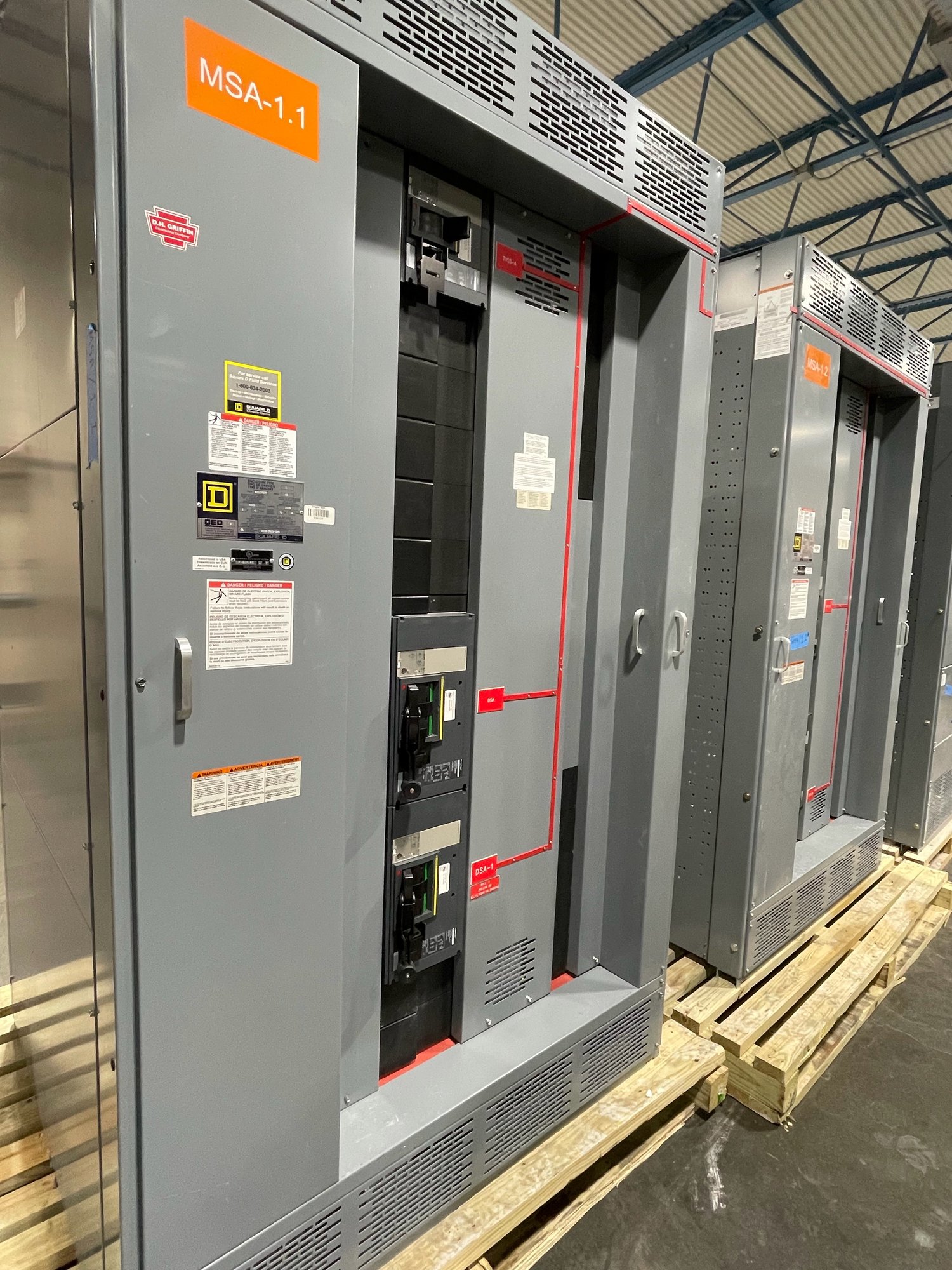
Define the access arrangement
A non-walk-in enclosure has no personnel-accessible interior aisle. Operators and qualified service personnel reach compartments through exterior doors or panels, so the arrangement of breakers, controls, barriers and cable compartments affects both usability and enclosure dimensions. Identify which faces must remain accessible and whether normal operation occurs at the front, rear or both sides.
Share the intended installation location, available footprint, nearby walls or equipment, and the direction each door can open. A compact outline is useful only if doors can open fully and personnel can perform the required work. Confirm aisle and working-space requirements with the project engineer and applicable authority; do not assume enclosure dimensions alone establish adequate access.
Plan service clearance before reducing footprint
Exterior access shifts the service-clearance question from an internal aisle to the space around the enclosure. Consider door projection, removable panels, lifting or handling needs, and room for qualified personnel to inspect, test or replace components. A fence, curb, parked vehicle, piping run or future building addition can turn an accessible door into a maintenance obstruction.
For a quote, provide a dimensioned site plan or mark the proposed equipment footprint and surrounding obstructions. State which sides need routine access and which operations may require larger temporary work areas. The equipment configuration can then be evaluated against the site constraints, with final clearances confirmed through project engineering and review by the authority having jurisdiction.
Account for Georgia weather exposure
Outdoor equipment faces rain, humidity, wind-driven moisture, temperature changes, sunlight and airborne contaminants. Site exposure varies across Georgia and even within a property: an open pad, a covered loading area and a location near washdown or irrigation create different conditions. Describe the actual environment rather than relying on a broad regional label.
Discuss enclosure construction, door seals, ventilation approach, drainage, condensation control and finish requirements as part of the specification. Keep roof edges and nearby discharge points from directing water toward openings, and consider whether landscaping or grading could obstruct airflow or promote standing water. The required enclosure details depend on the design and exposure; confirm them for the specific order rather than assuming a standard configuration fits every site.
Coordinate electrical and physical requirements
Compact outdoor layouts still need a complete electrical basis. Provide the one-line diagram, system voltage, available fault-current information, service or feeder arrangement, protective-device requirements and planned metering or control needs. Identify cable entry direction and conductor approach where known, since underground conduits, overhead connections and limited bend space can affect compartment layout.
Also identify the intended use, expansion plans and interfaces with transformers, generators, transfer equipment or building distribution. UL 891 applies to switchboard assemblies; it is not a blanket listing for medium- or high-voltage switchgear. Specify the equipment type and applicable requirements with the engineer, and have the final design, ratings and code application reviewed by qualified professionals and the relevant authority.
Make procurement information actionable
A useful request for quotation includes the one-line, equipment schedule, site dimensions, required access faces, environmental conditions, cable-entry details and any project specifications. Include requested options such as control power, metering, communications, spare provisions or compartment separation, while distinguishing mandatory requirements from preferences. If drawings are preliminary, identify open decisions so the configuration can be developed without treating assumptions as final.
New switchgear is built to the confirmed scope, and component availability, configuration and schedule are verified for each order. American-made components, custom-built arrangements and short lead times may be considered where they fit the specification, but they are not guarantees of stock or a particular delivery date. Ask for the proposed scope and timeline to be confirmed against the actual design and purchasing schedule.
Prepare the site and handoff
Before release for manufacture, align the equipment drawings with the civil and electrical plans. Check foundation dimensions, conduit stub-ups, anchorage, lifting access, door swing and the route from delivery vehicle to pad. Resolve conflicts with fences, bollards, canopies and adjacent equipment early; changing a cable approach or access face after fabrication can affect the layout and project coordination.
For Georgia delivery, provide the ship-to location, site access limitations, receiving hours or constraints, unloading plan and desired delivery window. Nationwide shipping can be coordinated for the order, while delivery timing and handling details are confirmed for the destination. Assemble these site facts, electrical documents and open questions before requesting a quote so the proposed exterior-access configuration can be reviewed against real operating and installation conditions.