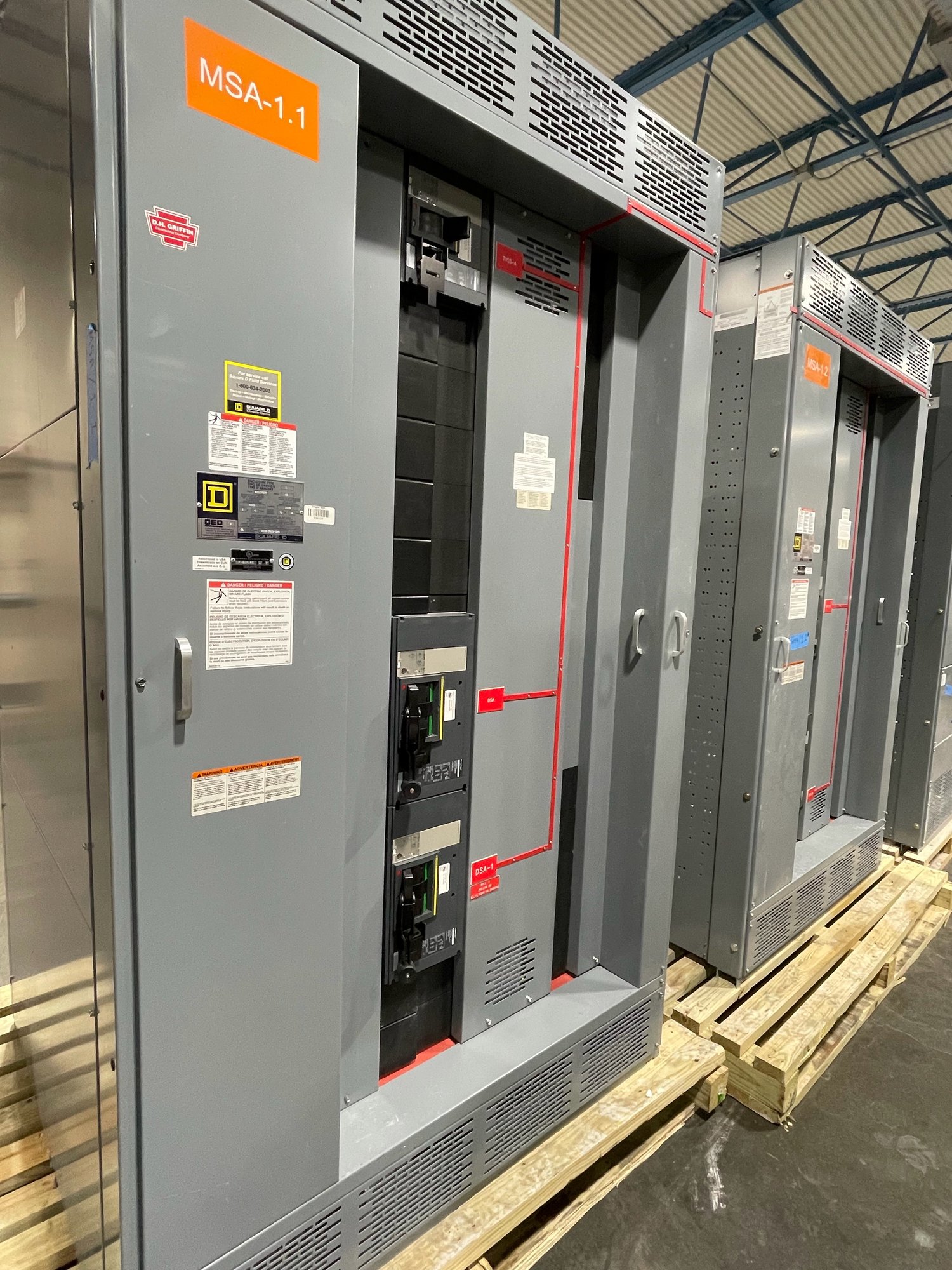
Reconcile ratings with the project basis
Start with the one-line diagram, equipment schedule and written specifications used to request the quote. Confirm the quoted equipment type and configuration, system voltage, phase, frequency, main and feeder arrangement, bus rating, and any stated short-circuit or withstand requirements. Check that the quote identifies the applicable ratings rather than relying on a general product description. If documents differ, record which revision governs and ask the manufacturer to identify any assumptions that affect selection.
Review protective-device and metering requirements against the project design. Confirm breaker or switch types, trip-unit functions, sensor or current-transformer details, control power, instrument requirements and any specified communications interface. Do not infer coordination, arc-flash performance or suitability from a rating label alone. The responsible engineer must resolve protection and application questions, with the authority having jurisdiction reviewing matters within its remit.
Define exactly what the price includes
Compare line items and scope notes, not just the total. Establish whether the quoted scope includes the required sections, bus connections, transition or service sections, neutral and ground provisions, barriers, doors, nameplates, internal wiring and specified accessories. Identify items excluded from the manufacturer’s scope, such as field cabling, installation, site testing, commissioning or coordination studies, where applicable. This prevents a quote from appearing comparable when another proposal assigns those tasks differently.
Ask how project-specific requirements are handled: special finishes, environmental conditions, seismic or other design criteria, cable entry direction, conduit space, bottom or top access, and space or provisions for future equipment. Give the manufacturer the actual constraints and drawings rather than assuming a standard arrangement will fit. For UL 891 switchboard assemblies, confirm whether the quoted assembly is specified to that standard; UL 891 applies to switchboards and does not establish a blanket listing for medium- or high-voltage switchgear.
Check drawing status and approval steps
Determine which drawings are included, when they will be issued, and what information they will show. A useful review set may need overall dimensions, section arrangement, elevations, conduit or cable entry space, connection details, nameplate data and device schedules. Confirm whether drawings are preliminary or approval documents and whether the quote assumes customer-furnished dimensions, connection locations or equipment interfaces. Flag building openings, access routes and adjacent equipment early, before the layout is treated as final.
Agree on who reviews each submittal and who can approve technical changes. Route electrical details to the engineer of record and physical fit or installation interfaces to the appropriate project team. Ask how revisions are identified and how a changed one-line, device schedule or site constraint affects price and schedule. Procurement should avoid releasing a configuration based on unresolved exceptions; document accepted deviations and obtain engineering review before treating them as approved.
Test the schedule against real milestones
Read schedule language as a set of conditions, not an unconditional delivery promise. Ask what event starts the quoted manufacturing schedule: order release, approved drawings, receipt of complete technical data, or another stated milestone. Confirm which customer decisions must be complete first and how late revisions or missing information could change timing. Exact availability and timing should be confirmed for the specific configuration and order.
Work backward from the project’s required-on-site date in Georgia. Include time for drawing review, approvals, freight planning, receiving inspection and any site-specific delivery restrictions. Share the delivery address, site access limitations, unloading responsibility, receiving hours and whether equipment must arrive in a particular sequence. Confirm what shipping scope is quoted and who coordinates any special handling; do not assume a particular carrier, delivery window or unloading method is included.
Verify documents and the handoff package
Ask for a list of documents included with the equipment and their planned issue points. Depending on the order, the handoff may need approved drawings, final equipment schedules, wiring or connection information, operating and maintenance documentation, and available test or identification records. Verify formats, quantities and whether documents are supplied for approval, construction or closeout. If the project requires particular forms, labels or electronic file conventions, state those requirements before order release.
Check that quote exceptions, approved drawings and the final order describe the same configuration. Assign a person to maintain the current revisions and distribute changes to engineering, field supervision, procurement and receiving. Before shipment, the project team should know what to inspect on arrival, how to report visible shipping damage, and which documents are needed before installation planning proceeds. Installation, testing and energization must be performed by qualified personnel under the project’s approved procedures.
Close gaps before purchase approval
Create a short clarification register with each open question, the responsible reviewer and the document or response that resolves it. Prioritize differences in ratings, protective devices, physical dimensions, exclusions, drawing revisions and schedule triggers. Ask the manufacturer to restate agreed changes in the revised quote or order documents rather than relying on meeting notes. This gives purchasing a traceable basis for comparison and gives engineering a clear record of the selected configuration.
Before approving procurement, send the governing one-line and specification revisions, requested delivery date and Georgia site constraints, then request confirmation of scope, exceptions, drawing deliverables, schedule assumptions and closeout documents. Resolve technical questions with the responsible engineer and record any remaining conditions. A complete, coordinated quote review makes the order easier to release, receive and hand off without substituting assumptions for project decisions.