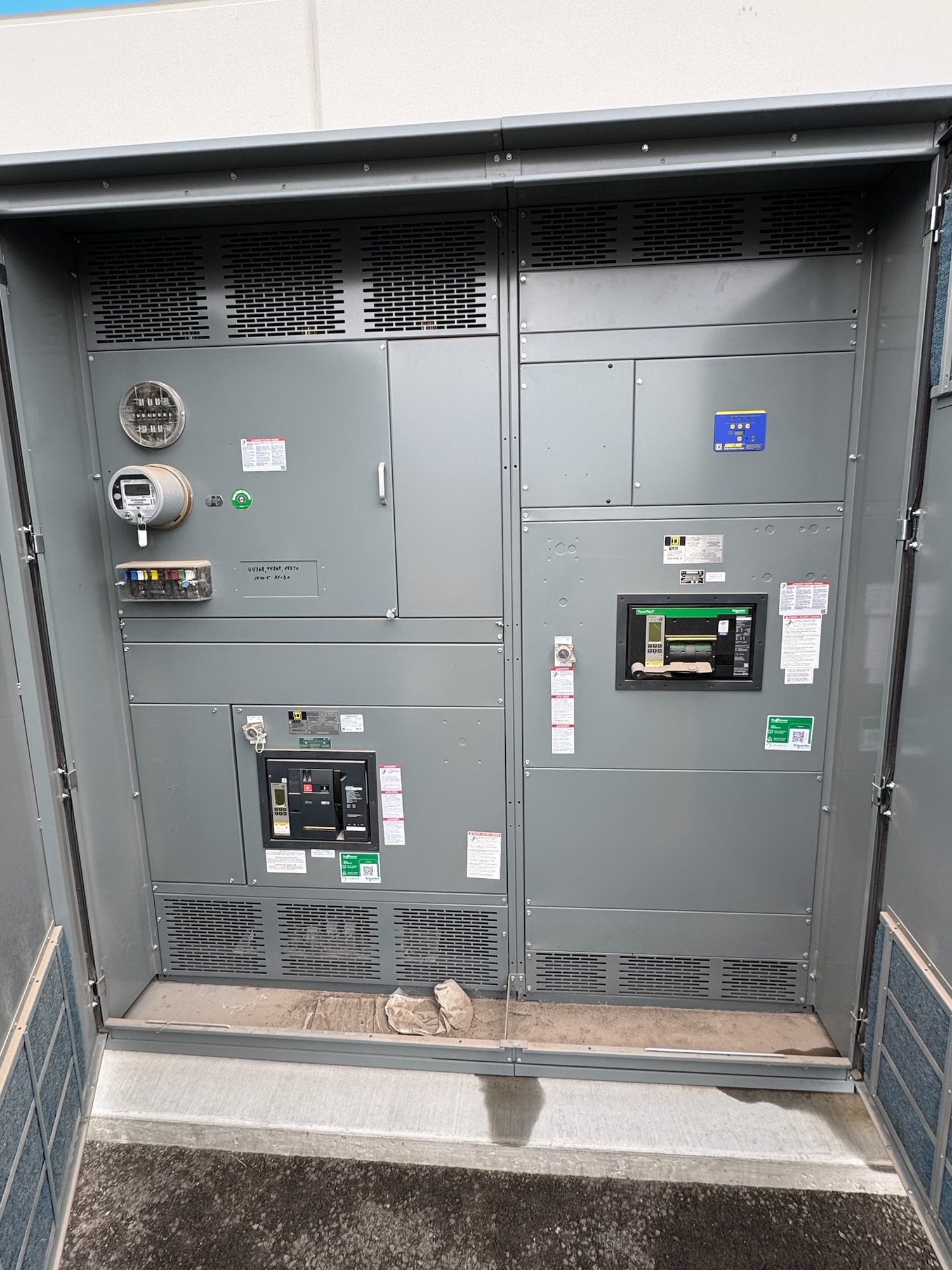
Start with the exact item and its role
A useful review begins with identification, not a general statement that a part is equivalent. Share the specified manufacturer and catalog or part number, the proposed replacement, the equipment location, and the component’s function. A breaker, trip unit, fuse, metering device, control relay and bus connection each have different dependencies, even when their descriptions sound similar.
Include the switchgear or switchboard drawings, one-line diagram, bill of material, relevant schedules and the specification language governing substitutions. Mark the affected lineup section and identify whether the component is original equipment, a project spare or part of a new custom-built assembly. This gives procurement and engineering a common reference for the review.
Compare ratings that govern operation
Compare the proposed component’s applicable voltage, continuous current, interrupting or withstand capability, frequency, pole arrangement and control requirements with the project documents. Which values are specified, and which are established by the system study or assembly design? A similar frame size or nominal ampere rating alone does not establish functional equivalence.
For protective devices, confirm the trip functions, sensor or rating plug details, available adjustment ranges, accessory requirements and coordination assumptions. For metering or control components, check input ranges, signals, power requirements, communications and terminal assignments. Any difference that could alter protection, indication, operation or coordination needs review by the responsible qualified engineer.
Check physical fit and interfaces
Physical compatibility is specific to the equipment and its configuration. Compare overall dimensions, mounting pattern, access clearances, terminal locations, bus or cable interfaces, conductor orientation and required working space. Ask whether the proposed item fits the same compartment and whether existing barriers, doors, wiring ducts or arc-management features are affected.
Do not treat a dimensional match as proof that installation is interchangeable. Differences in connector geometry, primary or secondary disconnects, wiring harnesses, mechanical interlocks, shutters or operating mechanisms may prevent use or require design changes. Provide available dimensional drawings and photographs when useful, while relying on controlled drawings and engineering review for final disposition.
Resolve approvals and evidence
Identify the approval basis that applies to the equipment and the contract: for example, specified manufacturer requirements, project submittal acceptance, listing or labeling conditions, or owner standards. Ask whether the substitution changes the evaluated assembly or its documentation. UL 891 applies to switchboard assemblies; it is not a blanket certification for medium- or high-voltage switchgear or every component installed in equipment.
The review should record its evidence and limits. Useful records include manufacturer data, ratings documentation, dimensioned drawings, wiring information and a comparison against specified requirements. If documents conflict or do not establish a key characteristic, record the open question rather than assuming equivalence. Required engineering and authority review remains part of the project’s approval process.
Document acceptance before release
A clear decision states the exact proposed part, the equipment and drawing revision reviewed, the requirements compared, any differences, and the disposition. Identify who must approve the substitution and whether revised drawings, schedules, settings, labels, manuals or spare-parts records are needed. Procurement should not interpret a technical review as authorization to change an order unless the designated project authority accepts it.
For a new custom-built assembly, resolve substitutions before design details and procurement are finalized where practical. Later changes can affect layout, interfaces, documentation and schedule. Record any conditions that must be met at manufacture or installation, and make sure the accepted part number and revision flow into the final bill of material and handoff package.
Prepare a review request for a Georgia project
For a quote or review, share the project location in Georgia, requested delivery point, required-on-site date, specified and proposed part numbers, equipment type, voltage and current requirements, relevant drawings, specification clauses, and the reason for the substitution. Note whether the item is for a new assembly or a change to existing equipment, and identify pending approvals or interface constraints. Exact scope, availability and timeline are confirmed for each order.
Before releasing procurement, ask the project engineer and responsible approval authority to accept the documented disposition, then provide the approved revision with the order documents. We can use that information to assess the requested component and its fit within a new equipment configuration. Coordinate Georgia delivery timing with site access, receiving arrangements and the project sequence; shipping arrangements and order timing depend on the confirmed scope.