Classify loads by clinical consequence
Start with the services the office must sustain when normal power is unavailable. Identify which spaces and functions support patient care, such as treatment rooms, medication storage, clinical workstations, selected lighting, and communications. The required backup scope depends on the care provided, equipment instructions, operating procedures, and the consequences of interruption; a medical-office label alone does not establish which loads belong on backup power.
Separate essential loads from functions that can pause or shut down, including general office equipment, noncritical lighting, and convenience receptacles. Then record each candidate load’s voltage, phase, rated current or input power, starting behavior, and whether it can tolerate a brief interruption. Include HVAC, refrigeration, IT, and specialty equipment where applicable. An engineer can use this inventory to assess demand, sequencing, and whether loads should be divided among branches or transferred in stages.
Define what must happen during an outage
For each essential function, specify the required response: remain energized without interruption, restore after a short transfer, or be shed if generator capacity is constrained. Some equipment may have internal batteries or dedicated ride-through systems, but these should not be assumed to cover the whole room or the time needed for standby power to start. Confirm the equipment manufacturer’s power requirements and coordinate any local battery or UPS arrangement with the electrical design.
Discuss outage duration assumptions, generator starting and transfer sequence, and the order in which larger loads return. Motors, compressors, imaging or laboratory equipment, and other nonlinear or sensitive loads can affect generator selection and voltage behavior. The design engineer should evaluate actual load data, inrush, harmonics, diversity, future additions, and any required load-shedding logic rather than sizing equipment from connected nameplate totals alone.
Coordinate the generator, transfer equipment, and distribution
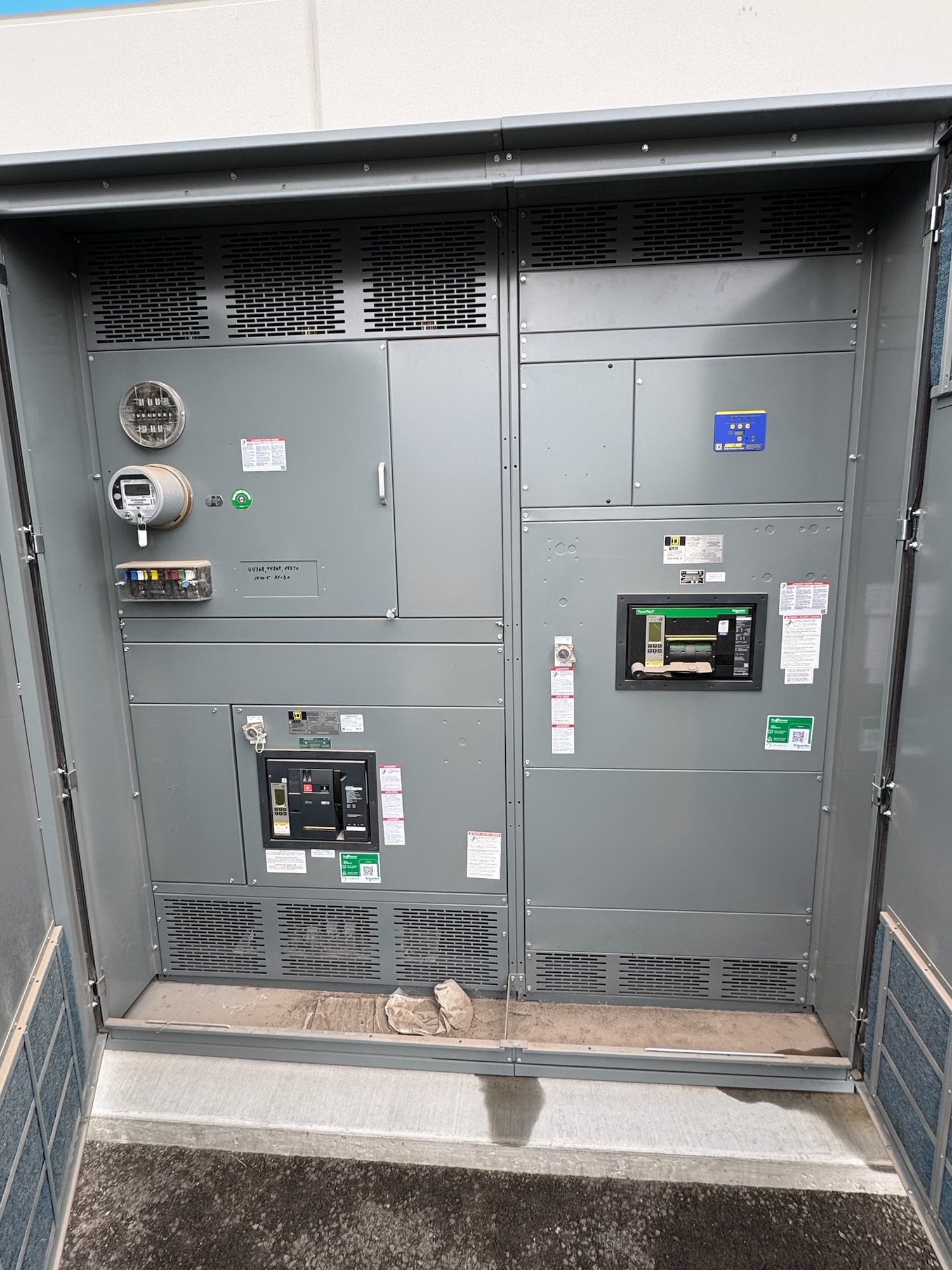
A backup system is a coordinated assembly of generator, transfer equipment, overcurrent protection, grounding and bonding provisions, and downstream distribution. Clarify whether the project uses a separate emergency distribution section, a main-tie-main arrangement, or another engineered configuration. The switchboard layout must support the intended sources and feeders while allowing maintainable access, suitable cable entry, and clear identification of normal and alternate power paths.
Provide the electrical one-line diagram, available fault-current information, service and feeder data, generator and transfer-equipment specifications, and the intended protective-device coordination approach. Confirm system voltage, phase, bus and main-device requirements, enclosure location, environmental conditions, and space constraints. New UL 891 switchboard assemblies can be configured to project requirements; UL 891 applies to switchboards and does not establish a blanket listing for medium- or high-voltage switchgear.
Resolve site-specific review before release
Medical-office requirements depend on the facility’s services, occupancy, adopted codes, and authority having jurisdiction. Have the project engineer identify applicable emergency-power provisions, required branch separation, transfer arrangements, testing provisions, and any healthcare-specific requirements that apply to the actual use. Coordinate with the electrical contractor, generator supplier, fire-protection team, and local reviewer so equipment scope and the permit documents agree.
Georgia projects may involve state and local review requirements, and the applicable editions or interpretations can vary by jurisdiction and project circumstances. Do not treat a generic medical-office checklist as approval. Resolve questions about existing service capacity, grounding, selective coordination, equipment location, egress and working clearances, and generator fuel or exhaust interfaces with the responsible design professionals and authorities before equipment is released for manufacture.
Prepare a quote package and delivery handoff
For a useful quote, share the one-line diagram, load schedule, generator and transfer-equipment selections, preliminary short-circuit and coordination data, required switchboard sections, and target submittal and installation milestones. Include site dimensions, cable-entry direction, indoor or outdoor conditions, access limitations, and any required interface points. Identify which details remain under engineering review so the proposed configuration can be aligned with the project instead of relying on assumptions.
State the Georgia project location, requested delivery window, receiving constraints, and the party coordinating unloading and placement. Nationwide shipping can support Georgia projects, but the configuration, availability, and schedule are confirmed for each order. Before release, align approved drawings, device functions, labels, feeder interfaces, and shipping sequence with the contractor’s installation plan. This handoff helps the field team coordinate a new assembly with the generator and transfer system without treating delivery as design approval.
Turn the load study into a buildable scope
Before procurement, ask the engineer to identify the loads that must transfer, the acceptable interruption for each, and the sequence for restoring them. Use those decisions to confirm generator capacity, transfer equipment, switchboard arrangement, protective-device data, and the space and connection details needed at the site. If clinical services or equipment change, update the load schedule and review the effect on the design before ordering.
A complete request should include the design documents, known constraints, unresolved code questions, and the project’s Georgia delivery requirements. The manufacturer can then develop a new switchboard configuration against the defined scope, with exact technical details and timing confirmed for the order. Keep the engineer and authority review in the approval path, and release equipment only after the final drawings and interfaces match the site-specific backup-power plan.