Map the circuits that cannot lose power
Start with the existing one-line diagram, panel and feeder schedules, equipment labels, and the facility’s list of critical loads. Identify which circuits serve life-safety systems, clinical areas, information technology, diagnostic equipment, refrigeration, and building operations. The hospital’s electrical engineer and facilities team should confirm actual source paths and dependencies in the field; old drawings may not show later renovations or temporary connections.
For each load, document its normal source, alternate source if present, transfer method, acceptable interruption, and the person authorized to approve a change. Ask whether replacement scope includes only a switchboard or also upstream protection, downstream distribution, metering, controls, and interconnections. These details determine what the new assembly must accommodate and which interfaces need verification before fabrication.
Define temporary power before setting the outage
Temporary power is a project design task, not a general promise that a generator will preserve every service. The project engineer should establish the temporary source, capacity, connection points, grounding and bonding approach, overcurrent protection, cable routing, transfer sequence, and monitoring responsibilities. Confirm load priorities and operating limits, including whether equipment needs conditioned power or cannot tolerate a transfer interruption.
Coordinate the temporary arrangement with clinical engineering, facilities operations, the electrical contractor, and affected department leaders. Determine who supplies and operates temporary equipment, who tests each transfer, and what contingency applies if a source or connection fails. The replacement switchgear should be specified with the planned temporary configuration in view, while leaving final design, protection coordination, and operating procedures to qualified project professionals.
Coordinate clinical operations and infection control
Electrical work can affect occupied departments even when the work area is separated from patient care. Review access routes, staging and storage areas, noise, vibration, dust containment, debris removal, and the timing of deliveries with the hospital’s infection-prevention team. Establish barriers and housekeeping expectations appropriate to the site’s infection-control risk assessment, and identify any work that could affect air handling or pressure relationships.
Map the work zone against patient movement, emergency access, staff circulation, and nearby clinical schedules. Decide how the team will communicate changes, protect sensitive spaces, and pause work if conditions depart from the approved plan. For Georgia projects, delivery timing and unloading arrangements should be coordinated with the facility and contractor; statewide shipping does not determine site access, staging capacity, or an acceptable delivery window.
Build an outage plan the hospital can approve
Develop the outage sequence with the authority responsible for hospital electrical operations and the project’s qualified electrical professionals. Break work into defined steps, identify each affected source and load, and state prerequisites, responsible roles, verification points, and restoration criteria. Confirm the approved window, notification process, escalation path, and decision authority well before equipment arrives. Do not treat a preferred date as approval to interrupt service.
Ask what work can be completed before the outage, such as receiving inspection, layout confirmation, preparation of terminations, and review of switching documents. Confirm how existing conductors, bus connections, controls, and protective devices will be identified and checked against the replacement design. A realistic sequence accounts for discovery in an existing installation and provides a documented path to stop, restore, or reschedule if conditions do not match assumptions.
Specify the replacement for the actual installation
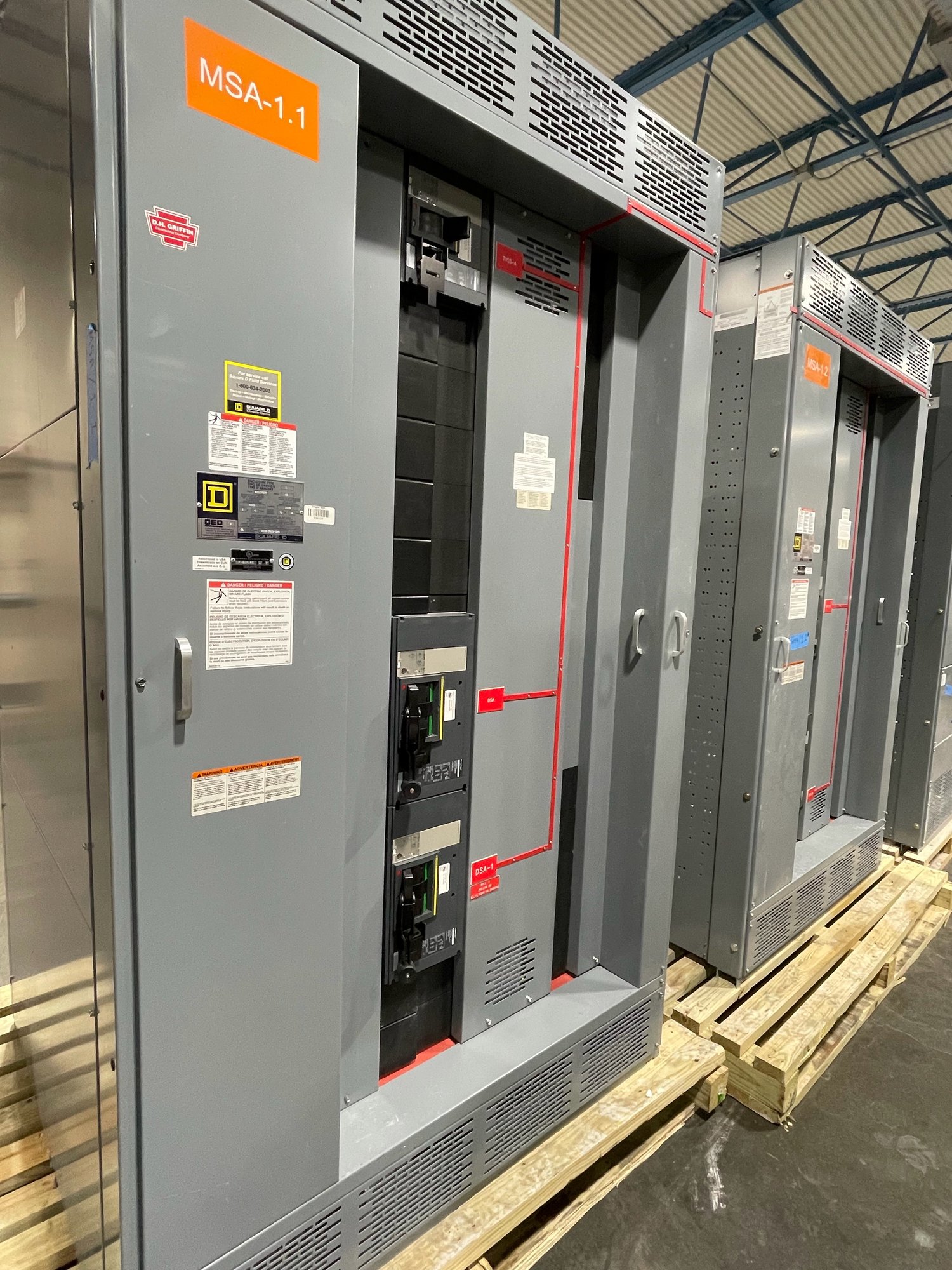
For a quote, share available one-lines, equipment schedules, photographs and nameplate data, physical dimensions, access constraints, system voltage and phase, bus and feeder requirements, available fault-current information, protective-device details, metering and control needs, and the intended installation sequence. Identify known manufacturer or component requirements only when confirmed by the project engineer. For switchboard assemblies, clarify the requested UL 891 scope; that standard applies to switchboards and does not establish a listing for medium- or high-voltage switchgear.
Also provide the target delivery period, receiving location in Georgia, unloading limits, required documentation, and any planned inspection or fit-up milestones. New assemblies can be custom configured using American-made components, subject to confirmed scope and availability. Engineering review is needed to reconcile the replacement with existing connections, protection, available space, and project requirements; ratings and configuration should not be assumed from a photograph or legacy label alone.
Close the handoff before returning to service
Before procurement is complete, align the approved submittals, equipment scope, delivery plan, outage sequence, and responsibilities for field verification. Confirm which drawings, connection details, operating instructions, and test records the contractor and facility need at turnover. Resolve open interface questions early, including responsibility for temporary-power removal, labeling updates, and communicating the final circuit status to affected departments.
For a project quote, provide the equipment information, critical-load and temporary-power assumptions, approved outage constraints, infection-control requirements, site receiving conditions, and desired delivery timing. Ask the hospital engineer and facilities authority to validate the outage and restoration plan before scheduling field work. This gives the manufacturer a defined basis to scope a new assembly and coordinate Georgia delivery without substituting equipment procurement for site-specific engineering approval.