Classify loads before selecting equipment
Legally required standby systems serve functions that a project’s adopted codes identify as necessary for safety or health during a normal power failure. They are distinct from emergency systems and optional standby loads, even when all three use the same generator plant. Misclassification can affect transfer equipment, circuit separation, feeder routing, testing and the switchboard lineup. The design team should identify each load, its purpose, location and required operating sequence before the equipment scope is finalized.
Do not assume that a load belongs in this category because it is important to an owner or appears on an existing generator schedule. The project engineer and authority having jurisdiction determine the applicable classification and requirements. Confirm which loads are legally required, which are emergency or optional, and whether the design calls for separate transfer switches, distribution sections or other separation. Those decisions establish the electrical interfaces a manufacturer needs to quote accurately.
Coordinate the codes that govern the project
Requirements may depend on adopted editions of the National Electrical Code, building and fire codes, occupancy provisions and local amendments. The applicable rules can vary with building use, system voltage and the specific loads served. In Georgia, confirm the editions and amendments in force for the project jurisdiction, along with the authority’s review process. Do not carry requirements forward from another site without checking whether its occupancy, code basis or approval conditions match.
Resolve code questions with the engineer of record and authority having jurisdiction before releasing switchboard drawings. In particular, document required load categories, circuit identification, separation criteria, transfer arrangement and any specified testing or accessibility provisions. A manufacturer can build to an approved project specification, but cannot determine the project’s code classification from a general request. Where interpretations remain open, record the responsible reviewer and the decision needed to close the issue.
Define the electrical architecture and operating sequence
A useful specification explains how normal and standby sources reach each load group. Identify the generator source, transfer equipment, distribution points, feeder destinations and any ties or alternate operating modes. Provide system voltage, phase, frequency, available fault-current information, grounding approach and the engineer’s required equipment ratings. Confirm whether the switchboard is upstream or downstream of transfer switches; that location changes the devices, compartments and connections included in the lineup.
Describe what should happen when normal power fails and returns. State which loads start first, whether load shedding or staged restoration is required, and which loads may operate together. Account for generator capacity and starting characteristics through the responsible electrical design. The switchboard configuration must follow that design, rather than imply that a particular lineup can support an unverified load combination. Resolve interface points with the generator, transfer equipment and field distribution before approval.
Make separation and identification explicit
Standby load classification has practical consequences for how circuits are grouped and identified. Provide a schedule that ties each feeder to its served equipment, category, destination and transfer source. Show required physical or electrical separation on the one-line diagram and equipment drawings, and specify any barriers, dedicated sections or enclosure arrangements required by the approved design. Clear labels and consistent naming help installers, inspectors and facility staff trace the intended source and load.
Avoid relying on broad notes such as “standby loads” when the project includes multiple classifications. List the actual circuits and indicate which party supplies each component, including transfer switches, protective devices, metering and control interfaces. Confirm cable entry, conduit zones, working clearances and room access with the switchboard layout. These details can affect the lineup dimensions and connections, so late changes to separation or routing may require drawing and procurement revisions.
Specify a buildable switchboard package
For a quote, provide the current one-line diagram, load and feeder schedules, project specifications, fault-current study or required ratings, and the applicable code basis. Include enclosure and environmental conditions, incoming and outgoing cable details, metering needs, control wiring, required accessories and any drawing or submittal milestones. Identify the project location in Georgia, delivery constraints, receiving arrangements and the date equipment is needed on site. Exact scope, availability and schedule are confirmed for each order.
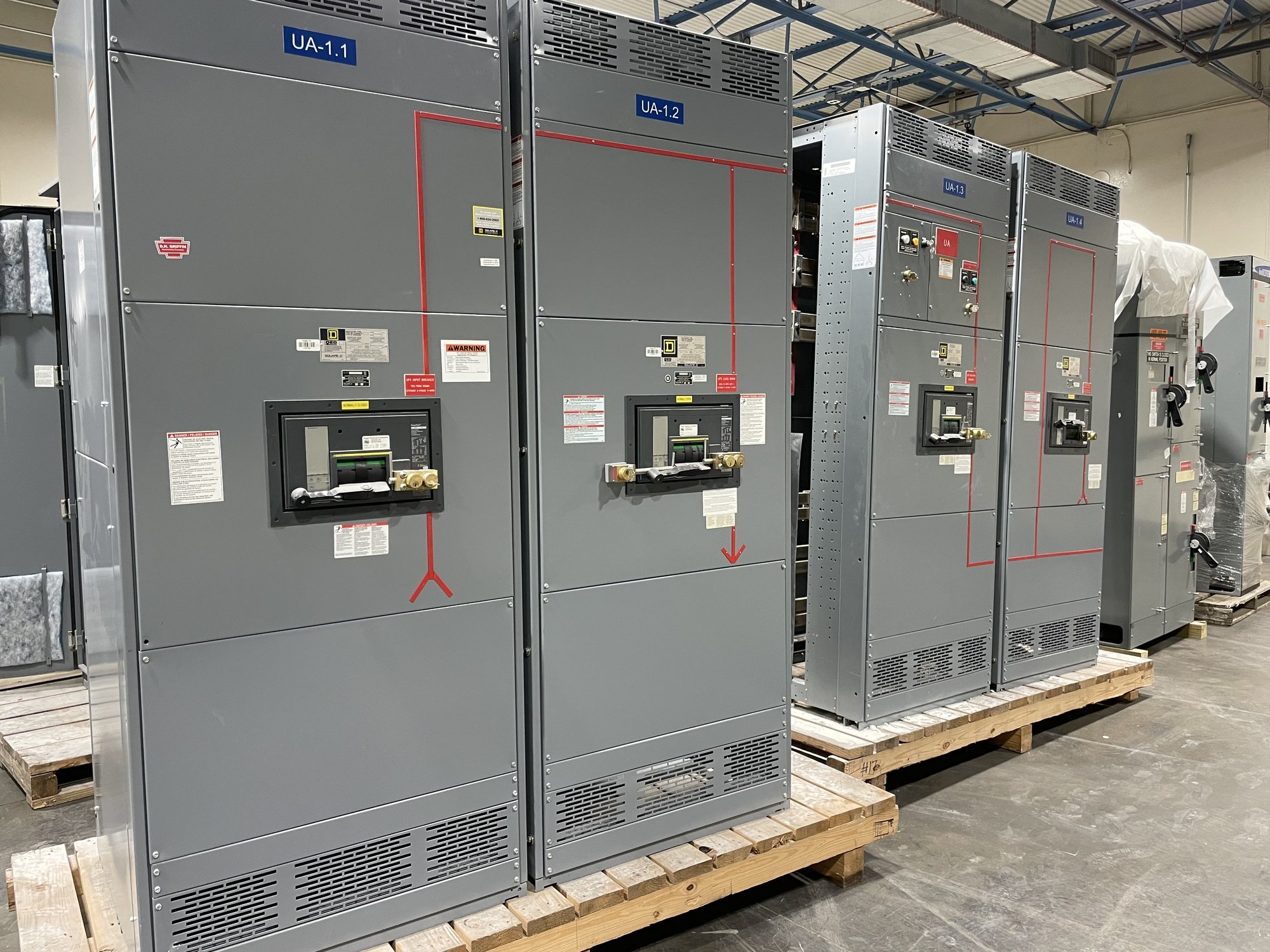
We manufacture and supply new switchgear and custom-built switchboard configurations in the United States, using American-made components as a focus. UL 891 applies to switchboard assemblies; it is not a blanket certification for all equipment or a substitute for confirming the project’s specified construction and review requirements. State whether a UL 891 switchboard assembly is required, and identify any other required standards or approvals for the particular scope. Engineering and authority review determine the acceptable design and ratings.
Close the handoff before release
Before production, reconcile the approved one-line, final feeder schedule, equipment drawings and interface responsibilities. Verify that each legally required load is assigned to the intended source and transfer path, and that labels, ratings, compartmentation and connection locations agree across documents. Name the parties responsible for generator controls, transfer equipment, field wiring, testing and inspection. This coordination reduces ambiguity at installation and gives the facility team a usable record of the intended system.
To start a project-specific quote, share the code basis and jurisdiction, the engineer-approved load classifications, one-line diagram, feeder schedule, equipment ratings and delivery requirements. Flag unresolved authority comments or scope boundaries rather than treating them as settled. Georgia delivery can be coordinated around the project’s receiving site and construction sequence; confirm access, unloading responsibilities and the required date with the order team. Finalize the classification and interfaces with the engineer and authority before equipment release.