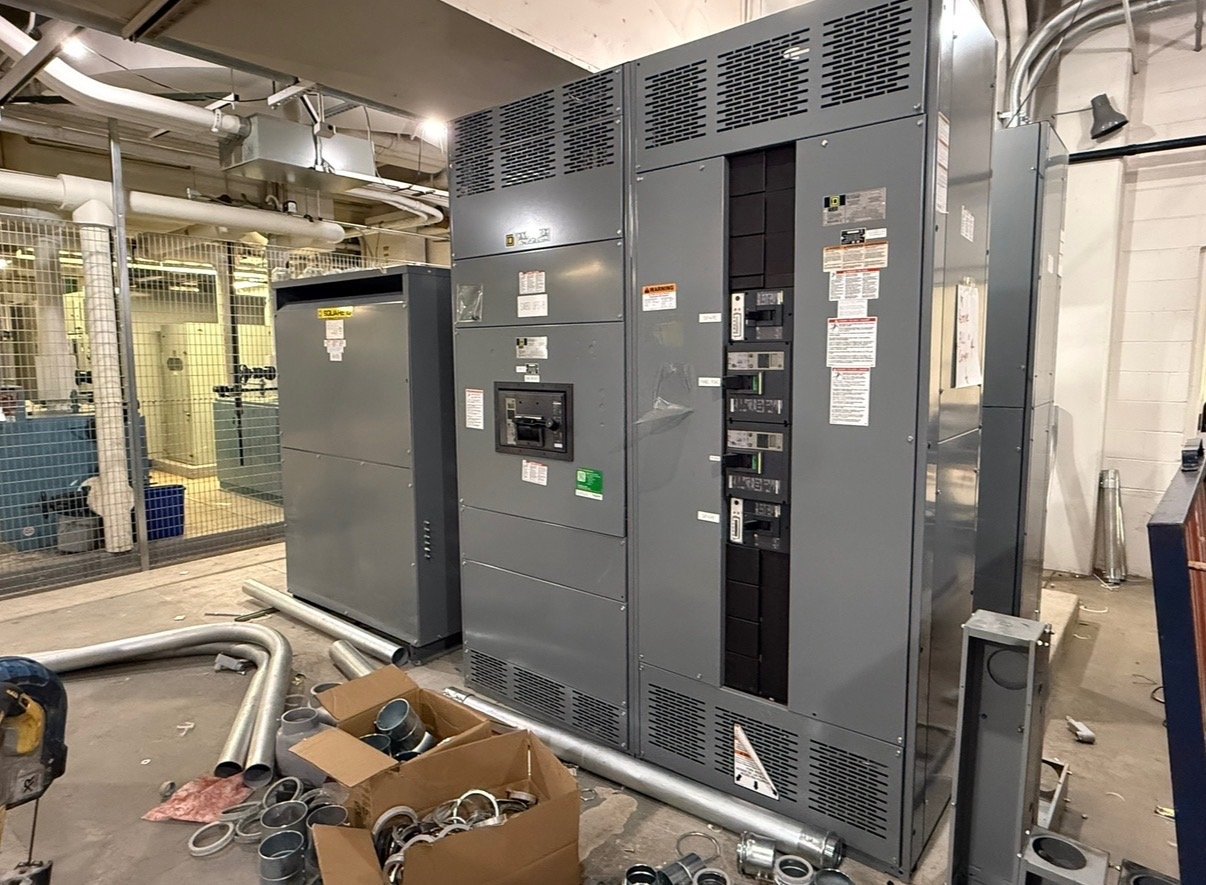
Critical facilities and continuity planning
Hospitals, emergency operations centers, data centers and other critical facilities must coordinate electrical distribution with continuity requirements. Project teams should identify the loads that must remain available, the source arrangement, transfer or tie-in points, and any planned expansion. These details influence enclosure layout, bus configuration, protective-device provisions and how the equipment connects to the broader distribution system.
For a replacement or capacity project, document the existing gear dimensions, cable entry locations, available fault-current information and shutdown constraints. Confirm which loads can be interrupted, when access is possible, and whether temporary power is part of the contractor’s plan. Share one-line diagrams, site constraints and the required ship-to location when requesting a quote so the proposed assembly can be evaluated against the actual project scope.
Industrial plants and process loads
Manufacturing and processing facilities often combine large motors, variable-speed drives, heating loads and building services. The design team should clarify load characteristics, starting methods, operating schedules, planned spare capacity and any requirements for coordination with motor control centers or transformers. These inputs help determine a practical switchboard arrangement and identify where the project engineer must specify protective devices and ratings.
Industrial environments also affect the physical design. Describe indoor or outdoor placement, ambient conditions, dust or moisture exposure, available working space, cable routing and access for maintenance. Provide equipment schedules and drawings where available, and flag existing gear that must remain in service during construction. Custom-built configurations can address project-specific layouts, but final dimensions, ratings and device selections require engineering review and confirmation before release.
Utility and power-distribution projects
Utility-related work may involve service distribution, facility upgrades, generation support or equipment serving a municipal or cooperative system. Clarify the system voltage, grounding approach, source and load connections, available fault-current data, metering needs and the intended boundary between utility and customer-owned equipment. These are design inputs, not assumptions to be inferred from a general project description.
UL 891 applies to switchboard assemblies; it is not a blanket listing for medium- or high-voltage switchgear. Identify the equipment class and applicable project requirements early, and have the responsible engineer and authority determine required ratings, approvals and standards. For a quote, provide the one-line diagram, specifications, device schedule, installation setting and any utility interface requirements. Exact product scope and availability are confirmed for each order.
Public infrastructure and municipal facilities
Water and wastewater plants, transportation facilities, public buildings and street or traffic infrastructure can have different load profiles and access constraints. A pump station may prioritize motor loads and remote operation interfaces, while a public building may focus on service distribution, future tenant needs and controlled outage windows. Explain the facility’s function, critical loads, environmental conditions and operating constraints rather than relying on a broad equipment label.
Procurement teams should align the specification with bid documents, approved submittals, construction sequencing and the planned inspection process. Identify required documentation, drawing review milestones, labeling conventions and any coordination with controls or field wiring. Georgia delivery planning should account for the site’s receiving hours, unloading capability, access route and construction phase. Nationwide shipping is available; delivery timing and shipment details are confirmed for the specific order.
Define scope, submittals and delivery
A useful quote package starts with the project location and schedule, but it also needs electrical and physical scope. Share the latest one-line diagram, voltage and current requirements, fault-current data, enclosure location, cable entry preferences, device schedule, applicable specification and any known site dimensions. Note whether the request concerns new construction, a planned replacement or a phased upgrade, and identify unresolved engineering decisions clearly.
Before release, align the equipment scope with the engineer of record, installer, procurement team and receiving site. Confirm interface points, approved drawings, nameplate and documentation needs, shipment destination, access for unloading and the date equipment is required at the site. For Georgia projects, include any outage window or construction milestone that affects sequencing. Send the available drawings and specification with these project details to begin a focused review; final configuration, availability and timeline are confirmed for each order.