Confirm what is actually available
Ask for the manufacturer’s exact description and the quantity currently available for the configuration under consideration. A general product family or component name may cover multiple frame sizes, voltage classes, interrupting ratings, bus arrangements, control options or revisions. Request the identifying information needed to distinguish the offered item from an electrically similar but unsuitable alternative.
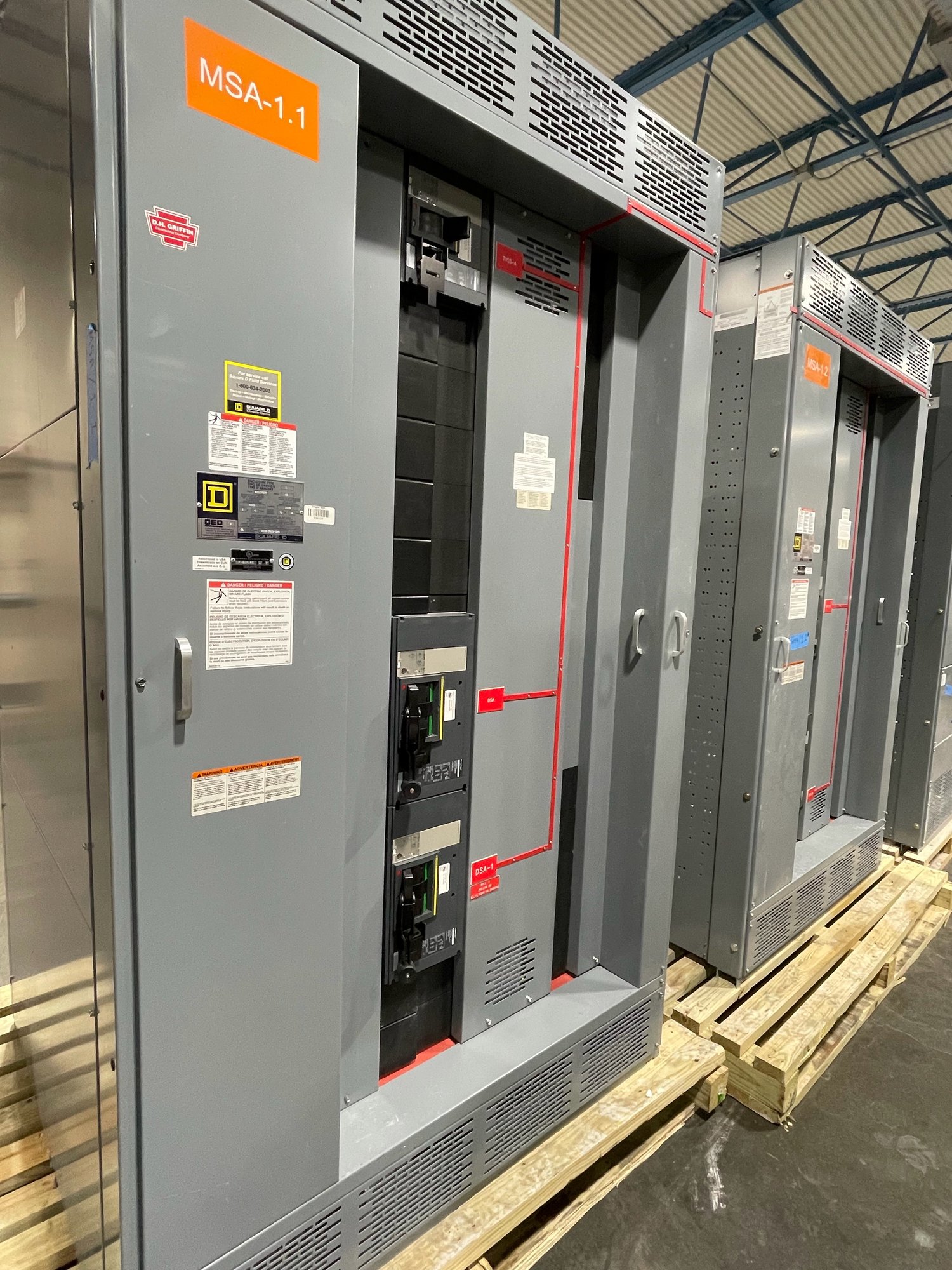
Clarify whether the quoted scope is a complete assembly, a configured section, or an individual component. For switchboards, identify the sections, mains, distribution devices, metering and accessories included. For a replacement part, compare the catalog number and revision against the installed equipment documentation. Availability should be confirmed for the complete required scope, not inferred from one available item.
Check compatibility against the installation
Share the project’s electrical requirements and the existing equipment details that affect fit: system voltage and frequency, phase and wire configuration, available fault-current information, required ratings, enclosure requirements, and the intended service or application. Where replacement equipment must connect to existing gear, provide manufacturer and model information, nameplate data, drawings, and photographs that clearly show interfaces and labels. Engineering review can identify questions that a part number alone will not resolve.
For switchboard assemblies, compare the proposed arrangement with the one-line diagram, load and feeder schedule, cable or conduit entry, available space, and connection requirements. Bus layout, device type, neutral and ground provisions, metering, and control wiring can affect whether an assembly suits the project. UL 891 applies to switchboard assemblies; it does not establish a blanket listing for medium- or high-voltage switchgear. Confirm the applicable scope and documentation for the specific equipment.
Establish condition and documentation
Because this is new equipment, have the quote identify the offered condition as new and describe the scope being supplied. Ask what product data, drawings, bills of material, instructions, and other submittals are available for review. Verify that document identifiers and revisions correspond to the quoted configuration. If a project requires a particular manufacturer, component origin, or documentation package, state that requirement before the configuration is finalized.
Review the proposed equipment against the project specifications and the authority having jurisdiction’s requirements through the project’s qualified design team. Do not treat a stock description, component label, or general standard reference as proof that a complete installation meets the project’s electrical design or code obligations. Resolve deviations, substitutions, exclusions, and pending approvals in writing before release so procurement and engineering are working from the same scope.
Verify timing and Georgia delivery
Ask whether the stated availability is current, how long it can be held for the order, and what events could change the ship date. Distinguish equipment ready for shipment from equipment that still needs configuration, review, testing, documentation, or other order-specific work. A short lead time is useful only when it applies to the exact configuration and quantity required; timing is confirmed for each order rather than assumed from a general stock statement.
For delivery in Georgia, provide the complete ship-to location, site access constraints, receiving hours, unloading arrangements, and any appointment or carrier requirements. Confirm the shipment’s scope, packaging, delivery method, and responsibilities for receiving and inspection. Coordinate arrival with the project’s storage capacity, installation sequence, and site readiness. Nationwide shipping can support Georgia projects, but delivery timing and logistics depend on the order and destination.
Make procurement decisions with a clear record
Before issuing a purchase order, compare the quote line by line with the approved electrical requirements and submittals. Confirm quantities, device and accessory details, ratings, configuration, inclusions, exclusions, shipping destination, and the current schedule. If a substitution is proposed, route it through the engineer of record and any required project reviewers instead of treating similar names or dimensions as interchangeable.
For a useful quote review, share the one-line diagram, applicable specification sections, equipment schedules, required ship date, destination, and any existing gear nameplate or catalog data. Identify open engineering questions and approval steps, then record agreed answers in the order documents. This gives purchasing, engineering, and the receiving team one reference for what was ordered and what arrival should include.
Turn availability into a dependable next step
Do not base a shutdown, installation crew booking, or commissioning plan on an unverified stock claim. First confirm the exact new equipment or component, its compatibility with the project, the documentation and review path, and the order-specific ship schedule. If a requirement is not yet known, flag it so the proposed scope can be checked before purchase rather than discovered after delivery.
To begin, send the equipment schedule or part identifiers, electrical requirements, quantity, project drawings, desired delivery window, and Georgia ship-to details for a scope and availability review. Confirm the final configuration, open approvals, and delivery plan in writing before releasing the order. This turns a stock question into a practical procurement decision without treating general availability as a project commitment.