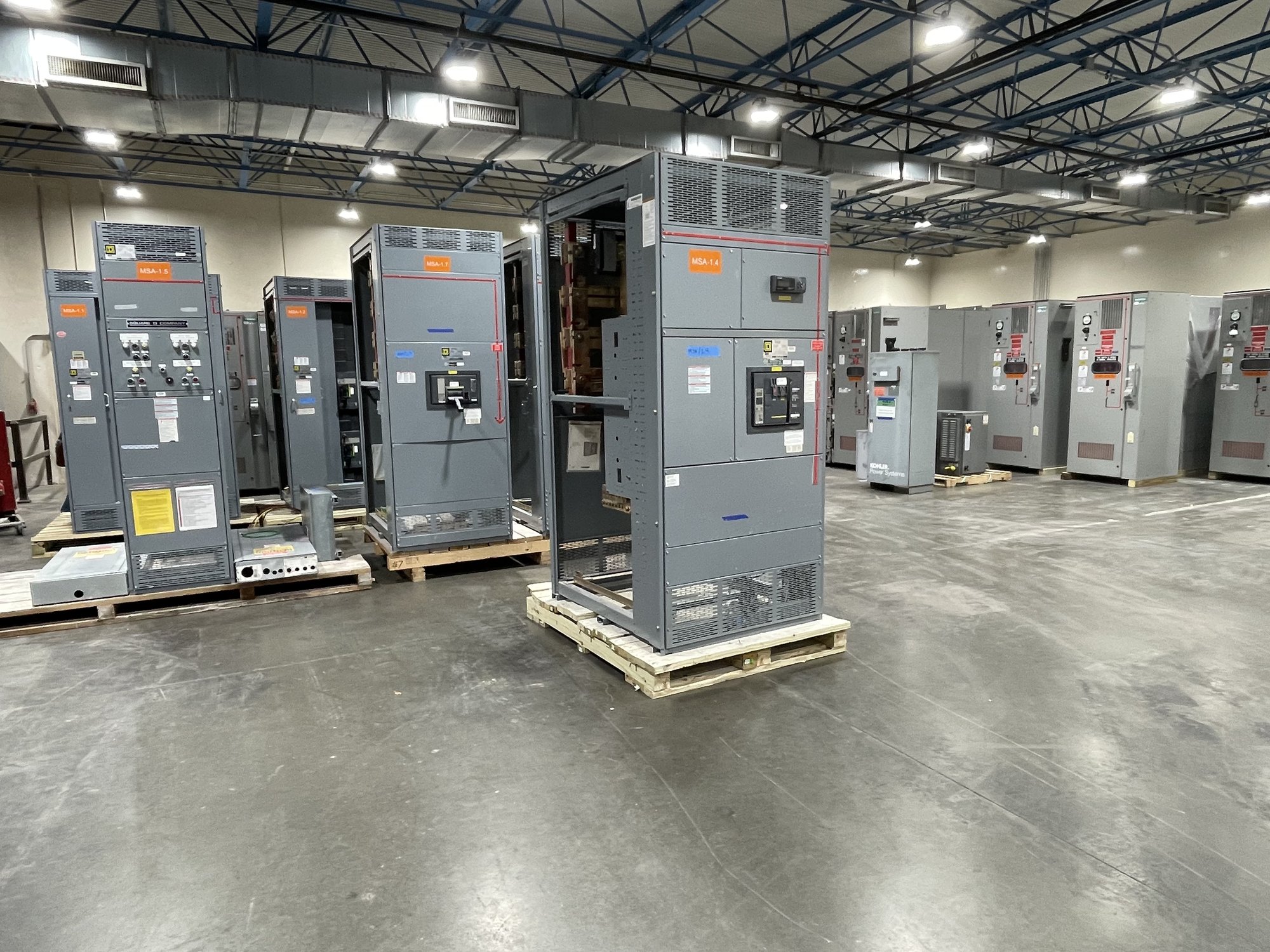
Define what U.S. manufacturing means for this order
Ask the manufacturer to identify the work performed in the United States for the assembly under consideration. Relevant details may include engineering coordination, enclosure and bus work, component installation, wiring, inspection, and final assembly. The answer should distinguish those activities from the origin of individual devices and materials. A U.S. assembly location does not, by itself, establish that every component was made domestically.
Use precise language in specifications and purchase documents. If domestic manufacture is a project preference, state which assembly and production activities matter and what evidence is required. If a contract or funding program imposes a particular domestic-content test, identify the applicable requirement and ask how compliance will be documented. Do not treat a general “American-made” statement as proof of a specific legal or procurement standard.
Trace component origin at the right level
Switchgear assemblies combine major devices, control components, conductors, insulation, enclosures, and other materials that may have different origins. Ask for an origin declaration or component schedule tied to the proposed configuration. Clarify whether it covers major electrical devices only or also materials and subcomponents, and whether origin means manufacture, substantial transformation, or another defined test. Those terms can produce different answers.
For a meaningful comparison, identify the components that matter most to the project: for example, breakers, metering, protective relays, control power devices, or bus material. Request the available manufacturer and origin information for those items, while recognizing that substitutions can affect the final record. Confirm how any approved substitution will be reviewed and reflected in the assembly documentation before procurement locks the design.
Match records to the exact assembly
A useful documentation package is specific to the ordered equipment, not a generic product brochure. Ask what will be provided for the final assembly, such as approved drawings, bills of material or component schedules, wiring information, nameplate data, inspection records, and applicable test documentation. Confirm document formats, revision control, and whether records identify the installed components rather than an earlier proposed configuration.
For UL 891 switchboard assemblies, define the documentation and labeling expectations for the assembly and its intended scope. UL 891 is a switchboard standard; it is not a blanket listing for medium- or high-voltage switchgear. If a project includes equipment outside that scope, identify its separate standards, evaluation, and approval requirements. The applicable design and documentation must be confirmed for the particular equipment and project.
Resolve design and sourcing constraints early
Domestic-origin requirements can narrow component choices or affect a custom configuration. Share the one-line diagram, system voltage, available fault-current information, operating sequence, metering and protection needs, enclosure requirements, and interface constraints when requesting a quote. These details allow engineering review of the proposed assembly rather than an assumption based on a product name or country-of-origin claim.
Ask which requested components are confirmed for the design, which remain subject to engineering review, and whether an origin requirement could constrain substitution or availability. American-made components and custom-built configurations may be part of the scope, but origin, availability, and schedule are confirmed order by order. Avoid approving a substitution solely because it preserves a general domestic-content statement; verify that the device also meets the project’s electrical and functional requirements.
Plan procurement and Georgia delivery together
For a Georgia project, provide the delivery location, site access limits, receiving hours, unloading arrangements, and required delivery sequence with the quote request. State whether the assembly must arrive in sections, fit a particular route or doorway, or coordinate with staged construction. These logistics can influence shipping preparation and the handoff plan, even when the equipment design is otherwise settled.
Ask for the current order-specific production and shipping assumptions, the date drawings are needed, and the point at which design changes could affect schedule or documentation. Nationwide shipping is available, but exact availability, configuration, and timeline are confirmed for each order. Coordinate receiving and installation with qualified electrical professionals; review drawings and site conditions before equipment is handled or energized.
Make the origin claim auditable at handoff
Before release, align the purchase description, approved drawings, component-origin evidence, and required closeout records. Assign responsibility for reviewing each item, including who approves substitutions and how the final component schedule will be reconciled with the delivered assembly. If a project requires a formal certification or a prescribed origin calculation, identify that requirement early and confirm whether the requested evidence can be supplied.
For a quote, send the project location, equipment type, electrical specifications, one-line diagram, preferred domestic-content criteria, required origin records, and delivery constraints. Ask the manufacturer to state what the proposed assembly includes, what origin information is available, and which details remain subject to confirmation. This creates a practical basis to compare proposals and carry verified requirements through engineering, purchasing, and Georgia site delivery.