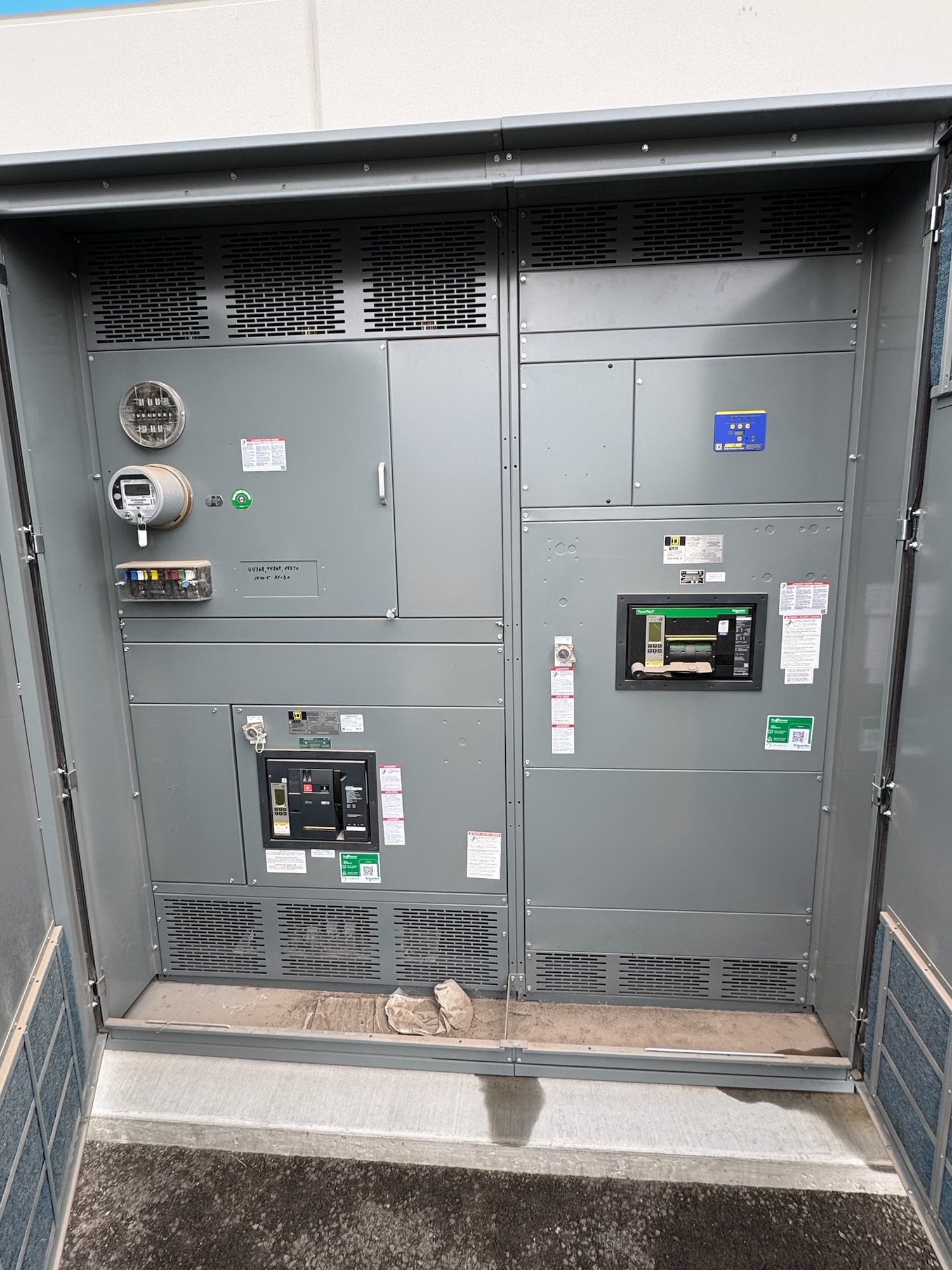
Start with the existing equipment record
Gather the nameplate data and drawings for the equipment being replaced, including manufacturer, model, serial number, voltage, phase, frequency, bus ratings, interrupting or withstand ratings, and enclosure details where available. Include one-line diagrams, control schematics, wiring diagrams, and prior modifications. Photos of nameplates, front and rear views, cable terminations, and compartment labels can help resolve gaps, but they do not replace verified engineering documents.
Clarify what failed and what remains usable. Identify the affected section, connected loads, protective devices, metering, control power, communications, and any adjacent equipment that must remain in service. Share fault findings and inspection reports if available. Do not assume a matching exterior or footprint means an electrical or mechanical replacement is interchangeable.
Define the outage and operating constraints
Describe the operating condition now: whether the gear is isolated, partially available, bypassed, or still carrying loads under an approved operating plan. State the required outage window, switching limitations, critical loads, temporary-power arrangements, and who controls authorization to de-energize and restore the system. These details help engineering and procurement evaluate the replacement scope without treating an emergency as permission to bypass normal controls.
Record site access and installation constraints that affect delivery and assembly. Useful details include indoor or outdoor location, room dimensions, door and aisle clearances, overhead limits, floor or handling restrictions, access hours, receiving arrangements, and whether existing cable entry and termination positions must be preserved. Provide target delivery dates and the required ship-to address in Georgia; transportation timing and equipment configuration must be confirmed for the specific order.
Resolve fit, function, and protection questions
Ask the responsible engineer to determine whether the replacement is a direct dimensional match, a modified arrangement, or a broader redesign. Confirm the required bus layout, incoming and outgoing connections, breaker or switch functions, neutral and ground provisions, compartment arrangement, instrumentation, and control interfaces. Document cable sizes and termination details, available space for bends, and any bus or conduit transitions that the installation plan must address.
Protection and system coordination need deliberate review, especially if the replacement changes device types, settings, interrupting capability, or available fault-current assumptions. Provide the current study and protective-device information when available, and identify any proposed changes for review. The project engineer and authority having jurisdiction determine applicable requirements and approvals. UL 891 applies to switchboard assemblies; it is not a blanket listing for medium- or high-voltage switchgear.
Make procurement decisions without guessing
For a quote, send the equipment records, one-line diagram, required functions and ratings, enclosure and environmental conditions, connection details, control and metering requirements, known deviations, and installation constraints. Identify what is mandatory versus open to engineering alternatives. Include the reason for urgency, requested delivery date, destination, and any separate testing, documentation, or packaging requirements so the proposal can address the actual need.
New equipment can be custom-built, and American-made components may be specified where appropriate. Do not assume a particular component, configuration, or assembly is in stock or that an expedited schedule is available. We confirm scope, component availability, build schedule, and shipping arrangements for each order. If records are incomplete, identify the unknowns and assign the engineer responsible for resolving them before release.
Keep safety and verification in the work plan
An urgent schedule does not change the hazards of electrical work. Qualified personnel must follow the facility’s approved isolation, lockout/tagout, absence-of-voltage verification, grounding, and arc-flash procedures, as applicable. Do not remove covers, connect cables, test, operate, or energize equipment based only on photographs or a proposed replacement arrangement. The site’s authorized personnel direct all field work and switching.
Before the new equipment is released for manufacture, the responsible parties should review and approve drawings, ratings, interfaces, and deviations. At the site, qualified personnel verify installation, connections, protection settings, control operation, and required inspection or testing under the approved commissioning plan. The engineer and authority having jurisdiction resolve applicable code and approval questions; neither a quote nor a manufacturer drawing substitutes for that review.
Coordinate handoff from order to restoration
Assign one project lead to coordinate engineering, purchasing, the electrical contractor, facility operations, and receiving. Confirm drawing approval responsibility, submittal milestones, freight access, unloading arrangements, and who will inspect equipment upon arrival. Track open technical questions separately from schedule decisions so an unresolved rating or interface does not become an installation-day surprise.
For a Georgia replacement, provide the delivery address, site contact role, receiving hours, access limitations, and the date the equipment must be available for the planned outage. Before requesting a quote, assemble the nameplate and drawing package, failure description, outage constraints, required functions and ratings, site dimensions, and target delivery date. That focused handoff gives the project team a concrete basis to evaluate a new replacement and confirm its scope and schedule.