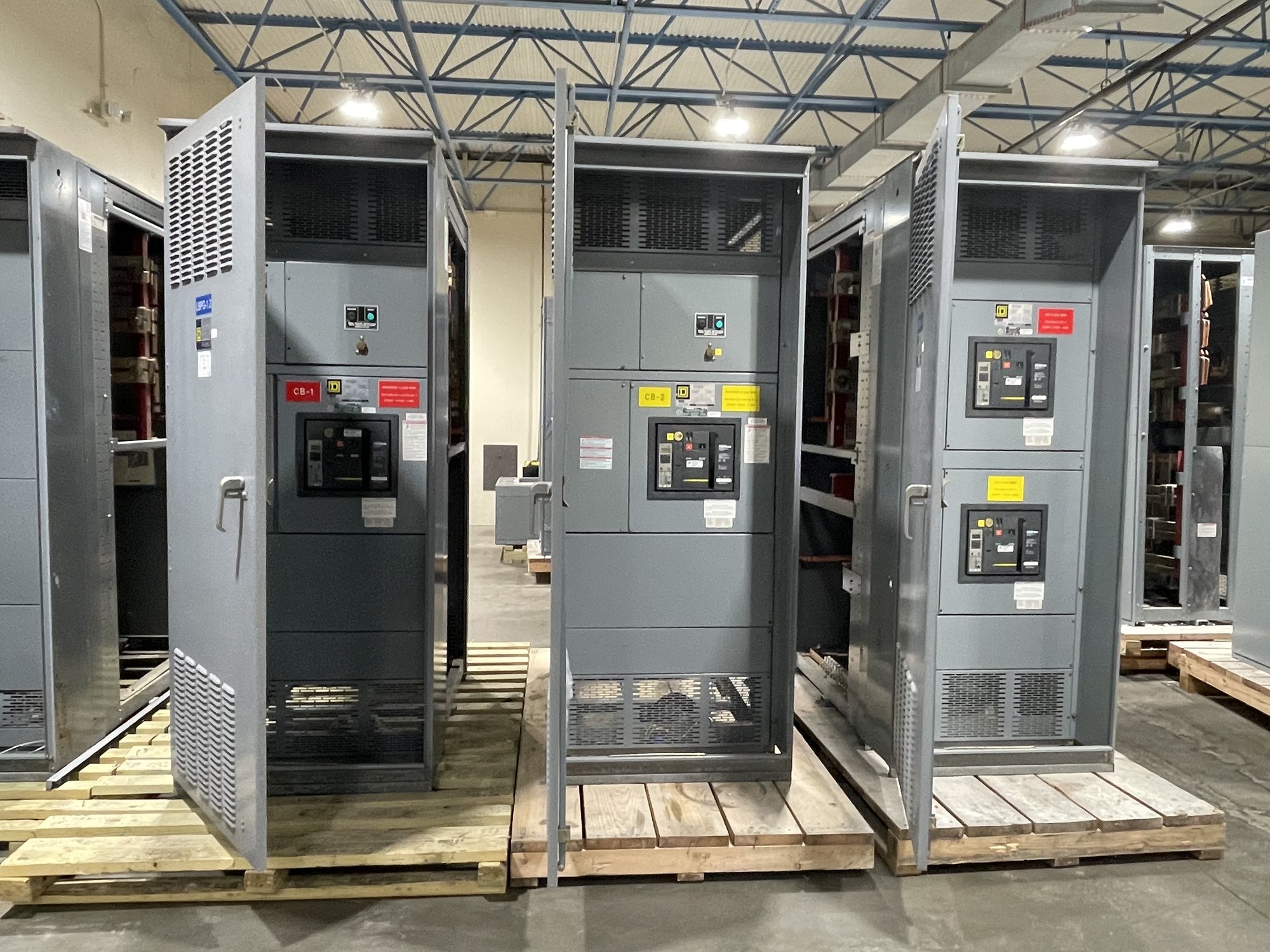
Map cleaning exposure before choosing an enclosure
A hose-down packaging room, a dry ingredient area and a utility space beside a production line can have very different exposure. Record where water is directed, whether cleaning uses foam or chemicals, how often sanitation occurs, and whether equipment faces splash, spray or direct washdown. Note nearby drains, floor slope and any locations where water can collect or rebound onto electrical assemblies.
Include the cleaning procedure, not just the room name, in the equipment specification. Ask sanitation and maintenance teams which surfaces are cleaned in place, what tools and pressures are used, and whether cleaning is performed while adjacent equipment remains installed. Those details help the project team assess location and enclosure requirements without assuming one rating fits every process.
Locate switchgear outside direct cleaning paths where practical
The most effective way to reduce washdown exposure may be to place switchgear in an electrical room or other controlled area rather than directly on the production floor. Consider feeder routes, voltage drop, access for operation and maintenance, and the space needed to install and remove sections. Longer conductors or remote operation can bring their own design and cost considerations, so evaluate location alongside the distribution plan.
When equipment must be near a wet process, review the layout with the project engineer and sanitation lead. Check for spray paths from hoses, overhead piping leaks, condensation, door openings and traffic that may carry water into a room. Protecting the equipment is not only an enclosure question: room drainage, barriers, equipment elevation and maintenance access can all influence the final arrangement.
Specify the exposure and construction details clearly
Describe the anticipated water exposure and cleaning agents, and identify the equipment location and orientation. State whether the assembly is indoors, whether it is sheltered, and what surfaces can be reached by spray. Ask the responsible engineer to determine applicable enclosure and installation requirements for the specific conditions; a general phrase such as “washdown rated” does not define the exposure or establish that an assembly is suitable.
Discuss corrosion concerns with the project team, including room humidity, chemical residue and the condition of nearby metals. Confirm door and access arrangements, conduit or cable entry locations, and how penetrations will be managed in the final installation. The specified enclosure, components and assembly details must be evaluated as a system for the intended application, rather than inferred from one material or feature.
Coordinate power distribution with production needs
Food production often depends on keeping selected lines operating while other areas are cleaned or maintained. Share the one-line diagram, load information, available fault-current data and intended feeder arrangement so the switchboard configuration can be developed around the distribution plan. Identify essential loads, spare capacity expectations and any planned production expansions, while leaving final ratings and protective-device selection to qualified engineering review.
Clarify whether controls, metering or other equipment will be housed in the assembly or located separately, and explain any interface requirements. Confirm who is responsible for upstream and downstream connections, field wiring and coordination with existing equipment. UL 891 applies to switchboard assemblies; it is not a blanket certification for medium- or high-voltage switchgear. Confirm the applicable product scope and documentation for the requested equipment.
Make procurement and delivery fit the plant schedule
For a useful quote, provide the project location in Georgia, drawings, electrical requirements, equipment-room dimensions and the intended washdown conditions. Include the cleaning method and chemicals, preferred equipment location, access constraints, requested configuration, delivery timing and any required submittal information. If some details are still under review, identify them as open items so the proposed scope and schedule can be based on confirmed information.
Coordinate delivery with site access, receiving capacity, construction sequence and the planned installation window. Confirm shipment configuration, unloading responsibilities and the route from the receiving point to the electrical room before equipment is released. We build new switchgear and UL 891 switchboard assemblies in the United States, with custom configurations and nationwide shipping; scope, availability and timing are confirmed for each order.
Close the specification loop before release
Before procurement approval, have the design team compare the proposed equipment location and enclosure details with the documented cleaning practices. Resolve mismatches between room drawings, cable entry plans, access clearances and sanitation procedures. Confirm that operations and maintenance staff can reach the equipment without exposing it to avoidable spray, and that installation details are reviewed by qualified personnel and the authority having jurisdiction where required.
Start by gathering the cleaning procedure, site plan, one-line diagram, equipment-room dimensions and target delivery window. Send those items with the project’s electrical and configuration requirements for a scope review and quote. A clear record of exposure and location gives the project team a practical basis for selecting equipment without over- or under-specifying protection.