Map loads by operational priority
Start with the functions that must remain available during a utility outage: dispatch and radio equipment, emergency lighting, security and access controls, critical receptacles, and systems needed to maintain occupied spaces. Identify loads that can be shed or delayed, such as selected comfort conditioning or nonessential outlets. The station’s operating plan—not a generic list—should determine which circuits receive standby power.
Give the electrical engineer a current one-line diagram, panel schedules, equipment data, and any planned building additions. Flag loads with motors, electronic power supplies, or substantial starting current, since their behavior can affect generator sizing and transfer sequence. Confirm whether each essential load is served from a dedicated panel, a transfer switch, or a distribution section designed for emergency service.
Coordinate generator and transfer equipment
Standby generation is a system, not just a generator nameplate. The design team needs the intended emergency load, starting sequence, available generator output, fuel arrangement, and transfer scheme to coordinate distribution. Determine whether the station uses one generator or multiple sources, whether loads transfer together or in stages, and which circuits may be shed when capacity is limited.
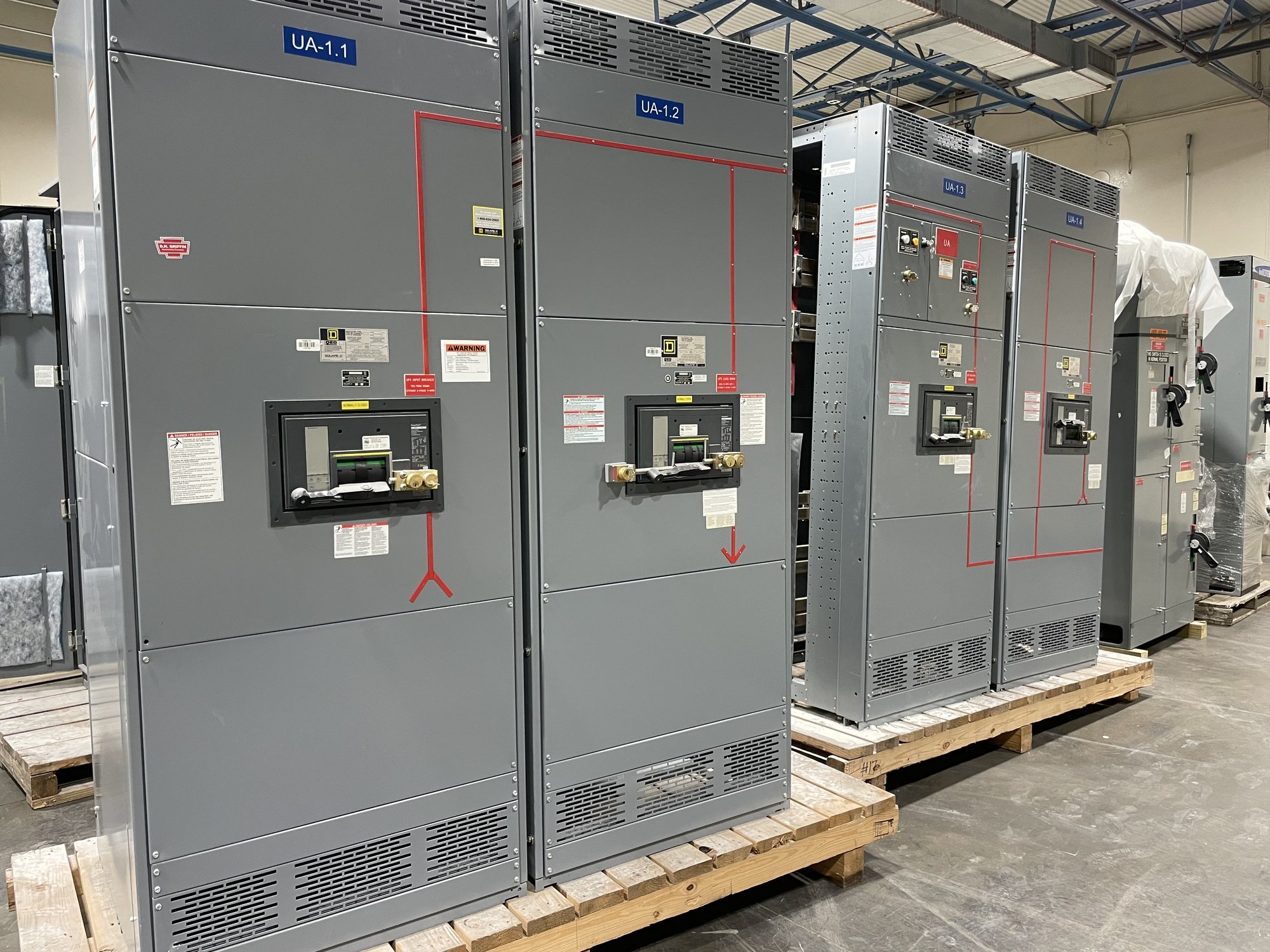
For a new switchboard, specify the service and emergency source arrangement, transfer equipment interfaces, breaker positions, and the locations where emergency and normal distribution meet. Confirm who is furnishing the generator, transfer switch, controls, and associated wiring. UL 891 applies to switchboard assemblies; it does not by itself establish a medium- or high-voltage switchgear listing or certify the complete standby system.
Plan for apparatus and fleet charging
Vehicle charging can change the station’s load profile substantially, especially when several apparatus bays may charge at once. Provide charger manufacturer and model data when available, input voltage, phase, current or power requirements, quantity, and anticipated operating schedule. Include likely future chargers in the planning discussion, but distinguish forecast loads from equipment included in the current project.
Ask the engineer to evaluate charging alongside generator capacity, service demand, and other station loads. Some charging may be designated nonessential during an outage, while other equipment may need a defined standby role; that decision belongs in the operating and engineering criteria. Identify charger locations, feeder routes, panel space, and any load-management controls so the switchboard layout supports the intended installation without assuming a particular charging strategy.
Check the service before fixing the scope
A service upgrade may be driven by added chargers, HVAC replacement, an expansion, or an existing distribution board with limited capacity or spaces. Gather utility service characteristics, existing equipment ratings and condition, measured demand if available, and the proposed load additions. The engineer and utility determine service requirements and acceptable fault-current and coordination assumptions; do not infer these from building size alone.
For a replacement or renovation, document the existing service entrance, available installation area, cable or conduit entry direction, feeder destinations, and any access restrictions. Establish whether work will be phased and how the station will remain operational during construction. These details affect section arrangement, connection provisions, and the project handoff, but final dimensions and electrical ratings must come from the approved design.
Define a buildable switchboard package
When requesting a quote, share the approved or current one-line diagram, project specifications, utility data, load schedules, generator and transfer-switch information, charger schedules, and the required delivery location in Georgia. Include requested main and feeder device details, metering needs, enclosure and access requirements, and any specified short-circuit or coordination criteria. Identify open design questions rather than treating estimates as final requirements.
Review the proposed configuration against the engineer’s documents before release: confirm circuit quantities, spare provisions, source arrangement, metering, cable entry, and interface responsibilities. We build new switchgear and UL 891 switchboard assemblies in the United States, with custom configurations and nationwide shipping. Component selection, availability, exact scope, and schedule are confirmed for each order; Georgia delivery planning should align with the site’s receiving access and construction sequence.
Close the loop before procurement
Before purchase, resolve who approves drawings, who supplies and connects each source, and what information the electrical contractor needs for installation planning. Coordinate submittal review with the engineer, utility, generator and charger suppliers, and the authority having jurisdiction. Their review establishes project-specific requirements; a quoted equipment configuration is not a substitute for that approval.
For a useful quote package, send the one-line, load and charger data, standby sequence, service information, site constraints, and target delivery window, then identify which items remain subject to engineering. This gives the team a clear basis to confirm a new switchboard configuration and delivery plan for the Georgia station before procurement proceeds.