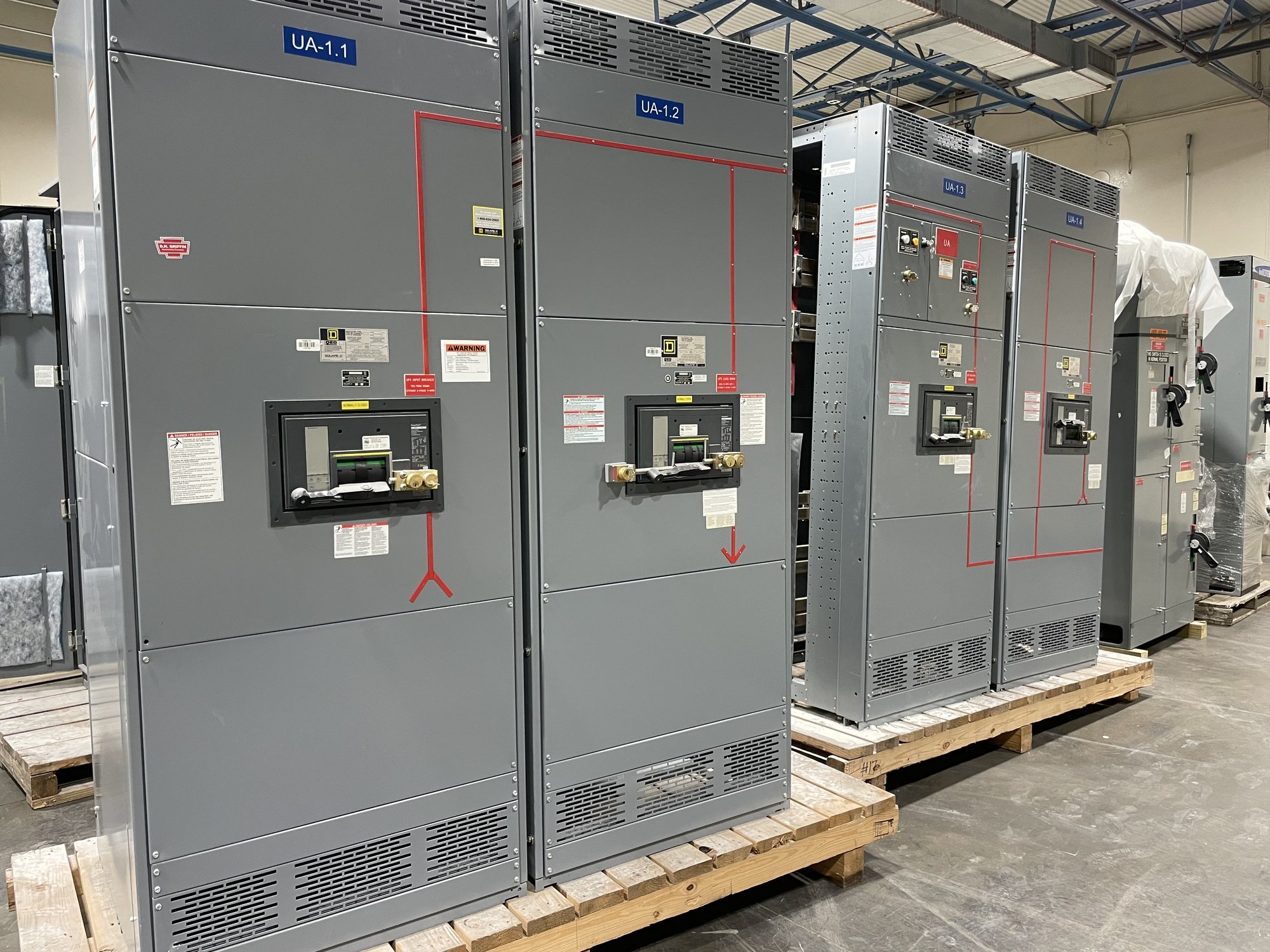
Set the FAT boundary in the specification
Start by identifying each assembly and section covered by the FAT, including lineup designations, project or purchase-order references, and any separately tested components. Clarify whether the scope includes a switchboard, control or metering functions, protective devices, interlocks, and furnished accessories. A boundary statement helps prevent gaps between factory checks, field installation work, and tests assigned to other suppliers.
The plan should distinguish routine manufacturer checks from project-specific demonstrations. Ask which drawings, approved submittals, standards, and purchase-order requirements govern acceptance, and how conflicts will be resolved. For UL 891 switchboard assemblies, identify the applicable assembly requirements without treating that standard as a blanket listing for medium- or high-voltage equipment. Confirm the exact equipment scope and evaluation basis during engineering review.
Define test procedures and acceptance criteria
A useful FAT plan names each test or inspection, its method, the equipment under test, and the result expected. Depending on the specified design, checks may include visual workmanship and nameplate review, wiring-to-drawing verification, mechanical operation, control circuit operation, and functional checks of specified interlocks or protective-device arrangements. Include only tests applicable to the furnished configuration and agreed project requirements.
State measurable acceptance criteria where the specification supports them, along with the governing drawing or requirement used to judge each result. Identify required test instruments or calibration records if the project calls for them. If a requested demonstration depends on external signals, customer-furnished devices, or conditions not available at the factory, decide whether to simulate, defer, or document that item before scheduling the test.
Agree on witness points before scheduling
Mark each activity as a manufacturer-performed check, a customer witness point, or a hold point requiring approval before work proceeds. For every witness point, name the decision-maker, required notice, attendance method, and what happens if a representative cannot attend. Remote witnessing may suit some reviews, but the parties should agree on camera views, access to readings, and how observations are captured.
Witness planning affects production and shipment coordination, so connect the test window to drawing approval, equipment readiness, and the project schedule. Procurement teams should confirm who can accept results and whether comments require a formal disposition. A missed witness is not automatically a failed test; the plan should establish the agreed alternative, such as review of records or rescheduling, without assuming a shipment release that has not been authorized.
Prepare records that prove what was checked
Specify the FAT record package before testing begins. It commonly identifies the assembly and serial or order references, test date, procedures followed, readings or observed results, instruments where relevant, participants, deviations, and final status. Tie each record to the approved drawing revision and test item so reviewers can trace evidence to the delivered configuration rather than a similar but different assembly.
Agree how discrepancies are recorded, assigned, corrected, and retested. The record should preserve the original observation and show its disposition; unresolved items should remain visible with an owner and agreed next action. Set expectations for document format, review, and approval, and identify which records are needed before shipment release. A completed checklist without traceable results may not answer the project’s acceptance questions.
Coordinate logistics with Georgia delivery
For a Georgia project, connect FAT timing to the destination, receiving constraints, and installation sequence. Confirm the delivery address, site access or unloading limits, requested arrival window, and whether the equipment will move directly to the jobsite or another receiving point. These details help coordinate packaging and shipment planning, but a requested date is not a shipping guarantee; availability and timeline are confirmed for each order.
Decide who reviews the final test package and how approved records reach the installation and commissioning teams. Identify any field tests, terminations, external connections, or startup checks that remain outside the factory scope. Clear separation lets the site team plan qualified personnel and required procedures without mistaking a factory demonstration for completed installation or commissioning.
Share project details when requesting a quote
For a quote, provide the equipment type and lineup schedule, one-line diagram, approved or current drawings, applicable specifications, requested FAT items, witness or hold points, and required records. Include the project schedule, Georgia delivery location, receiving constraints, and any approval milestones. If documents are not final, identify open decisions so the proposed scope can state assumptions instead of implying an unconfirmed configuration.
Ask for a proposed FAT scope that lists included checks, exclusions, customer inputs, witness arrangements, documentation, and shipment-release steps. Review it with engineering, procurement, and the responsible site team before approval. This early alignment gives the manufacturer and project stakeholders a practical basis to coordinate a project-specific test, resolve exceptions, and prepare a documented handoff before the new switchgear ships.