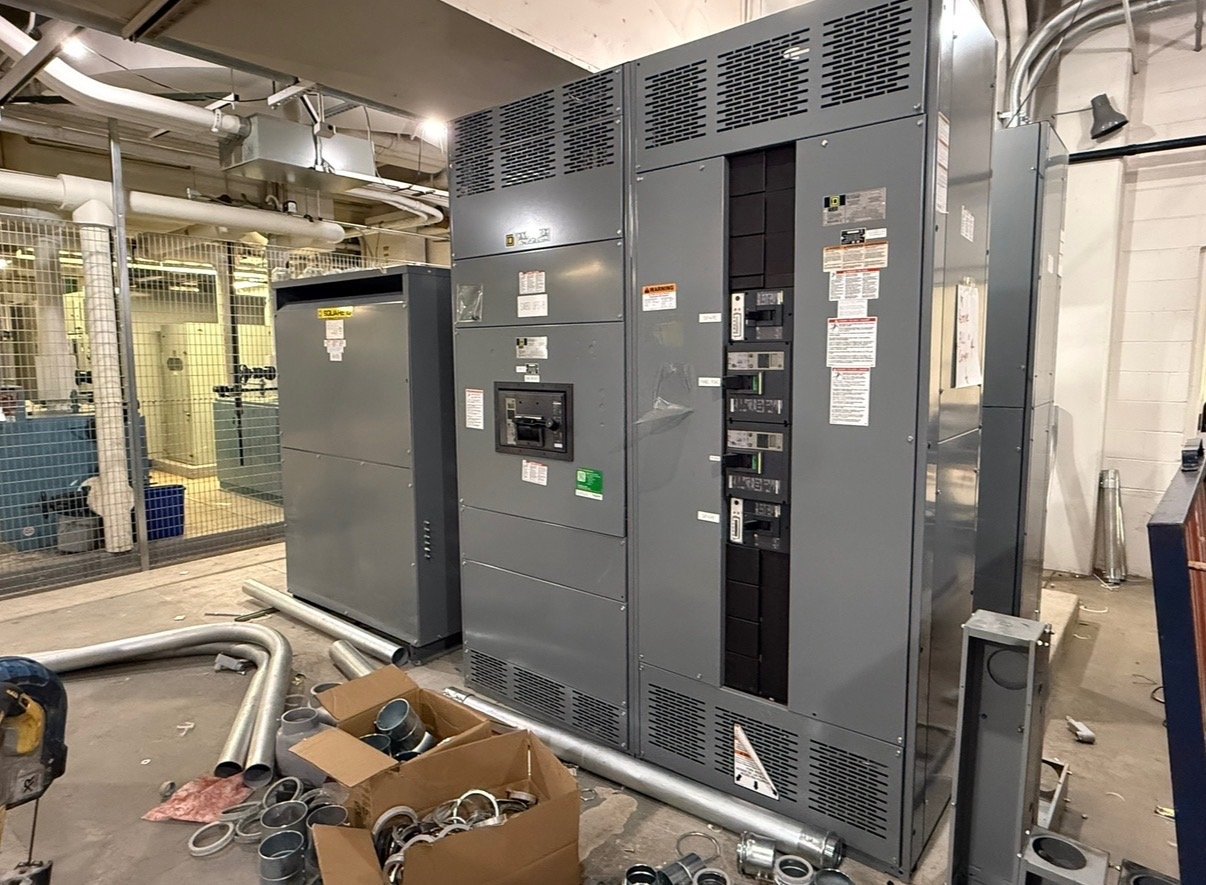
Start with the electrical basis
Copper has high electrical conductivity, but that fact alone does not determine the required bus size or equipment rating. The design must account for system voltage, continuous current, available fault current, protective-device characteristics, enclosure conditions, and the applicable equipment standard. Have the engineer of record establish the required ratings and confirm them against the project documents before selecting a construction.
When requesting a quote, provide the one-line diagram, system voltage and phase, main and feeder ratings, and the specified short-circuit or withstand requirements. Identify whether the project requires a switchboard assembly built to UL 891 or another equipment category. UL 891 applies to switchboards; it is not a blanket listing for medium- or high-voltage switchgear.
Conductivity does not replace thermal design
Copper’s conductivity can support a compact conductor design compared with a less conductive material, but actual dimensions depend on the full thermal and electrical design. Current density, bus arrangement, ventilation, enclosure temperature, proximity effects, and the way conductors share current all matter. A copper designation is not, by itself, evidence that a particular bus can carry a specified load.
Avoid specifying bus only by a preferred cross-section or an assumption that copper permits a smaller enclosure. The manufacturer and responsible engineering team need the assembly configuration and operating requirements to evaluate dimensions and clearances. Confirm any limits on conductor temperature, ambient conditions, or space with the project engineer and applicable authority.
Define the copper construction
A clear specification identifies the bus material and the locations where copper is required. State whether the requirement applies to phase bus, neutral bus, ground bus, or all of them, and note any separate requirements for device connections or transition sections. If the project distinguishes between main and distribution bus, show those boundaries on the drawings or equipment schedule.
Also identify any required conductor form, finish, plating, insulation, or color coding rather than relying on the word copper to imply these details. Such requirements can affect interface dimensions, termination preparation, and assembly coordination. Where the design permits alternatives, state the performance and dimensional constraints that govern acceptance so the quotation can reflect the intended construction.
Treat joints as engineered interfaces
Bus joints are important electrical and mechanical interfaces. Their design depends on conductor geometry, contact surfaces, fastening arrangement, access for assembly, and the forces associated with the specified fault duty. Joint locations can also affect compartment layout and the space available for cable terminations or maintenance access.
For a replacement or extension, provide the existing bus dimensions, connection orientation, hole pattern, bus spacing, and verified equipment information. Photographs can help explain the layout, but they do not replace measured dimensions or approved drawings. Do not assume that copper bus from different equipment families will mate directly; have qualified personnel verify the interface and the complete assembly design.
Check compatibility across the equipment
Copper bus must coordinate with the switchboard’s devices, supports, insulation, barriers, enclosure, and incoming and outgoing connections. Changes in conductor width or thickness can alter clearances, support locations, and connection reach. A specified bus material cannot be evaluated independently from the switchboard arrangement and the ratings of the complete assembly.
For a project tied to existing equipment, share manufacturer and model information when available, approved drawings, device schedules, and the intended connection points. Flag restrictions such as limited room, top or bottom entry, cable type, conduit approach, or a required transition to other equipment. The design team should resolve any conflicts before fabrication and installation planning.
Make the quote and handoff specific
For a useful quotation, send the one-line diagram, equipment schedule, required bus material by section, system ratings, enclosure and access requirements, and any project specifications or approved drawings. Include the site location in Georgia, requested delivery window, receiving constraints, and whether unloading or staged delivery needs coordination. Exact scope, availability, and schedule are confirmed for each order.
Before release, review the submittal for bus locations and material, dimensions, joint and termination interfaces, device arrangement, ratings, and drawing revisions. Confirm who is responsible for engineering approval, field measurements, installation, and acceptance review. Send the current project documents and a marked list of copper-bus requirements with your quote request so the proposed assembly can be evaluated against the actual design and delivery plan.