Start with the service entrance basis
Before selecting an assembly, establish the electrical service information that governs the project: service voltage and phase, available fault current, utility requirements, and the calculated building load. The electrical engineer should determine demand using the applicable project criteria and coordinate service details with the utility and authority having jurisdiction. These inputs shape equipment ratings and configuration; they should not be inferred from a tenant count or building area alone.
For a quote, share the one-line diagram or current electrical plans, service characteristics, requested main-device arrangement, and any known fault-current or utility constraints. If the design is still developing, identify which values are confirmed and which remain provisional. That distinction helps define a quote around the current design without treating an unverified rating or configuration as final.
Allocate capacity to tenants deliberately
Tenant load allocation affects feeder sizing, distribution space, metering arrangements, and the capacity reserved for future occupancy. A project may serve retail suites, offices, restaurants, or other uses with different demand profiles and operating schedules. The engineer should identify the planned tenant loads and the method used to establish demand, then determine how common-area equipment and house loads fit alongside tenant service.
Clarify whether the project calls for individual tenant breakers, provisions for metering, spare positions, or separate distribution for landlord loads. Ask who supplies metering equipment and which interfaces belong in the switchboard scope. Space for future tenants can support later changes, but spare ways do not establish that the service has spare capacity; the load calculation and equipment design must account for the intended expansion.
Coordinate protection, ratings, and layout
The main device, tenant feeders, protective-device types, and interrupting ratings need to align with the engineered system. Provide the available fault-current information and requested device data so the proposed assembly can be reviewed against the design. If selective coordination, ground-fault protection, or other protection criteria apply, identify them in the specification and one-line rather than assuming a standard arrangement will satisfy the project.
Building conditions also affect the physical configuration. Share the electrical room dimensions, access path, working-space constraints shown in the plans, cable entry direction, and any restrictions on equipment section size. Confirm whether the project expects bottom or top connections and how feeders will route. Final equipment layout and ratings require review by the responsible electrical engineer and relevant authorities.
Define the switchboard scope
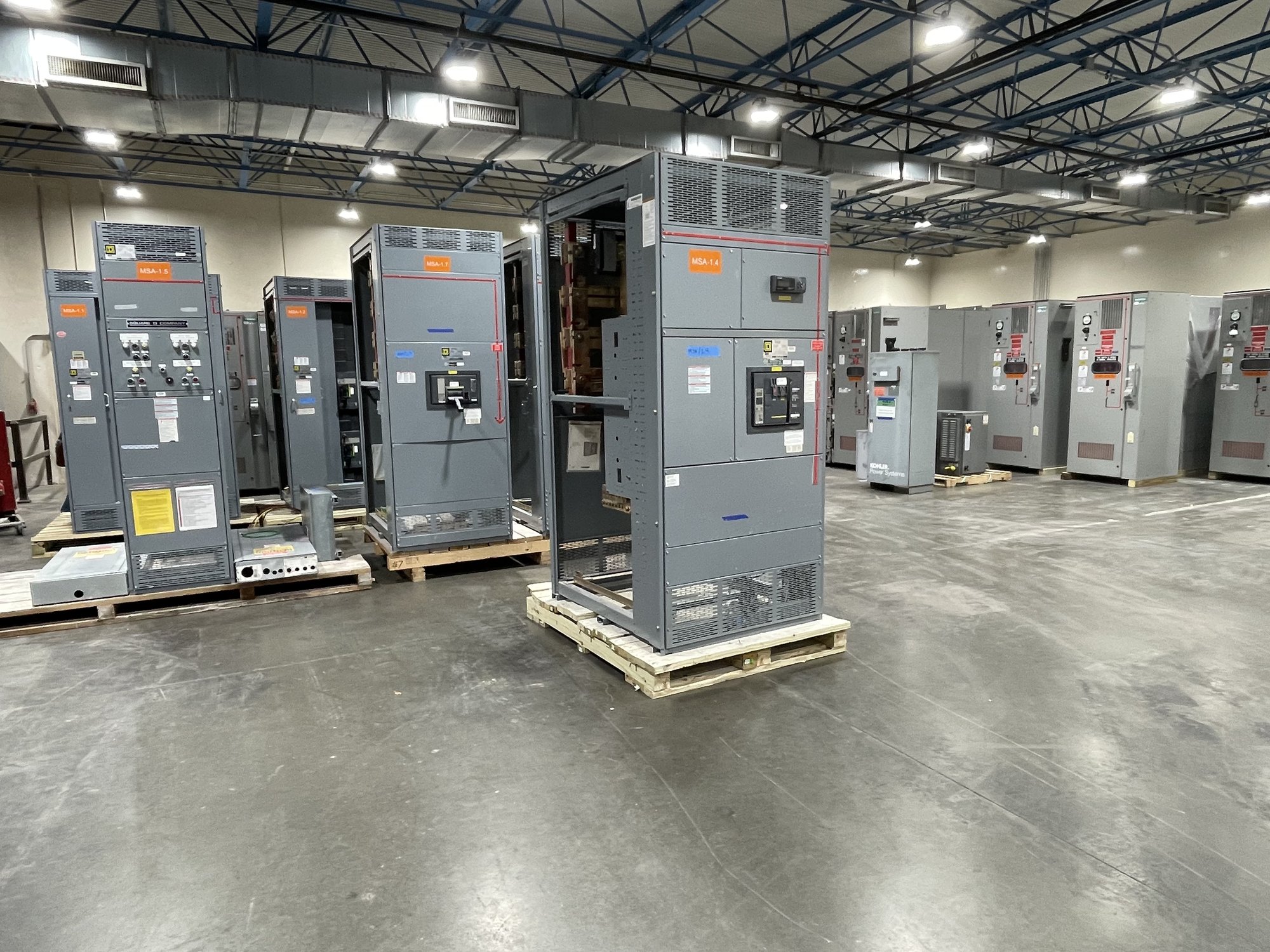
UL 891 applies to switchboard assemblies. If the project specification calls for a UL 891 switchboard, identify that requirement clearly and provide the applicable drawings and configuration details for review. It is not a blanket listing for medium- or high-voltage switchgear, so describe the actual equipment class and service requirements rather than applying the standard broadly to every component or system.
A complete scope should distinguish the switchboard assembly from utility-owned equipment, transformers, downstream panelboards, field wiring, and other work by separate trades. Note required accessories, control or metering interfaces, labeling information, and drawing submittals. Reviewing these boundaries early helps the contractor and purchasing team compare proposals on a consistent basis and identify exclusions before release.
Plan procurement around project maturity
A dependable equipment order starts with a coordinated design package. Before release, verify the tenant schedule, load calculations, service data, one-line, device schedule, room layout, and specification revisions. Changes to tenant use or service requirements after approval can affect configuration and schedule, so record the design revision that governs the quotation and the submittal review.
We manufacture and build new equipment in the United States using American-made components, and we can develop custom-built configurations for project requirements. Component availability and lead time depend on the selected design and are confirmed for each order. For purchasing decisions, ask which design inputs remain open, what review is required before production, and how a requested revision would be evaluated.
Coordinate delivery and project handoff in Valdosta
Georgia delivery can be planned around the project’s receiving conditions, but service coverage, shipment scope, and timing are verified individually. Share the Valdosta job location, site access restrictions, receiving hours, unloading responsibility, storage conditions, and target installation sequence. Confirm who will receive the equipment and how the contractor will protect it between delivery and installation.
For a project-specific quote, provide the latest one-line and equipment schedule, service and fault-current data, tenant and house-load breakdown, required standard, room constraints, desired accessories, and delivery requirements. Identify the engineer responsible for design approval and the purchasing contact for scope review. With those details, the project team can confirm the proposed assembly, unresolved inputs, and delivery plan before equipment release.