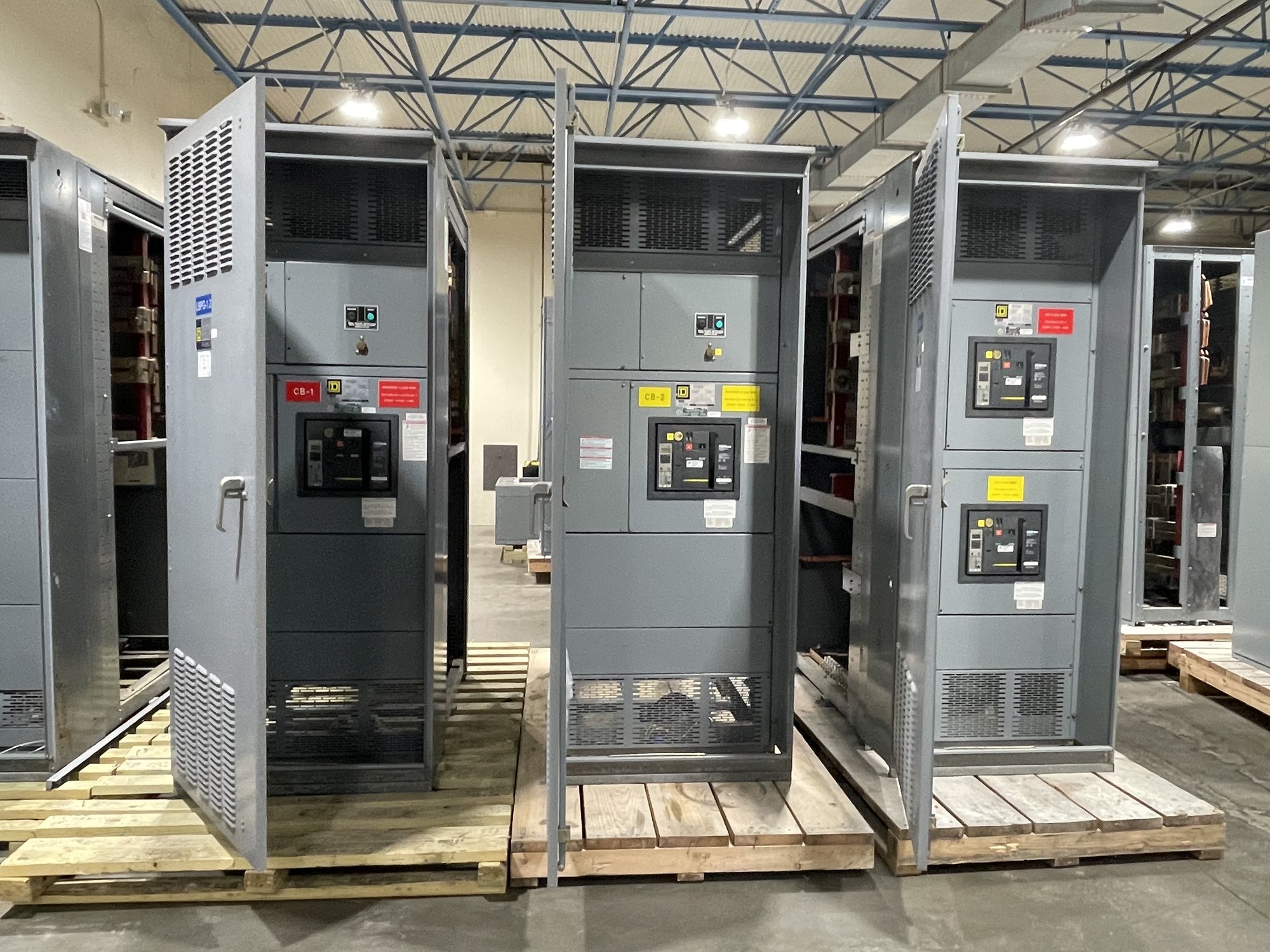
Start with the building’s service plan
For an office, retail property, medical facility, or other commercial building, the first specification question is what electrical service the project requires—not simply which gear is available. Share the utility service information, one-line diagram, system voltage and phase, anticipated load, and whether the equipment serves a new building, an expansion, or a replacement. These details help establish the equipment type and configuration to quote without assuming the design.
Also identify the loads that affect capacity planning, such as HVAC equipment, elevators, lighting, tenant spaces, kitchen equipment, or charging infrastructure. If the owner expects those loads to change, provide the known plans and the engineer’s assumptions. Future demand should be evaluated by the project’s qualified electrical engineer; it should not be addressed through an unverified capacity allowance.
Plan for additions without overcommitting
Commercial properties often change after the initial buildout as tenants, equipment, and operating needs evolve. Tell us whether the project anticipates additional feeders, tenant distribution, new mechanical loads, or a future building phase. Where the approved design calls for it, a switchboard arrangement may be configured with defined sections or provisions for later work. The drawings must make clear what is included now and what remains future scope.
Ask the engineer to identify the intended expansion approach and its limits before procurement. Future additions may depend on available space, bus and protective-device ratings, fault-current conditions, coordination, and the final service arrangement. A future provision is not a substitute for checking the complete system when the addition is designed. Review any proposed changes with the engineer and the authority having jurisdiction.
Match equipment to the project documents
A useful quote package includes the latest one-line diagram, equipment schedule, specifications, available fault-current information, and any required control or metering details. Include the main and feeder device requirements, enclosure and access conditions, incoming conductor arrangement, and installation location. If documents conflict or remain preliminary, identify the open items rather than treating an early drawing as final. Clear inputs reduce avoidable revisions during review.
UL 891 applies to switchboard assemblies. It does not establish a blanket listing for medium- or high-voltage switchgear, and it should not be used to describe equipment outside its scope. Confirm the required equipment classification, ratings, and documentation with the project engineer and applicable authority. We can review the requested configuration and confirm the specific assembly scope and available documentation for the order.
Coordinate procurement and delivery in Georgia
For Peachtree City projects, delivery planning should follow the construction sequence, not just the purchase date. Share the jobsite location, receiving hours, unloading arrangements, access restrictions, and the date the electrical contractor expects the equipment. Note whether the gear goes directly to the site or to another receiving point. Georgia service coverage, shipment details, equipment availability, and schedule are verified for each project; no delivery date should be assumed before confirmation.
Procurement teams can help keep the order aligned by naming the drawing approver, listing required submittal information, and identifying the deadline for approved-for-construction documents. Confirm who will review dimensions, access and maintenance clearances, conductor entry, and field interfaces. The contractor should verify site conditions and handling plans before shipment, while the project team resolves design comments through the established approval process.
Define the handoff before release
Before equipment release, reconcile the approved submittal with the purchase scope: device quantities and types, ratings, metering, accessories, enclosure details, and any specified labels or documentation. Record which party supplies connected equipment, conductors, and field work. This scope check helps prevent assumptions about items that may appear on a drawing but are not included in the order. Confirm changes through documented revisions.
Share the project’s current one-line diagram, equipment schedule, anticipated future loads, site delivery constraints, and required submittal date when requesting a quote. Identify unresolved engineering decisions and the person authorized to approve them. With those inputs, we can confirm the proposed new equipment scope, availability, project-specific Georgia delivery arrangements, and schedule for the order. Have the project engineer review the final configuration before procurement and installation proceed.