Define the expansion before selecting equipment
Start with the change the facility needs to make: a new production line, added process capacity, a building extension or replacement of equipment serving an existing area. That distinction affects whether the project needs a new service section, distribution switchboard, feeder equipment, or a coordinated combination. Share the affected areas and the intended division between existing and new loads so the equipment scope can be evaluated against the actual project.
A useful first document is a one-line diagram showing the existing source, major distribution points and proposed loads. Include available fault-current information, system voltage and phase, grounding arrangement, and any known changes to the utility service. If the diagram is preliminary, identify assumptions and open decisions rather than treating estimates as confirmed design values.
Coordinate feeder requirements with production planning
Production-line feeders should be considered alongside equipment schedules and the physical route to each line. For each major load, identify the connected equipment, expected operating conditions, nameplate data when available, and whether motors, drives, heating loads or process equipment may affect the distribution design. The project engineer determines conductor sizing, protection and coordination; the switchgear package needs the approved requirements and interface points.
Ask whether the expansion will be installed in stages, whether future line additions are planned, and which loads must remain in service during tie-ins. These answers can influence section arrangement, feeder provisions, cable access and the boundaries between new and retained equipment. Do not assume spare capacity or usable space in an existing lineup; verify both against drawings and field conditions before procurement.
Choose an assembly suited to its electrical role
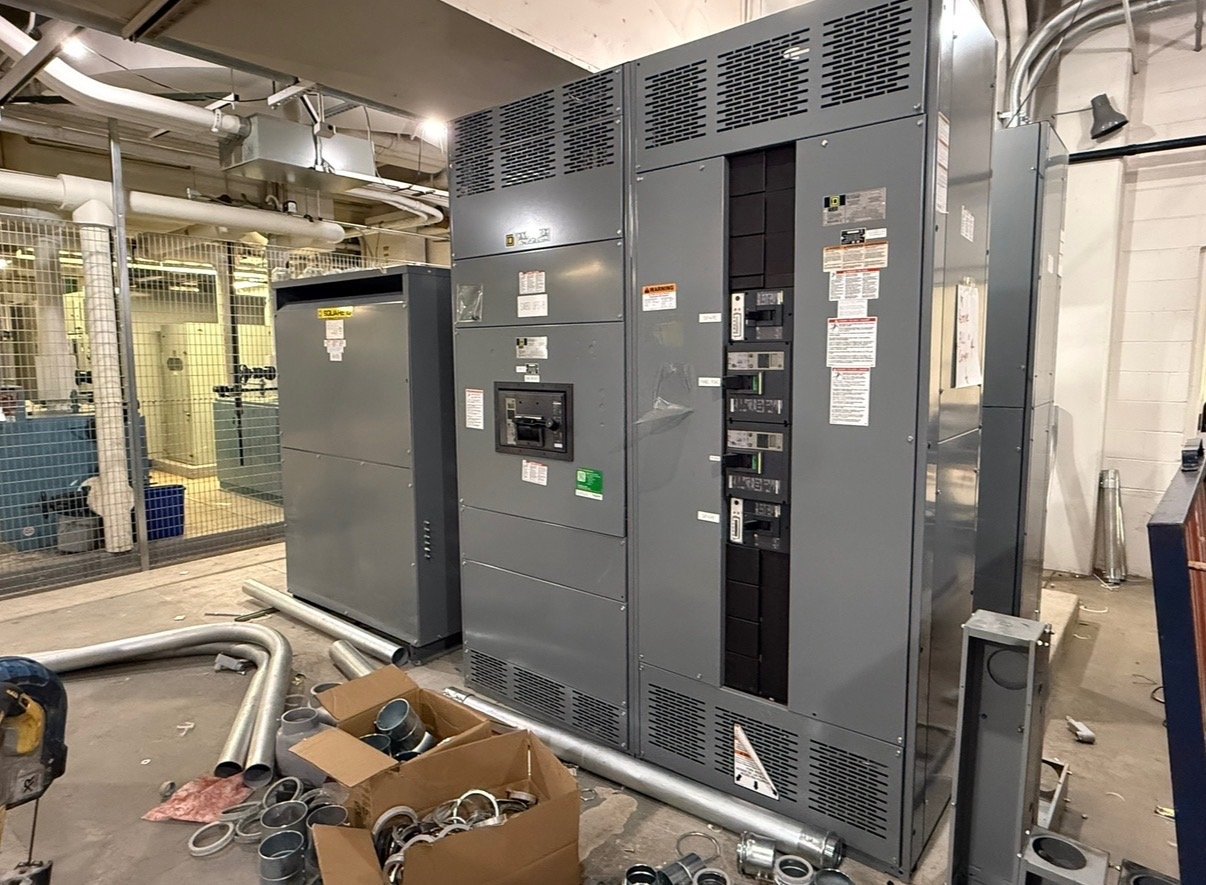
For low-voltage distribution, a UL 891 switchboard assembly may fit the project when its construction and ratings match the engineered application. UL 891 applies to switchboards; it is not a general listing for medium- or high-voltage switchgear. If the facility has a medium-voltage service or distribution scope, identify that equipment separately and confirm the applicable standards, interfaces and approval path with the project engineer and authority having jurisdiction.
The specification should state required voltage, continuous current, short-circuit rating, service conditions, main and feeder device functions, metering needs, control requirements and cable entry preferences. Confirm whether the design calls for a main device, multiple mains, tie provisions or a particular bus arrangement. Ratings and configuration are established from the site design, not inferred from a facility type or production process.
Resolve plant layout and installation constraints
Manufacturing buildings often have limited electrical-room space, active material-handling routes or production schedules that restrict access. Provide room dimensions, door and aisle clearances, equipment orientation, cable approach, floor or housekeeping-pad details, and any known rigging limitations. These inputs help establish a practical lineup arrangement and identify questions that need resolution before the equipment is built.
Document environmental conditions that may affect enclosure selection, including indoor or outdoor placement, dust, moisture, temperature and exposure to process areas. Also identify arc-flash study or coordination-study requirements, instrumentation, communications interfaces and control wiring expectations. Engineering review and authority approval remain part of the project design; equipment details should be checked against those decisions before release.
Make procurement and delivery information usable
For a quote, provide the latest one-line diagram, equipment schedule, specification, site location in Peachtree City, requested quantity, target ship window and current engineering status. Note the required ratings, lineup dimensions if established, incoming and outgoing cable directions, preferred documentation, and any customer-furnished devices or interface points. Mark unresolved items clearly so the scope, availability and schedule can be confirmed for the order rather than assumed.
We manufacture and supply new equipment in the United States, with American-made components and custom-built configurations available according to the confirmed scope. Georgia delivery can be coordinated with the project’s receiving location and installation sequence. Share delivery access, unloading arrangements, site receiving hours and whether equipment must arrive in planned stages; shipment timing and configuration are confirmed for each order.
Carry a clear package through project handoff
Before release, align the approved drawings, ratings, feeder schedule, device functions, labels, control interfaces and physical dimensions with the project team. Identify who will review submittals and resolve technical comments, and keep the design basis consistent across electrical, mechanical, construction and production stakeholders. Changes to loads, utility data or room layout after approval can affect the equipment scope and should be communicated promptly.
To begin a Peachtree City manufacturing expansion quote, assemble the one-line, load and feeder information, room constraints, required equipment functions, project milestone and delivery details. Flag what remains preliminary and who will provide the final engineering values. With those inputs, the equipment package can be scoped around the site’s production needs and the open decisions can be addressed before procurement.