Build the load picture around fleet duty
A charger count alone does not establish the required electrical service. Identify each vehicle group, charger input, anticipated charging duration and the hours when vehicles must return to service. Shuttle buses with overnight dwell, daytime service vehicles and ground-support units working multiple shifts can create very different demand profiles, even when the charger nameplates appear similar.
For a useful preliminary equipment scope, gather charger manufacturer and model information, input voltage and phase, rated current or power, planned quantity, and any charging-management assumptions. Note which loads can be scheduled or limited and which must be available on demand. The project engineer can use this information with utility data and site conditions to develop the load calculation and distribution approach.
Check service capacity before fixing equipment scope
Existing airport electrical infrastructure may serve terminals, hangars, maintenance shops, lighting, baggage systems and other critical loads. The remaining capacity at a proposed charging location cannot be inferred from a panel label or an old one-line diagram alone. Confirm the serving transformer and upstream distribution details, available fault-current information, service characteristics and any utility requirements through the responsible electrical professionals.
Compare the projected charging demand with measured or documented facility loads and the utility’s available service capacity. If capacity is constrained, the design team may evaluate staged deployment, managed charging, a different feeder arrangement or service upgrades. These decisions affect switchboard configuration, feeder provisions, protection coordination and procurement timing; they should be settled with the engineer and utility before equipment ratings are specified.
Make charging windows part of the electrical plan
Airport operations set practical limits on when vehicles can charge. A fleet may return in waves, share a limited number of parking positions, or need vehicles ready before the first departures. Map vehicle arrival and departure times, required state-of-charge targets, charger dwell time and any maintenance or seasonal operating changes. This gives the engineering team a realistic basis for evaluating coincident demand rather than assuming every charger operates continuously at full input.
If an energy-management system will sequence or limit chargers, establish who supplies it, which equipment it communicates with and what happens during loss of communications or a control-system outage. The electrical distribution design still needs clearly defined loads and protective-device requirements. Do not rely on a control strategy as a substitute for confirming service capacity or determining the ratings required by the final engineered design.
Provide for growth without guessing at future demand
Fleet conversion is often phased, but spare capacity should be an intentional design choice rather than an assumption. Identify the anticipated charger phases, likely parking-area additions and any vehicle types under consideration. Ask the engineer to distinguish physical space for future devices from electrical capacity, bus provisions and upstream service capacity; these are separate considerations and may carry different cost and schedule implications.
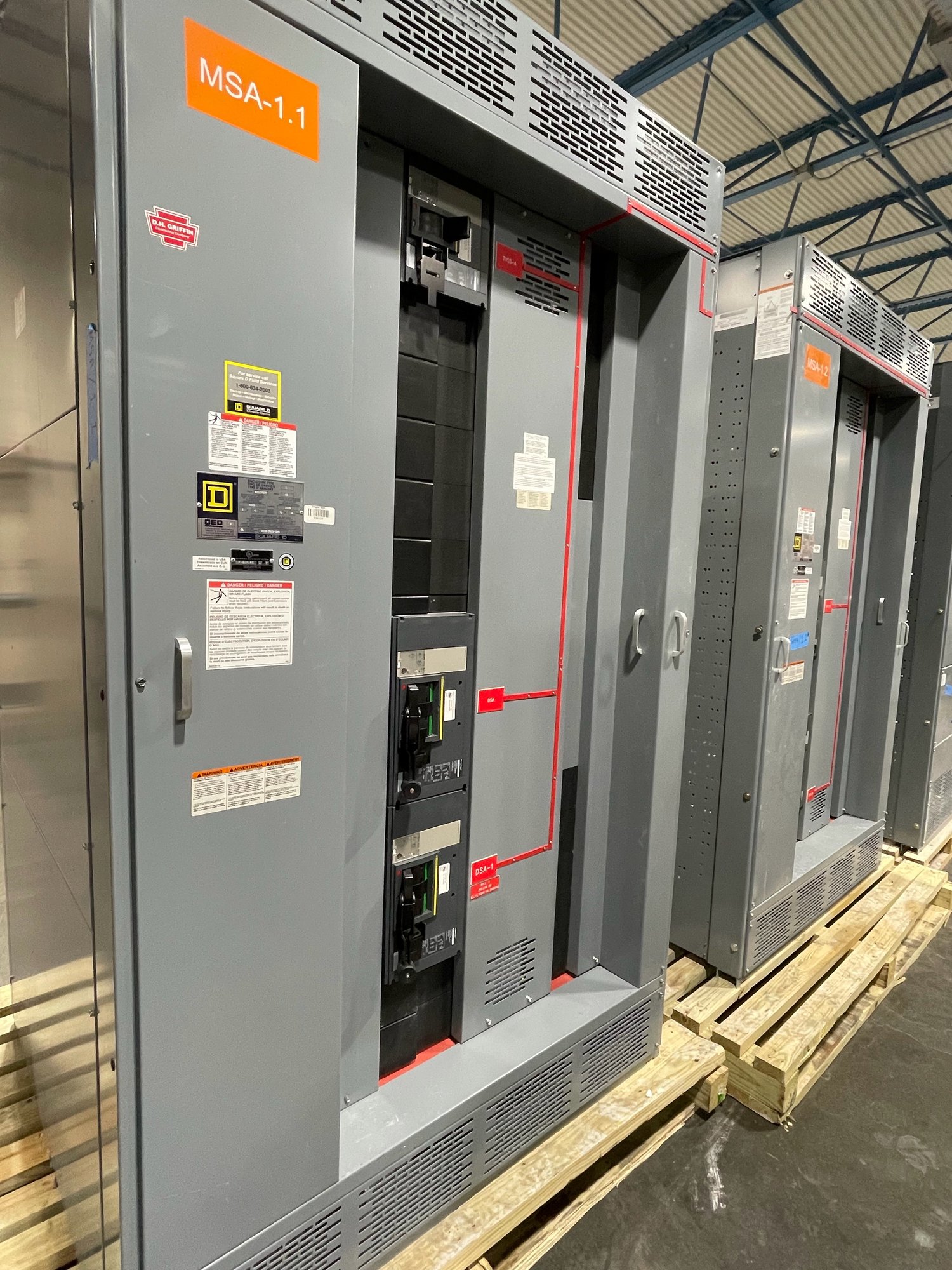
A custom-built switchboard assembly can be scoped around documented project requirements, including feeder arrangement, available distribution space and the planned connection points. Final provisions depend on the design, applicable ratings and approved drawings. Share the likely expansion sequence early so the equipment scope can be reviewed before procurement, rather than discovering that a later phase requires changes to upstream distribution or site infrastructure.
Coordinate airport interfaces and procurement details
Charging projects can cross boundaries between airport facilities, fleet operations, electrical contractors, charger vendors, utilities and engineering consultants. Establish who owns the charger disconnects, feeder conductors, communications interface, metering and site civil work. Confirm equipment location, access for installation and maintenance, environmental conditions and any airport-specific review or construction constraints that affect enclosure or layout requirements.
For a quote, provide the current one-line diagram, load schedule, service and fault-current information when available, charger data sheets, proposed quantity and phasing, preferred delivery point, and required drawing or submittal milestones. Include known site constraints and the project schedule, but treat availability and timing as items to confirm for the specific order. We manufacture new equipment in the United States and can ship to project sites in Georgia; delivery coordination depends on the confirmed scope and destination.
Turn fleet plans into a reviewable equipment package
UL 891 applies to switchboard assemblies, not as a blanket listing for medium- or high-voltage switchgear. The equipment type and applicable requirements must match the project design. Have the engineer review ratings, protection, coordination, grounding, utility interfaces and the authority having jurisdiction’s requirements before release and installation. Confirm the final drawing package and responsibility for field verification with the project team.
Before requesting pricing, assemble the fleet duty schedule, charger specifications, service information, phasing plan and site delivery constraints in one package. Identify what is confirmed and what remains under engineering review. That preparation helps define a practical switchboard scope for airport charging today while giving the team a clear basis to evaluate later fleet growth.