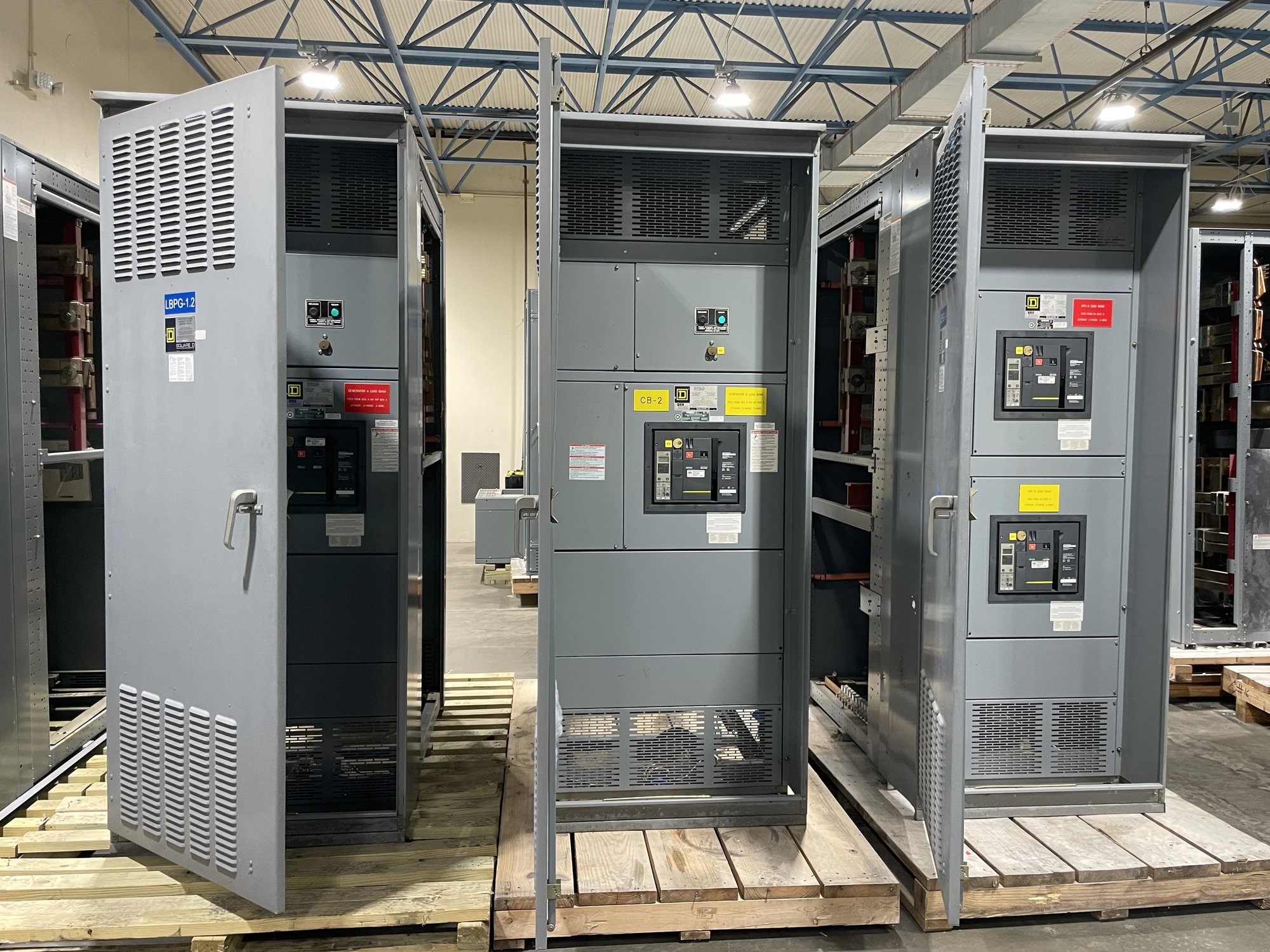
Confirm what the 800-amp rating applies to
Start by identifying the equipment type and the point in the distribution system where the 800-amp rating applies. A project may call for a switchboard serving a service entrance, a distribution section, or a replacement assembly coordinated with existing equipment. Specify the system voltage, phase and wire configuration, and distinguish the main bus rating from the ratings of individual feeders.
An 800-amp designation does not establish the assembly’s interrupting capability, fault withstand, enclosure dimensions or suitability for a particular installation. Those requirements depend on system conditions, protective-device selection and applicable project review. Provide the one-line diagram and the available equipment schedule, if available, so the manufacturer can develop a configuration around the intended application rather than infer critical details.
Choose a bus arrangement that fits the distribution plan
Describe how power enters and leaves the assembly, including the intended main device, feeder count and feeder ratings. A single-main arrangement may suit a straightforward distribution point, while a design with multiple sections or mains may be needed to support separate loads or operating plans. The one-line diagram should show normal power flow, sources, ties and any planned future feeders.
Bus material, section layout, connection orientation and space for cable terminations are practical specification points, not minor preferences. Confirm whether conductors enter from the top or bottom, where the assembly must connect to adjacent equipment, and which sections need accessible working space. Provide room dimensions and site constraints early; available configurations depend on the electrical design and physical requirements.
Coordinate protective devices with the fault study
List the required main and feeder protective devices, their ampere ratings, poles and functions, and identify any project requirements for adjustable settings or accessory features. Device selection should coordinate with downstream equipment and the protection strategy established by the responsible electrical engineer. Breaker or fuse selection cannot be determined from the 800-amp bus rating alone.
Share the available fault current at the proposed installation point and the basis for that value, such as a utility contribution or an approved short-circuit study. The assembly’s required short-circuit rating must be evaluated against that available current and the selected protective-device combination. If study results are pending, identify that clearly in the quote request so assumptions and unresolved engineering inputs can be documented rather than treated as confirmed.
Define construction and project interfaces
Specify indoor or outdoor use, enclosure requirements, access needs and any environmental conditions that affect construction. Identify whether the assembly must align with existing gear, conduit routes, cable sizes or a defined room layout. Include drawings, photographs or dimensions only as supporting information; final fit and electrical interfaces should be checked against approved project documents.
For a switchboard assembly, UL 891 may be relevant to the specified product scope. It is a switchboard standard and does not establish a blanket listing or approval for medium- or high-voltage switchgear. State the requested equipment classification and documentation in the procurement package, then have the responsible engineer and authority having jurisdiction review the complete application and submittals.
Make the quote request decision-ready
For a useful quote, provide the one-line diagram, system voltage and configuration, 800-amp bus requirement, main and feeder device schedule, available fault current, and required short-circuit rating. Add enclosure and entry preferences, dimensions, connection details, project location in Georgia, requested delivery window and any drawing or submittal milestones. Identify what remains unknown and who will resolve it.
These details let the manufacturer assess a custom-built configuration, confirm component availability and establish an order-specific production and shipping plan. American-made components and nationwide shipping can support Georgia projects, but exact scope, availability and timing are confirmed for each order. Coordinate the proposed delivery sequence with site access, receiving capacity and the construction schedule; do not assume a standard configuration or fixed lead time.
Close the engineering and procurement handoff
Before release, reconcile the quote and submittal with the latest one-line diagram, fault-current information, device schedule and physical layout. Resolve differences in feeder quantity, terminations, enclosure details and protective-device requirements before manufacturing begins. Changes after approval can affect configuration, schedule and cost, so route revisions through the project’s established review process.
To begin, send the current one-line diagram and fault-study value with a clear list of the required mains, feeders and enclosure constraints. Ask the project engineer to confirm the bus arrangement and protective-device basis, then identify the Georgia delivery site and target receiving date. This creates a practical starting point for confirming an 800-amp assembly’s scope, availability and order-specific timeline.