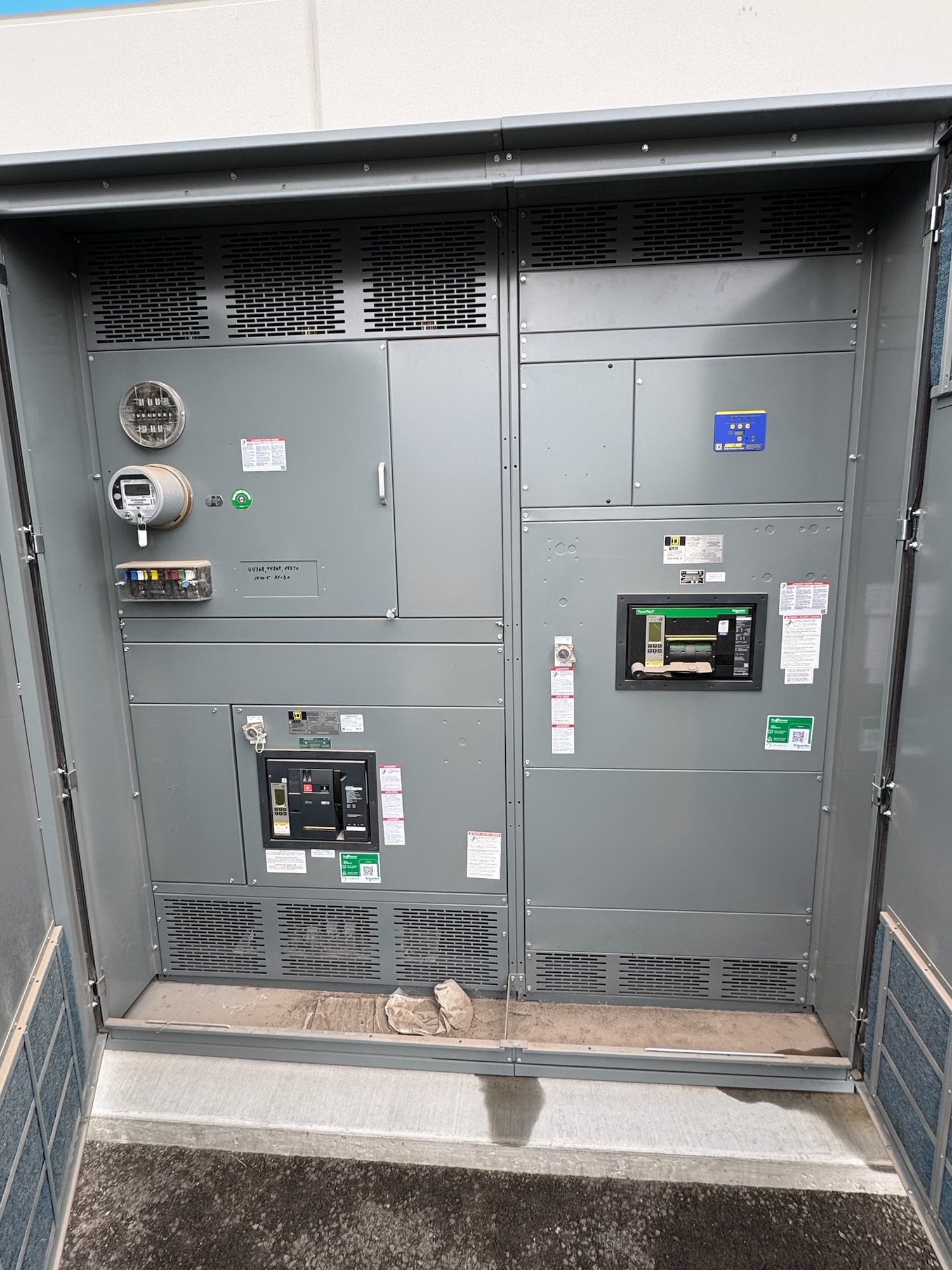
Define what the 600-amp rating applies to
First establish whether 600 amps describes the incoming service, a main breaker, a bus rating, or an individual feeder. Those values can differ within one assembly. A 600-amp main does not mean every outgoing circuit is rated for 600 amps, and the bus rating must be selected for the distribution arrangement and design conditions rather than inferred from the main device alone.
Document the nominal voltage, phase and wire configuration, grounding arrangement, source, and the point in the system where the 600-amp requirement applies. Also identify continuous loads, motor loads, noncoincident loads, and planned additions. These details let the engineer determine demand and protection requirements without assuming that the nominal amperage alone describes the operating duty.
Coordinate feeder conductors and protection
Feeder sizing depends on calculated load, conductor material and insulation, installation method, ambient conditions, termination limits, and applicable adjustment or correction factors. Conductor ampacity, overcurrent-device selection, and equipment terminals must work together. A conductor schedule should state material, size, number of parallel sets if any, and the intended raceway or routing assumptions for engineering review.
For each outgoing feeder, provide the connected load or design current, protective-device type and rating, and any required trip or coordination information. A 600-amp assembly may distribute power to several smaller loads, so branch and feeder devices should reflect the actual circuits. Final conductor and protection choices belong to the responsible electrical designer and must be checked against project conditions and applicable requirements.
Establish available fault duty
Available short-circuit current at the switchgear affects the required interrupting capability of protective devices and the assembly’s applicable short-circuit rating. Obtain the source information and fault-current calculation at the equipment location, including relevant transformer data, conductor impedance, and upstream protection. Do not substitute the 600-amp current rating for a fault-duty value; they describe different conditions.
Share the available fault-current value, its calculation basis, and any required series rating or coordination constraints with the equipment manufacturer and engineer. The selected devices and assembly must be suitable for the documented system duty. Where the source or utility data is not final, identify the assumption and who will confirm it before release, so procurement does not lock in an unverified rating.
Specify the assembly and operating arrangement
A 600-amp distribution package may be a switchboard or another switchgear configuration, depending on voltage, application, layout, and project specification. For switchboard assemblies, identify whether UL 891 construction is required; that standard applies to switchboards and should not be treated as a blanket listing for medium- or high-voltage switchgear. State the required enclosure, access, incoming arrangement, metering, auxiliary features, and cable entry direction.
Provide a one-line diagram and equipment schedule showing main and feeder devices, spaces, metering points, and any tie or transfer arrangement. Confirm the available room, working clearances, shipping route, and the planned connection and termination details with the project team. Custom-built configurations can be scoped from these documents, but final design, ratings, and approval remain subject to engineering and authority review.
Prepare a complete purchasing handoff
For a quote, send the one-line diagram, load information, voltage and system configuration, fault-duty data, feeder schedule, preferred device types, enclosure and access requirements, and requested options. Include the project location in Georgia, required delivery point, site receiving constraints, and target dates for submittal, release, and delivery. Flag unresolved design inputs rather than filling gaps with assumed values.
Review the proposal against the latest drawings before approval, especially the main rating, bus rating, feeder count, device ratings, fault-duty basis, dimensions, and connection orientation. Confirm which party supplies final utility data, approves submittals, and coordinates installation. Exact scope, component availability, and schedule are confirmed for each order; nationwide shipping can be coordinated to the Georgia project’s receiving plan.
Use the rating as a coordinated specification
The practical goal is not simply to order equipment labeled 600 amps. It is to match the distribution capacity to the calculated load, select feeder conductors and protection for their real conditions, and document fault duty and physical interfaces before release. A clear specification reduces avoidable redesign and gives purchasing a firm basis for comparing the proposed assembly with the project documents.
Before requesting pricing, have the responsible engineer confirm where the 600-amp requirement applies and provide the current one-line, feeder schedule, and fault-current basis. Then identify Georgia delivery and receiving requirements and the dates that matter to the project. This focused package allows the manufacturer to define a new, custom-built assembly and verify order-specific scope and timing.