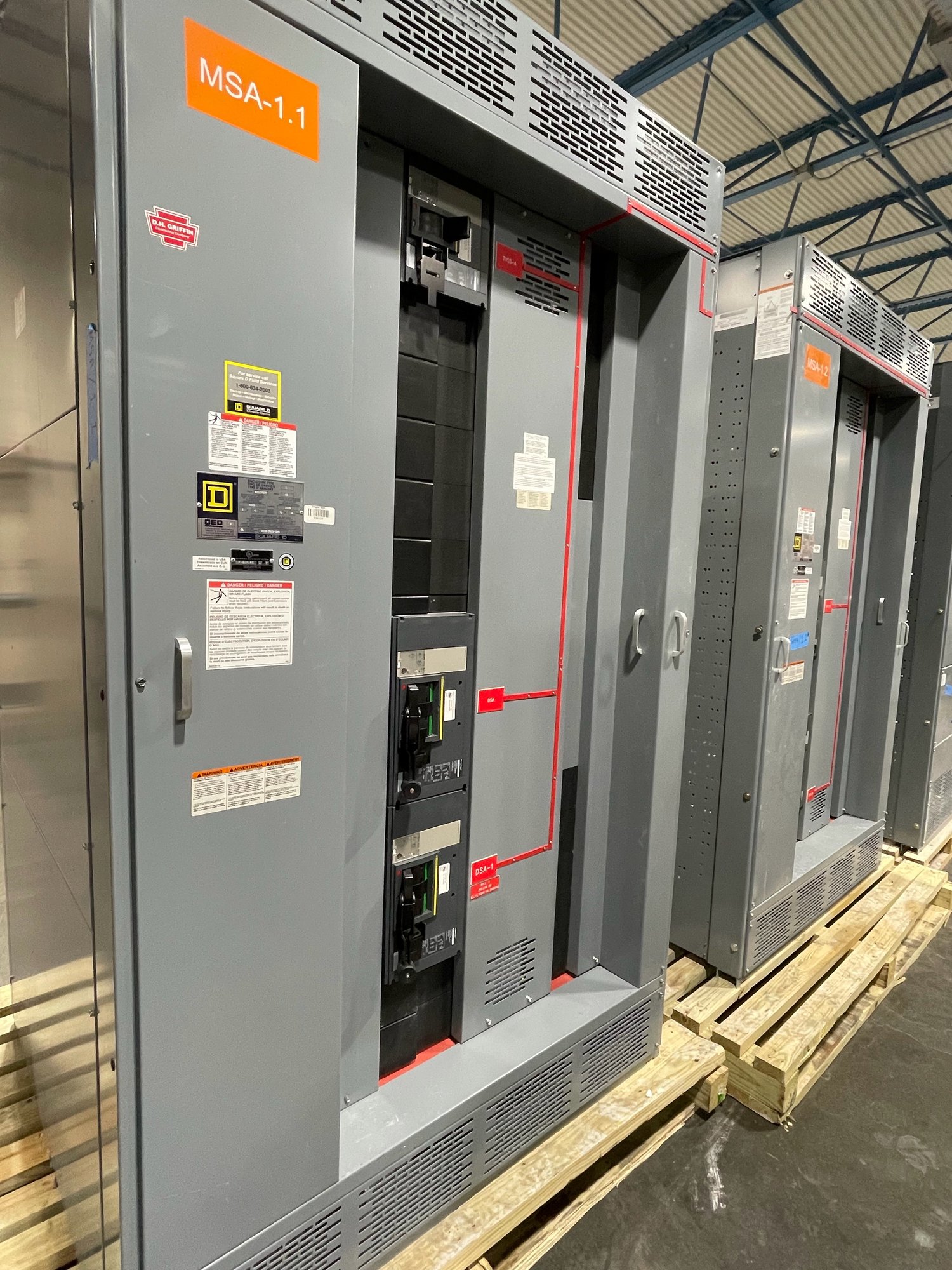
Start with the electrical application
First establish what the 400-amp equipment will serve: an incoming service, a feeder distribution point, or a replacement within an existing system. The application affects the required arrangement, incoming conductor termination, number and type of outgoing circuits, and coordination with upstream and downstream equipment. A nominal ampere value alone cannot establish whether the assembly fits the project.
Share the system voltage, phase and wire configuration, source information, and intended installation location. Clarify whether the project is new construction, an expansion, or a replacement, and identify what existing gear must connect to the new assembly. These details help the manufacturer evaluate a workable configuration without assuming the site's electrical design or the authority having jurisdiction's requirements.
Confirm service and bus ratings separately
Check the service or main-device rating against the actual load calculation and design documents. The service conductors, main protective device, distribution bus, and connected feeders have related but distinct requirements; do not treat a 400-amp label as proof that each element is appropriately rated. Confirm the specified voltage and system arrangement as well as the continuous load and any applicable design criteria with the project engineer.
Bus selection also depends on the number and size of feeder devices, their positions, and how current is distributed through the assembly. Ask whether the design needs a main device, main lugs, feed-through provisions, or a particular section arrangement. Provide the one-line diagram and feeder schedule when available, and identify any future circuits or reserved spaces so the proposed layout can be reviewed against the intended use.
Specify protective devices and fault duty
List the required main and branch protective devices, including device type, frame and trip requirements where specified, pole count, and any accessories or special operating features. Breaker or fusible-switch selection must align with the system voltage, load, conductor protection, and coordination study. If the project requires specific manufacturer or device-family compatibility, state that requirement for review rather than assuming interchangeable components.
Provide the available fault current at the equipment location and the required short-circuit rating or other fault-duty criteria from the design documents. The protective device's interrupting rating and the assembly's short-circuit capability are not interchangeable values. Any series rating or selective-coordination objective needs engineering substantiation and review for the actual configuration. Do not infer acceptable performance from the 400-amp rating.
Match the enclosure to the installation
Describe whether the switchgear will be indoors or outdoors and give the installation environment, including exposure to weather, dust, moisture, corrosive conditions, or unusual heat where relevant. Specify the enclosure type required by the project and confirm that it suits the location and applicable design criteria. Also note access direction, available wall or floor space, working clearances, and any restricted routes for moving sections into the electrical room.
Provide dimensional limits, conduit-entry preferences, cable approach, and the location of existing equipment or structural obstructions. Enclosure dimensions and section layout affect installation and maintenance access, so a 400-amp assembly should not be assumed to fit a footprint based only on its current rating. The project team should coordinate final dimensions and layout with the equipment drawings before construction or procurement approval.
Prepare a quote-ready specification
A useful quote package includes the one-line diagram, load and feeder schedules, voltage and system details, fault-current information, specified device requirements, enclosure conditions, and target dimensions. Identify required accessories, metering, control wiring, labels, finish expectations, and documentation. Mark which items are firm design requirements and which may be proposed for engineering review; this makes exceptions visible before an order is finalized.
For custom-built new switchgear, provide the requested delivery location in Georgia, the site receiving constraints, and the project milestone the equipment must support. Include unloading or access limitations and the receiving contact's coordination requirements without assuming a delivery method or date. American-made components and nationwide shipping can be considered in the proposed scope, while configuration, component availability, and schedule are confirmed for each order.
Review the handoff before release
Before approving production, compare the proposed equipment drawings and device schedule with the engineer's documents, field conditions, and project specifications. Resolve discrepancies in service arrangement, bus rating, protective-device details, fault-duty information, enclosure, and dimensions. Confirm the documentation required for review and the approval path with the responsible engineer and authority having jurisdiction; a manufacturer's quote is not a substitute for that review.
To move a 400-amp project forward, send the electrical one-line, feeder schedule, fault-current data, enclosure and space requirements, and Georgia delivery constraints with the quote request. Ask the project engineer to verify the design basis, then review the proposed configuration and schedule before purchase approval. Exact scope, availability, and timing depend on the confirmed order requirements.