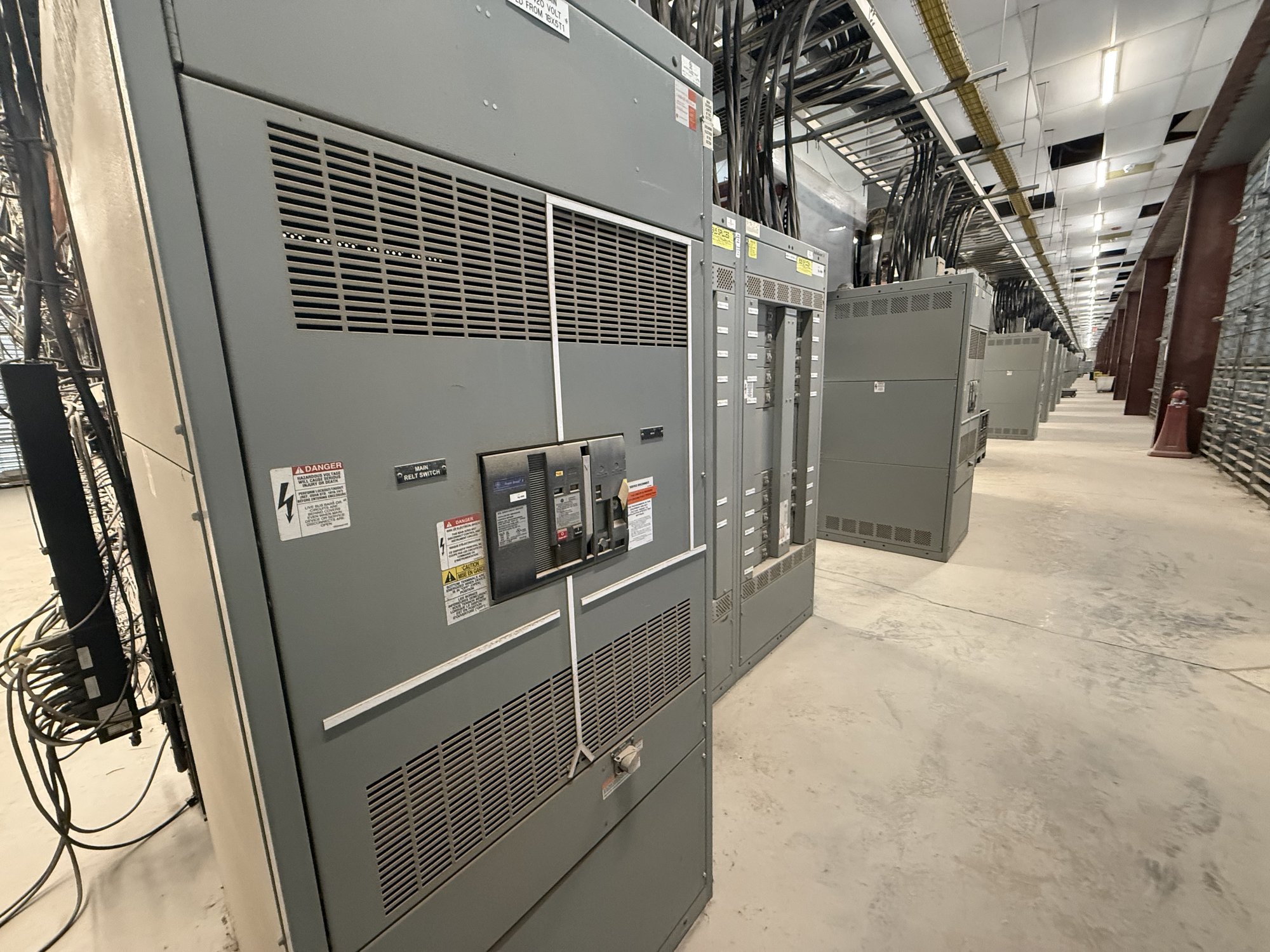
Start with the system voltage
A 27-kV designation identifies a voltage class, but it does not by itself define the required equipment rating. Establish the system’s nominal and maximum operating voltage, frequency, grounding method, and whether the installation is part of a utility distribution network, customer substation, or industrial facility. Confirm how the 27-kV equipment connects to transformers, feeders, and downstream loads.
Ask the serving utility or responsible engineer which voltage class and equipment standards apply at the point of interconnection. Do not assume that equipment labeled for a nearby voltage class is interchangeable. The single-line diagram, utility service requirements, and applicable engineering specifications should govern the rating and arrangement selected for the project.
Specify insulation for actual conditions
Insulation requirements involve more than the nominal system voltage. Obtain the specified power-frequency withstand and impulse withstand levels, along with any requirements for clearances, creepage, and insulation coordination. These values depend on the system design and the utility or project criteria; they should be stated in the specification rather than inferred from a 27-kV label.
Document the installation environment, including indoor or outdoor location, altitude, ambient conditions, pollution exposure, and available space. Environmental factors can affect insulation selection, enclosure design, and equipment arrangement. Where the project has special conditions, identify them early so engineering can determine whether the proposed configuration fits the site and the governing requirements.
Verify short-circuit and switching duty
The required fault-duty rating must reflect the available short-circuit current at the equipment location and the protection system’s clearing behavior. Request the utility’s fault-current data and confirm the study basis, including any future system changes or transformer contributions that affect the calculation. Specify the required short-time withstand current and duration, as well as the interrupting capability of switching devices where applicable.
Clarify the expected switching duties and protection functions, such as feeder protection, transformer protection, bus sectionalizing, or tie operation. These functions influence device selection, control power, relaying, and interlocking. Fault ratings, device ratings, and the assembly configuration must be reviewed together by qualified engineering personnel; one rating cannot substitute for another.
Define the utility interface
Utility interface requirements should be captured before equipment layout is finalized. Confirm the ownership boundary, metering arrangement, service entrance details, grounding and bonding expectations, disconnecting means, and any required visible isolation. Identify who supplies instrument transformers, protective relays, communications equipment, and associated control wiring, and state the required interfaces clearly.
Request the utility’s current service manual, approved drawings or specifications, and review process for the project location in Georgia. Utility requirements can vary by provider and may change over time. Design review and acceptance are separate from equipment manufacturing; allow the utility and authority having jurisdiction to review the applicable drawings and installation details.
Build a complete procurement specification
A useful request for quotation includes the one-line diagram, equipment schedule, required voltage and insulation ratings, fault-duty data, protection and metering requirements, and the preferred lineup arrangement. Add cable entry and termination details, conductor sizes and types, phase arrangement, enclosure conditions, control voltage, and any space or future-extension provisions. State which components and services are included or excluded.
UL 891 applies to switchboard assemblies; it is not a blanket listing for 27-kV medium-voltage switchgear. Identify the applicable standards and required documentation for the actual equipment type, and avoid treating a component rating as approval of an entire installation. Exact configuration, component availability, and production timeline are confirmed for each order.
Coordinate delivery and project handoff
For a Georgia project, provide the delivery address, site access restrictions, unloading plan, receiving contact, and required delivery sequence. Note whether the lineup must arrive in sections, pass through limited openings, or meet a specific construction milestone. Nationwide shipping can support projects across Georgia, but the schedule and shipping arrangement must be confirmed against the order scope and site constraints.
For a quote, share the latest one-line diagram, utility criteria, fault-current study, required ratings, lineup dimensions, and requested delivery window. Identify open engineering decisions rather than leaving them implicit. Then assign review responsibility for drawings, utility coordination, and site readiness so the approved configuration and delivery plan carry through procurement, installation planning, and commissioning.