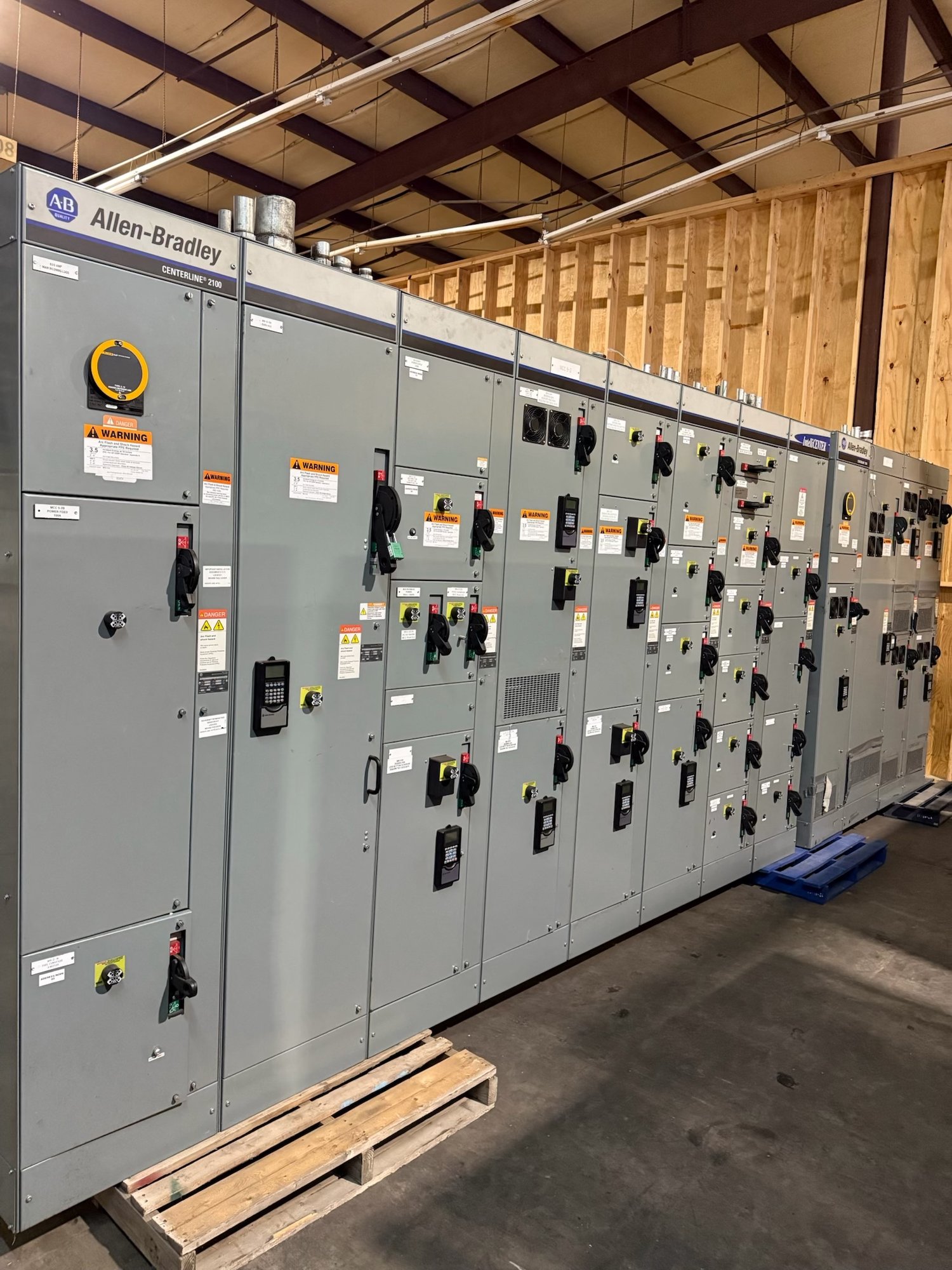
Define the electrical basis
Start with the one-line diagram and identify the service voltage, phase and wire configuration, source arrangement, and intended role of the assembly. Confirm whether 1600 amps is the required main rating, a bus rating, or the expected load; those values are related but not interchangeable. Include present loads and planned additions so the design team can establish the applicable demand and growth assumptions.
Document the utility or upstream transformer information available to the project team, along with generator, tie, or parallel-source operating modes. Fault contribution can change when sources operate together or system configuration changes. The project engineer should establish the applicable conditions and verify the design basis before protective devices and equipment ratings are selected.
Coordinate short-circuit ratings
Specify the required short-circuit current rating at the assembly and the voltage at which it applies. That rating must be evaluated against the available fault current at the installation point, not chosen solely from the 1600-amp continuous rating. Ask the engineer to account for upstream impedance and operating configurations, and to document the assumptions used for the calculation.
Protective-device selection affects the assembly’s short-circuit capability and coordination with upstream and downstream equipment. Provide the intended breaker or fuse types, device ratings, and any required selective-coordination study criteria. Do not assume a particular rating or device combination is suitable until the complete design is reviewed. UL 891 applies to switchboard assemblies; it does not establish a blanket listing for medium- or high-voltage switchgear.
Make maintainability a layout requirement
At 1600 amps, the physical arrangement can influence how a qualified team inspects, tests, isolates, and replaces devices. Identify which breakers or sections may need access during planned maintenance and whether the project expects front access, rear access, or both. Confirm working-space and egress requirements with the project’s electrical design and authority having jurisdiction; the manufacturer needs the intended room arrangement to develop a practical configuration.
Consider door swing, cable entry, conduit locations, equipment lineup length, and access to terminals when reviewing drawings. A compact footprint may conflict with rear access or cable-bending needs, while a preferred service approach may affect section arrangement. Share room plans, wall and column locations, and the planned cable routing early so maintainability is considered alongside electrical performance rather than after the layout is fixed.
Resolve system and enclosure details
State the main-device arrangement, feeder count and sizes where known, metering and instrumentation needs, control power source, and any transfer or tie functions. Identify neutral and grounding requirements and note whether the project includes special monitoring or communication interfaces. These details affect section space, wiring, and coordination; incomplete schedules can lead to avoidable drawing revisions.
Provide the installation environment and any project-specific enclosure or finish requirements for engineering review. Indoor versus outdoor placement, ambient conditions, exposure, and available room ventilation can affect the specified construction. Do not infer a particular environmental rating from the current rating. The final configuration and applicable ratings depend on the complete application and are confirmed during order review.
Prepare a quote-ready package
For a useful quotation, share the one-line diagram, load or feeder schedule, fault-current information, equipment location and dimensions, cable-entry preferences, and required delivery milestone. Include the project voltage, 1600-amp basis, short-circuit rating requirement, device preferences, and maintainability criteria. Flag unresolved items explicitly so engineering and procurement can distinguish firm requirements from assumptions.
If drawings or studies are still in progress, identify their expected status and the person responsible for approval. Confirm who will review submittals and what interfaces must match adjacent equipment. Exact scope, component availability, and production timeline are confirmed for each order; early, complete information helps clarify the configuration and identify open decisions before the purchase is finalized.
Plan Georgia delivery and handoff
For a Georgia project, coordinate the requested delivery milestone with site readiness, unloading arrangements, and the construction sequence. Provide the destination, receiving constraints, access hours if applicable, and any restrictions on truck or equipment access. Nationwide shipping supports projects across Georgia, but the delivery plan and timing must be confirmed for the specific order and destination.
Before releasing the specification, have the project engineer verify fault-current assumptions, device coordination, ratings, and installation requirements, then route drawings through the responsible reviewers. Send the manufacturer the confirmed electrical basis, access and room constraints, required features, and delivery details. This gives the 1600-amp assembly a defined design path and a clearer handoff from procurement to installation.