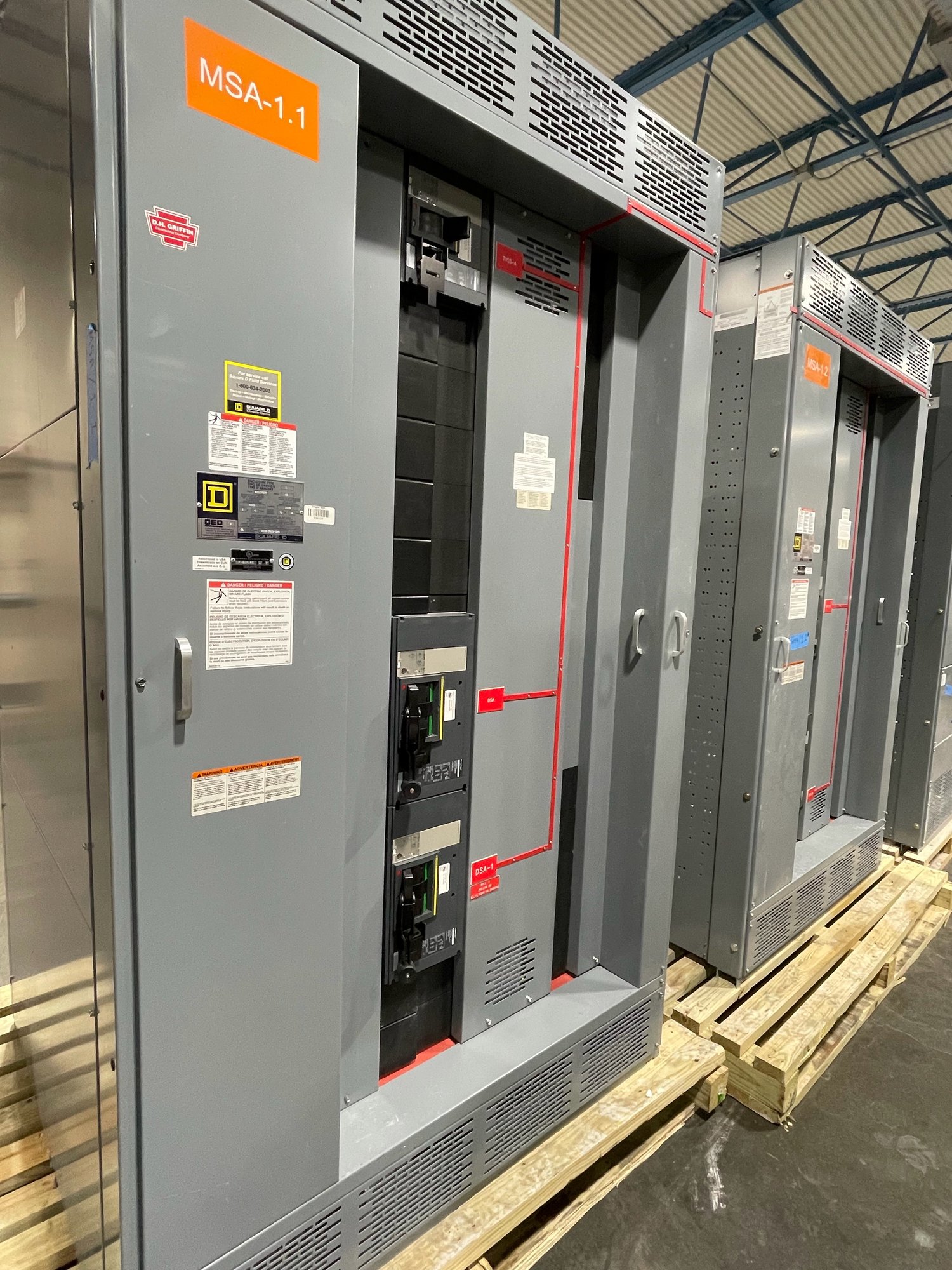
Map exposure before choosing a location
Hydrogen sulfide, chlorine compounds, moisture, and cleaning chemicals can attack electrical equipment, but exposure varies across a plant. A room near headworks or sludge handling may present different conditions from a dry control room. Identify nearby tanks, channels, chemical storage, ventilation intakes, doors, and routine washdown areas. Note whether odors or visible corrosion recur in particular locations; these observations help the engineering team assess where equipment may face the greatest exposure.
Whenever practical, place switchgear in a dry, controlled electrical room away from process aerosols, chemical handling, and direct washdown. Moving equipment is not always feasible: cable routes, existing foundations, access, and outage constraints can limit location choices. If the room remains close to corrosive processes, record the distance and barriers, door-opening patterns, drainage, and any known gas monitoring. These details inform enclosure and room-design decisions rather than relying on a broad label such as “corrosive area.”
Specify enclosure materials for actual conditions
Enclosure selection should reflect the chemical agents, their concentration and frequency, ambient humidity, condensation, and cleaning methods. Stainless steel, coated carbon steel, and other material options have different strengths and limitations; no material is universally resistant to every wastewater exposure. Ask the design team to evaluate the complete enclosure, including doors, hinges, fasteners, seams, mounting hardware, and any exposed surfaces, not only the main panels.
Describe whether the equipment will be indoors or outdoors, exposed to salt-bearing air, sprayed with hoses, or subject to chemical mist. Clarify the chemicals used for treatment and cleaning, and provide product information when available. Also identify required dimensions, access clearances, cable entry locations, and structural constraints. These facts help determine whether a custom-built configuration and a particular material approach are practical for the project.
Treat coatings as a system, not a label
A coating specification needs to address preparation, coverage, edges, welds, fasteners, and repair after handling. Corrosion often starts where a finish is damaged or discontinuous, including cutouts and interfaces around doors or mounting points. Ask what surface preparation and coating system are proposed for the selected substrate, and how field modifications or shipping damage will be inspected and touched up. A coating name alone does not establish suitability for a specific chemical environment.
Confirm whether routine cleaning agents are compatible with the finish and whether maintenance staff can inspect vulnerable areas without disturbing energized equipment. Define who is responsible for coating repairs after installation, and how any required touch-up materials and procedures will be documented. If a project specification calls for a particular coating or material, provide the exact requirement during quotation review so scope, cost, and schedule can be assessed before release.
Coordinate ventilation without drawing in contaminants
Ventilation must manage heat while limiting the entry of corrosive gases, humid air, dust, and process aerosols. More airflow is not automatically better if it draws contaminated air into the room or enclosure. Review the heat losses and operating conditions for the proposed assembly alongside room temperature, air movement, pressure relationships, filtration, and the location of supply and exhaust openings. The electrical and mechanical design teams should coordinate these choices rather than treating ventilation as an enclosure accessory.
Ask whether the room is conditioned, how temperature and humidity vary seasonally, and whether doors remain open during normal operations. Consider condensation during shutdowns, storms, or rapid temperature changes, especially where outdoor air enters. Any filters, louvers, heaters, or cooling equipment require a maintenance plan and suitable placement. The manufacturer can build to the defined configuration, but room ventilation and environmental controls require project-specific engineering.
Resolve the specification and handoff early
For a useful quotation, share the one-line diagram, required bus and circuit arrangement, control and metering needs, available room dimensions, cable entry preferences, and applicable project specifications. Add the proposed location, indoor or outdoor exposure, known chemicals, washdown frequency, ambient conditions, and any material or finish requirements. Identify the project stage, required submittal documents, and the parties responsible for room design, installation, and environmental controls.
A UL 891 switchboard assembly may be appropriate for a low-voltage distribution application when the project requirements call for it; UL 891 does not apply as a blanket certification for medium- or high-voltage switchgear. Confirm the required equipment type, ratings, and review path with the project engineer and authority having jurisdiction. Exact scope, component availability, and schedule are confirmed for each order, so resolve exceptions and approval responsibilities before production begins.
Plan delivery around the plant environment
For Georgia projects, nationwide shipping can support delivery to the plant or a designated staging point, subject to order-specific arrangements. Coordinate the delivery route, unloading equipment, door and corridor dimensions, storage conditions, and protection from rain, construction dust, and process exposure. Keep the assembly in its specified shipping protection until the installation team is ready, and inspect it for handling damage before placement. Any receiving or storage instructions should be shared with the contractor and facility team.
Before requesting a quote, assemble site photos or a room plan, environmental observations, equipment requirements, and delivery constraints in one package. Ask the project team to identify who will verify the location, ventilation, coatings, and installation conditions before energization. This gives engineering and procurement a clear basis to resolve corrosion-control choices, confirm the custom configuration and order scope, and coordinate delivery for the Georgia project.