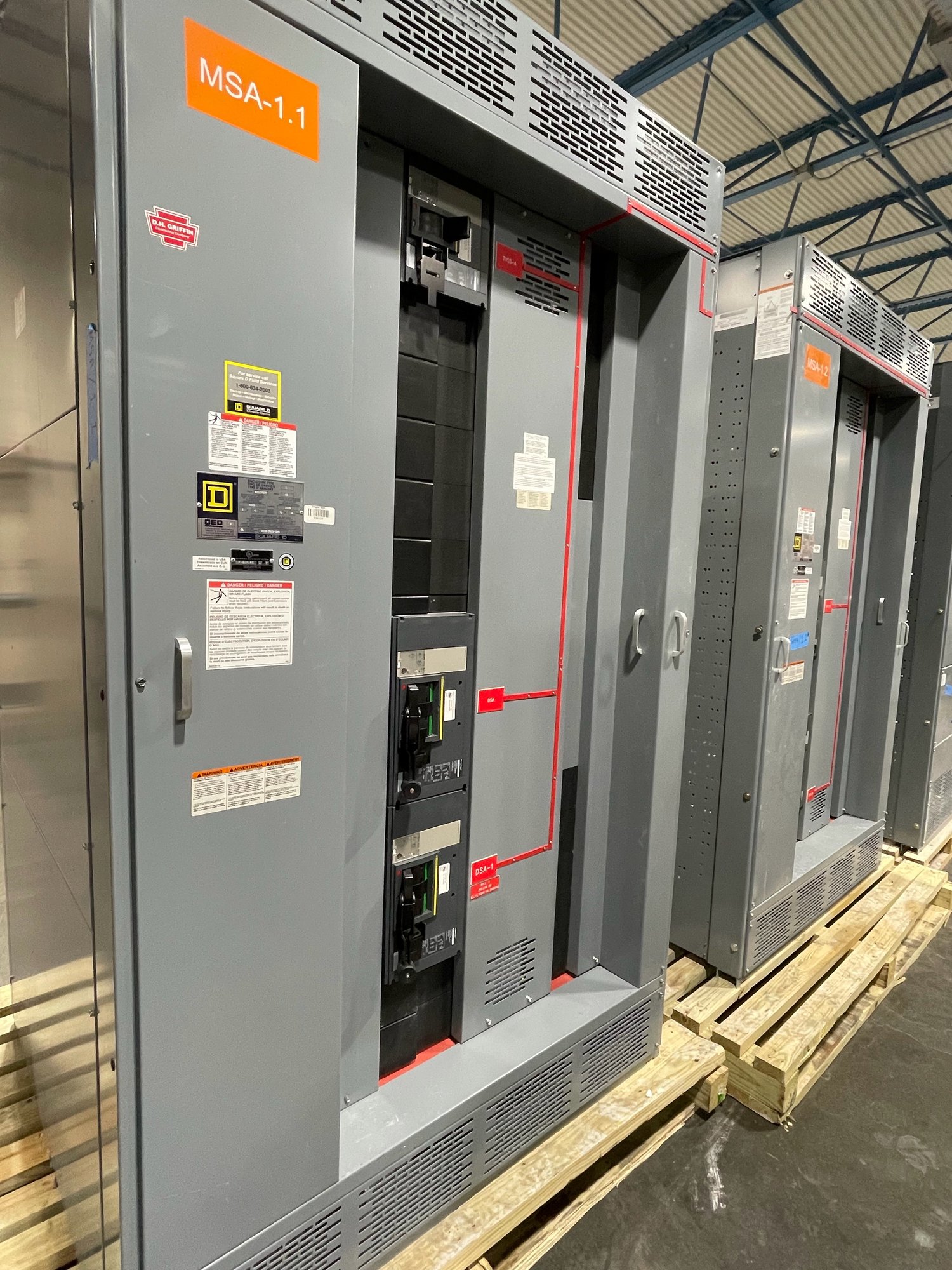
Power path inside the section
Horizontal bus distributes power along a switchboard lineup; vertical bus carries it within a section to the devices assigned to that section. Depending on the design, devices may connect directly to the vertical bus or through purpose-designed connection assemblies. This makes the bus more than a structural detail: its relationship to each device determines how power reaches feeders and other distribution circuits.
The one-line diagram shows the electrical relationships, but it may not show the physical arrangement needed to build the section. Clarify which devices are supplied by each vertical bus, their positions, and how connections are intended to be made. That information helps the design team check the proposed distribution path against the required circuit arrangement rather than assume all devices in a section share the same feed.
Check the ratings as a connected system
Specify the required current rating for the vertical bus and identify the loads and devices it serves. The rating review should account for the upstream source and horizontal bus, the section arrangement, device connections, and any project-specific operating conditions. A bus rating cannot be selected responsibly from the physical size of the section or the apparent size of the connected devices alone.
Short-circuit withstand and the associated protective-device coordination also require attention. Provide available fault-current information at the equipment location when it is established, along with the intended protective-device data and system voltage. The engineering review must determine whether the proposed bus, connections and assembly can meet the project requirements. Do not treat one component’s rating as proof that the complete assembly has the required rating.
Resolve layout and device connections
Vertical bus capacity and arrangement interact with the section’s device schedule. Share device types, frame or trip information where specified, mounting positions, and any required future spaces. A layout that changes during design can alter connection locations, bus requirements or available working and wiring space. Identify whether devices are fixed or drawout where applicable, and state any project requirements for barriers, access or separation.
Cable entry and termination needs should be coordinated with the bus layout, not left until the lineup is ready for installation. Confirm conductor quantity and size when known, termination orientation, routing direction, and whether field connections approach from above or below. These details help identify potential conflicts between cables, bus connections and device compartments. Final feasibility depends on the actual equipment design and engineering review.
Distinguish bus ratings and standards
A quotation request should distinguish the required vertical-bus rating from the main horizontal-bus rating and the ratings of individual devices. State whether the project specifies a particular bus material, plating, or connection approach, if those requirements are defined. If they are not, identify the governing project specification and let the engineering review establish a suitable configuration rather than presume a construction detail.
For switchboard assemblies, UL 891 is the relevant switchboard standard to identify when it applies to the specified assembly. It is not a blanket listing for medium- or high-voltage switchgear, and mentioning the standard does not establish that every requested design has a particular approval or rating. Confirm equipment class, system voltage, required documentation and applicable authority review for the actual project.
Prepare a complete quotation package
Useful quote inputs include the one-line diagram, equipment schedule, system voltage and phase, source and available fault-current data, main bus requirements, and the requested vertical-bus current and withstand criteria. Include device catalog or specification information, section count and lineup dimensions if established, cable entry conditions, metering and control needs, and any governing specifications. Note assumptions or unresolved values so they can be identified before configuration is finalized.
Also explain the project’s operating intent: which circuits must be grouped in the section, whether spare capacity is required, and whether future devices or expansion are anticipated. Provide the delivery destination in Georgia and the site’s receiving constraints, such as access, unloading arrangements and preferred delivery window. Exact scope, component availability and production timeline are confirmed for each order; complete inputs help clarify those items without promising an unverified schedule.
Coordinate design through delivery
Before release, compare the equipment drawings and submittal information with the one-line diagram, device schedule and project requirements. Check that each device is assigned to the intended vertical bus, that ratings and connection details align, and that cable entry and compartment arrangements suit the installation plan. Resolve discrepancies with the responsible electrical engineer and other project stakeholders before fabrication. Final installation, inspection and energization must be handled by qualified personnel under applicable project procedures and authority review.
For a Georgia project, include the delivery address and site logistics early so the shipment plan can be reviewed alongside the completed configuration. To move a request forward, send the one-line, device schedule, required bus ratings, fault-current basis, connection and cable-entry details, applicable specifications, and target delivery window. Ask which inputs remain open and confirm the resulting scope and timeline before approving the order.