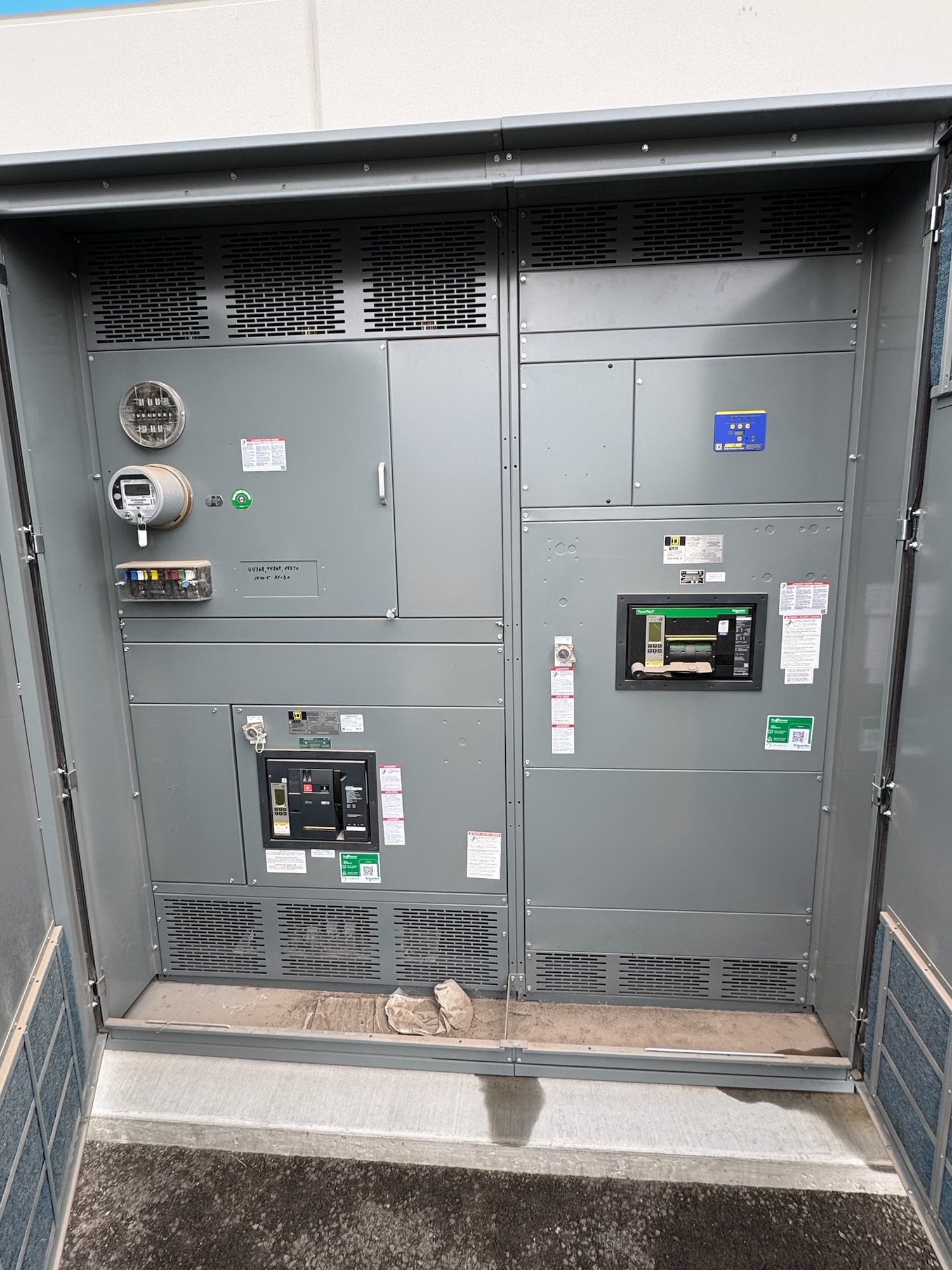
Define the service interface first
Start by identifying where the electric utility’s facilities end and the customer’s equipment begins. The boundary may be associated with service conductors, terminals, metering provisions, disconnecting equipment or another point established by the utility and project documents. That boundary affects equipment scope, access, labeling, installation responsibility and the information needed for review.
For a quote, share the utility service letter or applicable service requirements, one-line diagram, site voltage and available fault-current information when available. Include the proposed point of connection and note which components are utility-owned, customer-owned or still under discussion. If the utility has not confirmed a detail, identify it as pending rather than treating an assumption as approved.
Match switching functions to the distribution plan
Utility distribution applications can call for service entrance switching, feeder isolation, sectionalizing, transfer arrangements or switching at a dedicated facility. These functions are not interchangeable. The one-line should show normal and alternate sources, intended operating states, load paths and any interlocking or key-control requirements so the equipment arrangement can be evaluated against the actual operating plan.
Coordinate the proposed switchboard or switchgear configuration with the utility’s service method and the project engineer’s design. Confirm whether metering, protective devices, bypass provisions, spare feeder ways or future expansion are required. A UL 891 switchboard assembly may be appropriate for some low-voltage applications; UL 891 applies to switchboards and does not establish a blanket listing for medium- or high-voltage switchgear.
Translate utility criteria into equipment documents
Utility specifications can govern details beyond the basic electrical ratings. Review requirements for service entrance construction, compartments, barriers, cable entry, terminal provisions, metering space, labeling, access, finish and utility witness or inspection steps. Ask the utility which documents it expects to review and at what stage, and record any deviations or approved alternatives in the project package.
Engineering information should make the proposed equipment understandable to both utility reviewers and the facility team. Useful submittals may include a one-line diagram, equipment arrangement, connection details, nameplate data and control schematics where applicable. Final ratings, protective-device selections and construction details must be established by qualified design professionals and reviewed by the utility and authorities having jurisdiction as required.
Resolve ownership and operating responsibilities
Ownership boundaries influence who procures, installs, maintains and operates each portion of the service. Clarify responsibility for incoming conductors, terminations, metering equipment, seals, access controls and disconnecting means. The utility may specify equipment or procedures for its side of the interface, while the customer’s engineer determines the facility distribution design. Written responsibility assignments reduce gaps between those scopes.
Discuss operating access early, especially where utility personnel and facility staff may approach adjacent equipment. Confirm required working clearances, door access, labeling conventions and procedures for isolation or inspection with the responsible parties. Do not rely on a general equipment description to settle operational authority; the approved documents and utility requirements should identify who may operate each device and under what conditions.
Plan procurement, review and Georgia delivery
Procurement timing depends on the completeness of the design, utility review, component selection and any project-specific construction details. Share the required delivery window, submittal milestones, site receiving constraints and whether equipment must arrive in coordinated sections. We build new equipment with American-made components as specified and can develop custom configurations; exact scope, component availability and schedule are confirmed for each order.
For Georgia projects, provide the delivery address, access limitations, unloading arrangements and required delivery sequence when requesting a quote. Nationwide shipping can support projects across the state, but routing and timing depend on the order and confirmed logistics. Coordinate receiving and storage with the contractor and facility team so the equipment can be protected and positioned without disrupting site work or utility scheduling.
Make the handoff reviewable
Before release for construction, reconcile the latest utility comments with the one-line, equipment schedule and approved submittals. Verify that ownership demarcations, feeder destinations, metering provisions, device designations and required labels agree across the documents. Identify open decisions, responsible reviewers and due dates so procurement does not advance on an outdated assumption.
To begin a focused quote, send the utility requirements, current one-line, equipment ratings, requested switching functions, ownership demarcation, site constraints and target milestones. Note which details are approved and which remain subject to utility or engineering review. This gives the project team a concrete basis to confirm configuration, scope and delivery planning before the utility interface becomes a field issue.