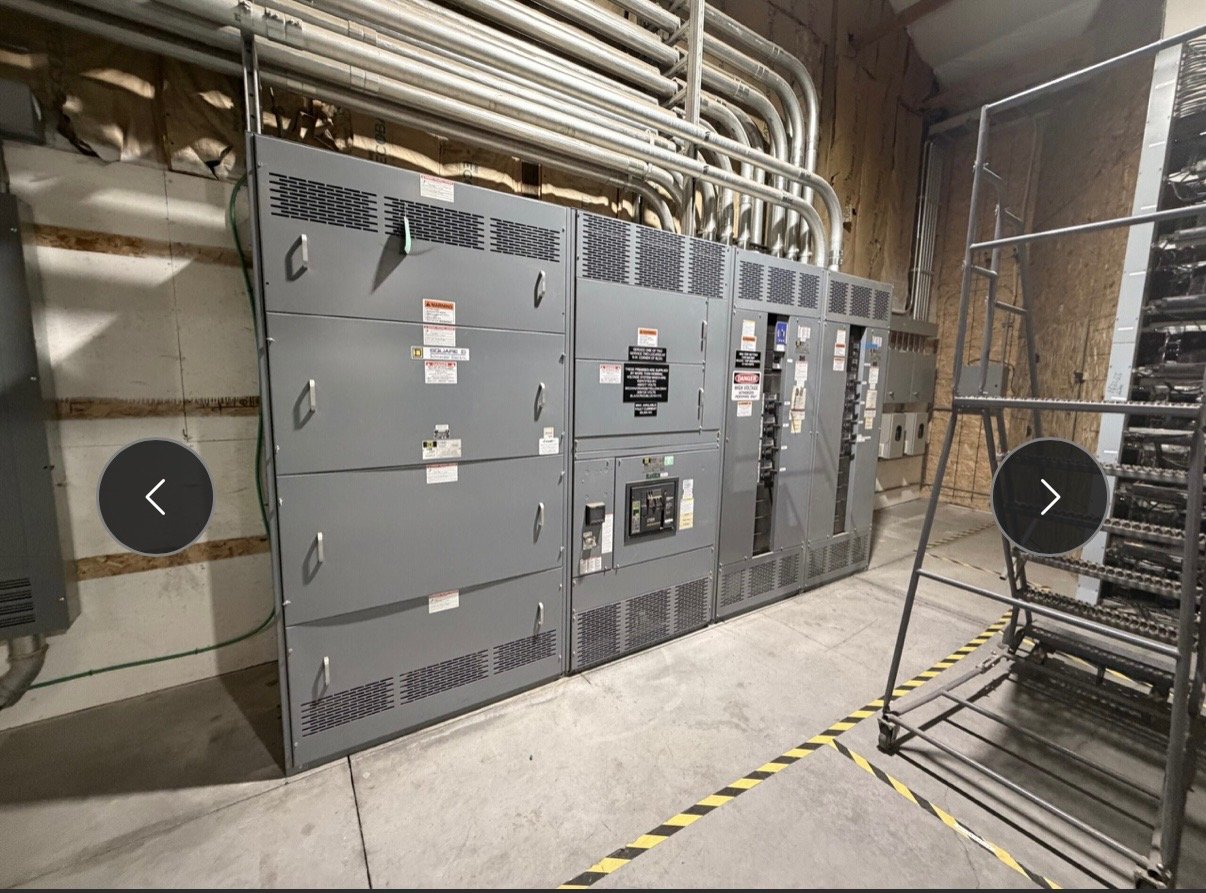
What UL 891 covers
UL 891 is a product standard for dead-front switchboards rated 600 volts or less. It addresses construction and performance requirements for the switchboard assembly, including such matters as enclosure construction, bus arrangements, spacing, temperature rise, and short-circuit withstand or current-limiting ratings where applicable. The standard is relevant to the assembled equipment, not simply to a collection of individually listed breakers, meters, or other components.
A component’s listing does not by itself establish that the complete switchboard assembly is UL 891 listed. The assembly must be built and evaluated within the applicable certification program and its permitted construction. UL 891 is not a blanket certification for medium- or high-voltage switchgear, and it does not determine whether a particular design meets every project requirement or will be accepted by the authority having jurisdiction.
Verify the assembly, not just the parts
For a specific proposed or delivered assembly, ask what certification mark or label will identify the completed switchboard and where that label will appear. Confirm the named manufacturer, product identification, and applicable electrical ratings against the submitted drawings and equipment schedule. If a project specification requires UL 891, request documentation that directly ties the requirement to the complete assembly rather than relying on a component list or a general statement about manufacturing practices.
Verify the manufacturer’s listing or certification through the certification organization’s current directory or other official verification channel. Check that the organization, manufacturer name, product category, and scope align with the equipment being quoted. Ask the manufacturer to explain any limits on the listed construction and how the proposed arrangement fits within them. A certification mark should be checked on the actual assembly at delivery; preliminary submittals are not a substitute for reviewing the equipment label and final documents.
Set the electrical basis before quotation
A useful specification identifies system voltage, phase and wire configuration, frequency, available fault current at the switchboard, and the required short-circuit rating. State the main device type and rating, feeder quantities and ratings, anticipated load, and any metering or protective functions. Include the service configuration, grounding and neutral requirements, and whether the equipment connects to generators, transfer equipment, or other sources. These inputs help establish a feasible bus and device arrangement; the manufacturer should not infer them from a building name or a general one-line description.
Also clarify whether the project calls for service-entrance equipment, a particular enclosure type or location, top or bottom cable entry, front or rear access, and any dimensional or working-space constraints. Provide the one-line diagram, specifications, site or room information, and the latest load or fault-current data available. Ratings and configuration must be confirmed through project engineering and reviewed by the responsible design professional and authority having jurisdiction; UL 891 alone does not establish that a selected rating is adequate for the installation.
Coordinate construction and submittals
Before release, align the switchboard schedule, one-line diagram, and equipment drawings. Resolve device frame and trip requirements, accessory needs, metering, control wiring, barriers, cable space, and termination provisions. Note required interfaces with upstream or downstream equipment, including bus connections and control signals. If the project has a specified footprint, conduit entry zone, lifting or handling limitation, or sequence for setting equipment, provide it early so the proposed arrangement can be reviewed against actual site conditions.
Agree on the submittal and approval process, including who reviews drawings and which documents are needed for coordination, installation planning, and closeout. Identify required equipment labels, circuit designations, and any project-specific documentation. Changes to fault-current data, feeder counts, device selections, or enclosure constraints after drawing approval can affect the assembly and schedule. Obtain written confirmation of final scope, availability, and timeline for the particular order rather than assuming a standard configuration or lead time.
Plan Georgia delivery and handoff
For a Georgia project, share the delivery address, receiving hours, site access limitations, unloading responsibility, and required delivery sequence when requesting a quote. Confirm whether the equipment will go directly to the jobsite or to another receiving location, and coordinate delivery timing with site readiness and the contractor’s setting plan. Nationwide shipping can support Georgia projects, but routing, freight arrangements, and timing depend on the specific order and destination and should be confirmed before release.
At handoff, compare the equipment identification and shipping documents with the approved submittal, inspect for visible transit damage, and retain the final drawings and certification information for the project record. Installation, testing, and energization should be performed by qualified personnel under the approved project documents and applicable requirements. For a quote, provide the one-line diagram, electrical ratings, device schedule, enclosure and access constraints, certification requirement, delivery location, and requested project dates; then resolve open engineering questions before authorizing production.