Define what cannot change
Start with the approved one-line diagram, equipment schedule, project specifications, and any written clarifications. Identify the required system voltage, continuous current, short-circuit withstand or interrupting requirements, main and feeder arrangements, bus configuration, and enclosure needs. Confirm which values apply to the complete assembly and which apply to individual devices; a similar-looking lineup does not establish equivalent performance.
Separate mandatory requirements from preferences. Available floor space, cable entry direction, service access, metering, control power, interlocking, and coordination with upstream and downstream equipment can determine whether an alternative is workable. Record the drawing revision and identify unresolved items. When documents conflict, seek direction from the responsible engineer rather than choosing whichever requirement appears easiest to meet.
Compare ratings on an equal basis
A substitution review should compare the same electrical conditions and operating duty. Check voltage class, bus and feeder ratings, fault-current requirements, protective-device types and settings, and any specified withstand duration. Confirm that the proposed combination of bus, breakers, and other components is supported by applicable engineering documentation. Do not infer an assembly rating from one component’s nameplate or from a higher rating stated without its test conditions.
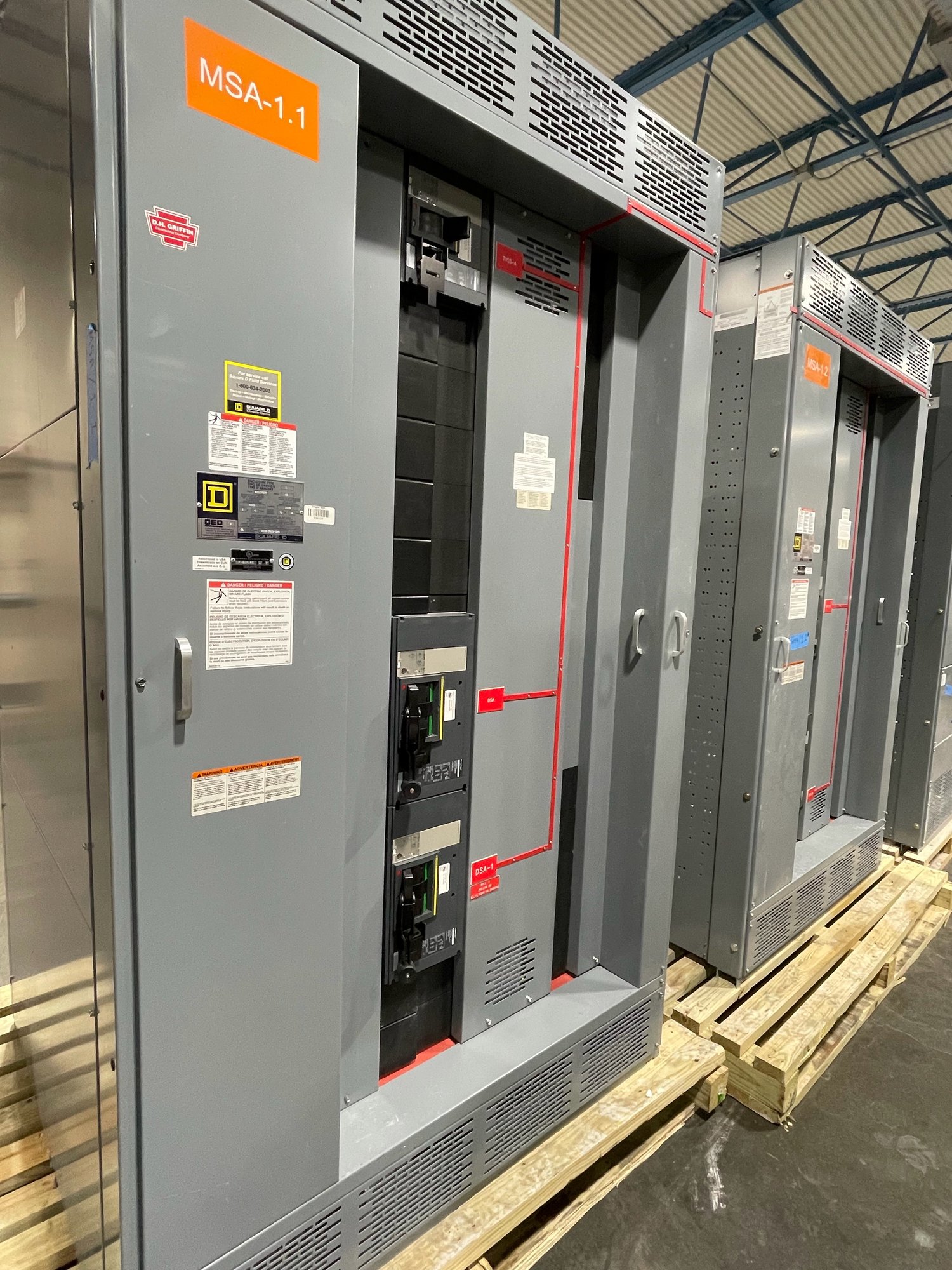
For switchboard assemblies, determine whether UL 891 is required by the specification and identify the scope of the relevant assembly documentation. UL 891 applies to switchboards; it is not a blanket listing for medium- or high-voltage switchgear. If the project uses equipment outside that scope, ask the engineer and manufacturer to identify the applicable standards and evidence for the proposed equipment. Final acceptance rests on project requirements and review by the responsible parties.
Preserve protection and operating functions
Compare what the equipment must do, not just its lineup dimensions. Review breaker frame and trip functions, protective relays where specified, metering, communications, remote operation, alarms, interlocks, and control schemes. A proposed device may fit physically yet lack a required function or create a different coordination, arc-energy, or operating study condition. Any change that affects protection or system behavior needs review by the engineer responsible for those studies.
Check maintainability and access as part of functional equivalence. Consider how operators identify circuits, isolate equipment, reach controls, and perform authorized inspection or maintenance. Confirm whether doors, barriers, cable compartments, and rear or front access align with the room and work practices. Do not assume that a substitution preserves safety or code compliance; those conclusions require engineering evaluation and, where applicable, review by the authority having jurisdiction.
Test installation fit and interfaces
Value engineering should account for the work around the equipment. Compare overall dimensions, section arrangement, anchoring, conduit and cable locations, bending space, ventilation needs, and connection points with the actual room and construction documents. Review bus connections to existing gear, transformers, generators, transfer equipment, or other specified systems. Changes to entry direction or section sequence can affect field labor and project schedule even when the electrical ratings match.
Ask whether drawings, terminal details, device designations, and interface information will be available for coordination before release to manufacture. Verify who will review and approve submittals, and what information is needed to resolve deviations. A clear exception list helps the engineer distinguish acceptable differences from items that require redesign. Do not treat a quotation, outline drawing, or preliminary configuration as final approval for installation.
Compare lifecycle value and procurement risk
Evaluate total project value alongside initial equipment cost. Consider replacement-device availability, access to technical documentation, maintainability, future expansion, and compatibility with existing maintenance practices. Clarify what support documentation accompanies the new assembly and what service or parts arrangements are actually available for the selected configuration. Avoid assuming that a lower-cost substitute has equivalent long-term support without confirming its component details and supply conditions.
For a manufacturer quote, provide the one-line diagram, equipment schedule, specification, fault-current and system data, required functions, room constraints, project location in Georgia, and requested delivery window. Include approved manufacturers or prohibited components if the project documents specify them, plus a list of acceptable deviations. American-made components, custom-built configurations, and nationwide shipping may be considered where suitable; component scope, availability, and timing are confirmed for each order.
Document the decision before release
Build a side-by-side comparison showing each requirement, the proposed value or function, supporting documentation, and any deviation. Route it to the electrical engineer, procurement lead, contractor, and owner or facility representative as the project requires. Resolve open questions in writing, update drawings and schedules, and obtain the approvals required by the contract before authorizing manufacture. This record reduces the risk of an undocumented change reaching installation.
For a Georgia project, coordinate the delivery destination, receiving access, unloading responsibility, and required arrival window with the construction or facilities team; shipping plans depend on the confirmed order and project conditions. Before requesting pricing, assemble the current design documents and mark which requirements are fixed versus open to alternatives. That focused package makes it possible to evaluate substitutions on verified fit, function, and support—not price alone.