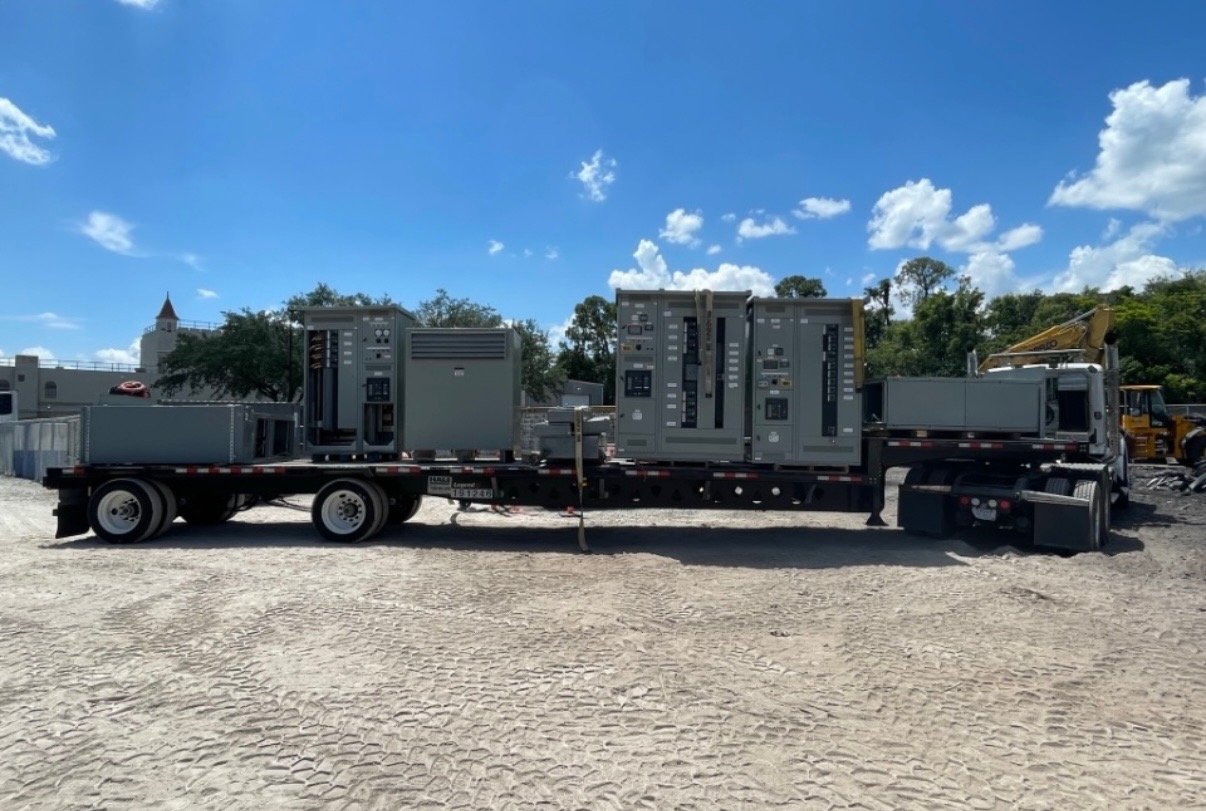
Set the storage plan before delivery
Start by identifying who will receive, unload, protect and periodically inspect the equipment. Confirm where each lineup or section will be held, how it will move from receiving to storage, and whether the route has adequate clearance and floor capacity. Keep equipment in a controlled, secure area away from active construction, vehicle traffic, overhead leaks and work that creates conductive dust or debris. Follow the manufacturer’s handling and storage instructions; packaging is not a substitute for a suitable location.
For procurement, align the expected ship date with the site’s readiness, available indoor space and planned installation sequence. Ask whether the order will arrive as one shipment or multiple sections, and how each package will be identified. If the construction schedule changes, confirm storage requirements with the manufacturer rather than assuming the original packaging can remain closed indefinitely. Quote discussions should include the destination, receiving constraints, requested delivery window and any known gap between receipt and installation.
Choose a location with moisture in mind
Georgia’s humid weather makes moisture control a practical storage concern, particularly when equipment is held in an unconditioned building or near exterior doors. Select a dry indoor location with protection from rain, standing water, condensation and plumbing leaks. Keep packages off floors where water could collect, and do not store them against damp walls. Avoid placing equipment where temperature swings can create condensation, including areas exposed to open-air loading activity.
Use only the moisture-control measures specified by the manufacturer for the particular assembly and packaging. Do not add heaters, desiccants or ventilation changes based on guesswork; inappropriate measures can create temperature, condensation or material concerns. If the designated space is not environmentally controlled, ask what storage conditions and periodic checks apply, including any limits on temperature or humidity. Record readings when required by the instructions, and document corrective action if the location becomes wet or unusually damp.
Preserve packaging and inspect condition
Keep protective coverings intact until the manufacturer’s instructions call for removal, while ensuring that any required inspection access remains available. Do not stack packages or place materials on top unless the shipping and storage guidance permits it. Protect openings from dust, insects and construction debris, and maintain clearance for air circulation where specified. If packaging is torn, punctured or wet, photograph the condition and notify the responsible project and procurement contacts promptly.
Establish inspection intervals from the manufacturer’s directions and assign a named role to complete the checks. Look for damaged packaging, water marks, corrosion, condensation, displaced protective materials and signs that the equipment has been moved or struck. Do not open compartments, operate devices or attempt repairs as part of routine storage inspection unless authorized personnel and the applicable instructions permit that work. Record findings, dates, photographs and any notification or disposition so the installation team receives an accurate condition history.
Track sections, documents and changes
Maintain an inventory that ties each package to the purchase order, equipment identification, lineup position and intended installation location. Record the quantity received, package condition, storage location and any movement between areas. Keep shipping documents, approved drawings, manufacturer storage instructions and inspection records together in the project’s controlled document system. Clear identification matters when multiple switchgear packages or electrical equipment shipments share a staging area.
When schedules or storage locations change, update the inventory and communicate the change to procurement, the site lead and the installation contractor. Reconcile the received packages against the order and delivery documents without removing protective materials unnecessarily. Flag missing identification, damaged packaging or discrepancies for resolution before installation planning depends on uncertain information. This traceable record helps the project team distinguish a storage issue from a delivery discrepancy and supports a deliberate turnover.
Prepare a clean handoff to installation
Before the planned move to the electrical room, review the manufacturer’s instructions for any required pre-installation checks, packaging removal or storage-related actions. Confirm that the destination is ready, access and lifting arrangements are coordinated, and the installation team has the current drawings and equipment identifiers. Share inspection records and report any exposure to water, condensation, impact or abnormal storage conditions. The responsible qualified personnel should determine whether further evaluation is needed before installation proceeds.
For a new equipment quote, provide the application and requested configuration, project schedule, Georgia delivery location, receiving hours, unloading limitations, indoor storage conditions and anticipated installation date. Explain whether the site can accept a full shipment at once or needs delivery coordinated with construction milestones. These details help establish a practical order and delivery plan; exact scope, availability and timing are confirmed for each order. Before shipment, name the receiver, reserve the protected storage area and assign the inspection and recordkeeping responsibility.