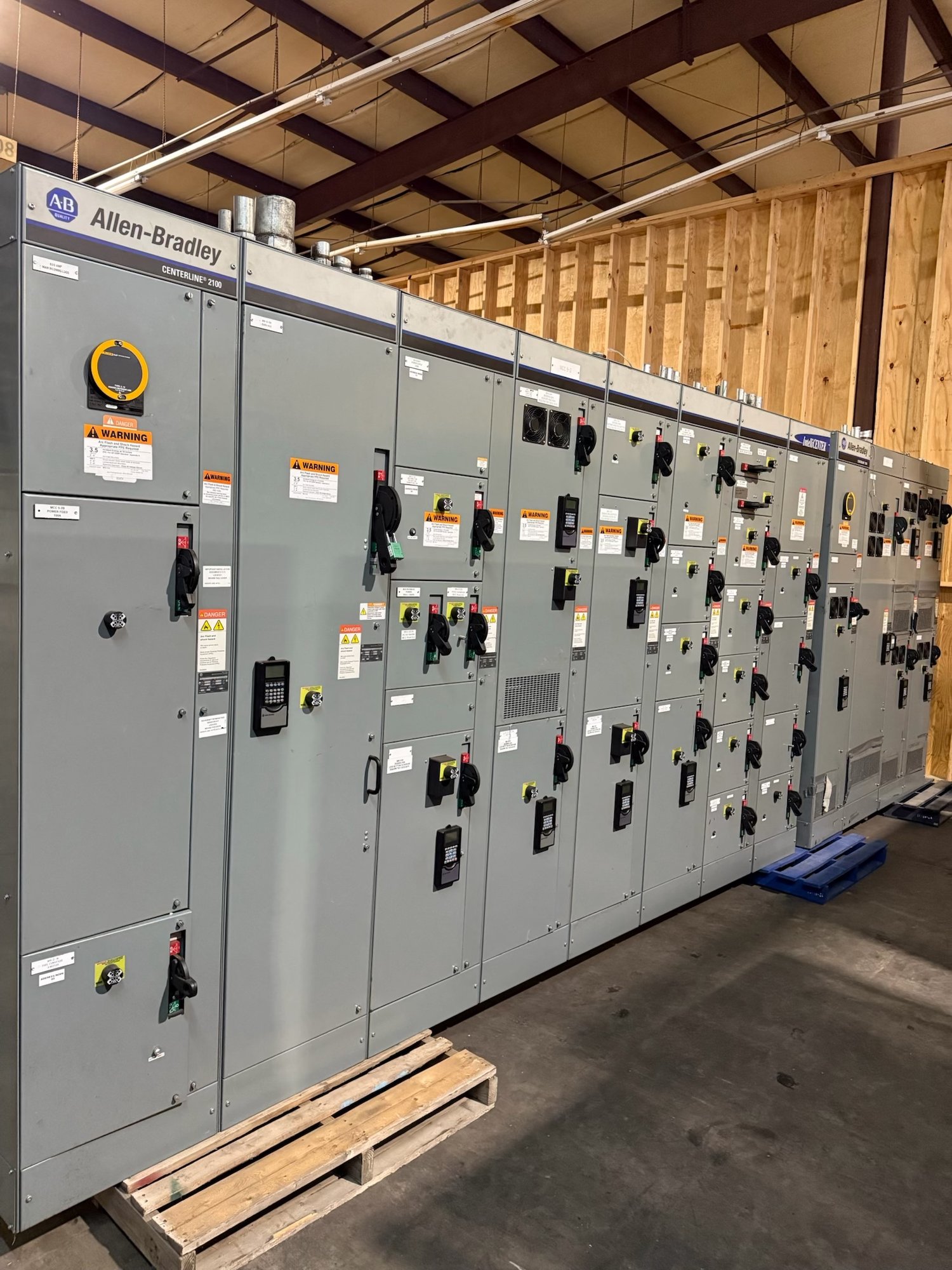
Rank parts by operational consequence
Start with the effect of a component failure, not its purchase price or apparent convenience. Identify which switchgear sections serve critical loads, whether an alternate feed or spare breaker position exists, and how long the facility can tolerate an interruption. A component that can disable an essential process deserves different attention from one whose failure affects only a noncritical indication.
For each candidate spare, record the failure scenario, affected equipment, available workaround and estimated replacement effort. Consider dependencies as well: a control-power component may affect several breakers, while a single protective relay may leave one feeder unavailable. Have the facility’s qualified electrical and engineering personnel confirm these consequences against the one-line diagram, operating procedures and maintenance history.
Confirm compatibility before ordering
Switchgear parts that look alike may differ in electrical characteristics, mechanical dimensions, terminal arrangement, control voltage, trip functions or accessory interfaces. Identify the equipment manufacturer, assembly designation, section and device position, along with catalog and part numbers where available. For a breaker, document frame and trip-unit details; for a relay or control component, capture the relevant model, settings range and connection information.
Use nameplates, approved drawings, bills of material and prior purchase records to verify the configuration. Photos can help clarify labels and physical interfaces, but should support—not replace—engineering review. If the original part number is obsolete or the assembly has been modified, provide the modification history and have a qualified engineer determine whether a proposed replacement is suitable. Do not assume interchangeability from appearance or nominal voltage alone.
Account for shelf life and storage
Not every spare benefits from long-term storage. Batteries, electronic modules, capacitors and some protective devices can be affected by age, temperature, humidity, packaging condition or periodic maintenance requirements. Ask what storage conditions and preservation steps apply to the specific part, whether date codes matter, and whether inspection or replacement intervals should be included in the site’s maintenance plan.
Keep parts in labeled, controlled storage with their documentation and traceability information. Protect sensitive components from moisture, dust, static discharge and handling damage as applicable. Set a review date to check condition, packaging and compatibility after equipment changes. A spare that has deteriorated or no longer matches the installed configuration can create false confidence during an outage.
Balance replenishment time against risk
Compare the time to obtain a replacement with the maximum outage the operation can accept. Confirm current availability and an order-specific timeline rather than relying on a general estimate; configuration, component sourcing and production requirements can affect timing. For a long-replenishment item with severe failure consequences, holding a verified spare may be justified. For a readily obtainable, low-impact item, planned replenishment may be more practical.
Evaluate the total operational cost, including storage, periodic inspection, engineering review and the consequences of waiting for a replacement. Consider whether several assets use the same component and whether a shared spare is truly compatible across them. Do not count a part as shared until each equipment configuration and required settings or accessories have been checked.
Prepare a precise quote request
For a quote, share the part description and quantity, equipment and assembly identifiers, device position, available catalog numbers, relevant nameplate information, and the drawing revision or bill-of-material reference. Include required functions, electrical and control characteristics, accessories, known modifications, storage requirements and the date the spare must be available. State whether the request is for a replacement component or a custom-built assembly so the scope can be reviewed accurately.
If records conflict or details are missing, identify the uncertainty rather than guessing. Provide clear photos of labels and interfaces when useful, and note whether engineering confirmation is needed before release. Exact scope, availability and timeline are confirmed for each order. A complete request helps distinguish a compatible spare from a similar-looking part and gives procurement a sound basis for comparing options.
Coordinate delivery and handoff in Georgia
Plan Georgia delivery around the facility’s receiving hours, site access rules, storage location and outage or maintenance window. Confirm the ship-to address, receiving contact, packaging and handling needs, and whether the spare must arrive before a scheduled shutdown. Nationwide shipping supports projects in Georgia, but the delivery plan and timing should be confirmed for the specific order rather than assumed.
Before closing the purchase, assign responsibility for receiving inspection, asset-record updates and controlled storage. Pass the part identification, approved drawings or documentation, storage instructions and compatibility decision to the maintenance team. The actionable next step is to rank the highest-consequence failure points, verify their exact installed configurations, and request quotes for the spares whose replenishment time exceeds the facility’s acceptable recovery window.