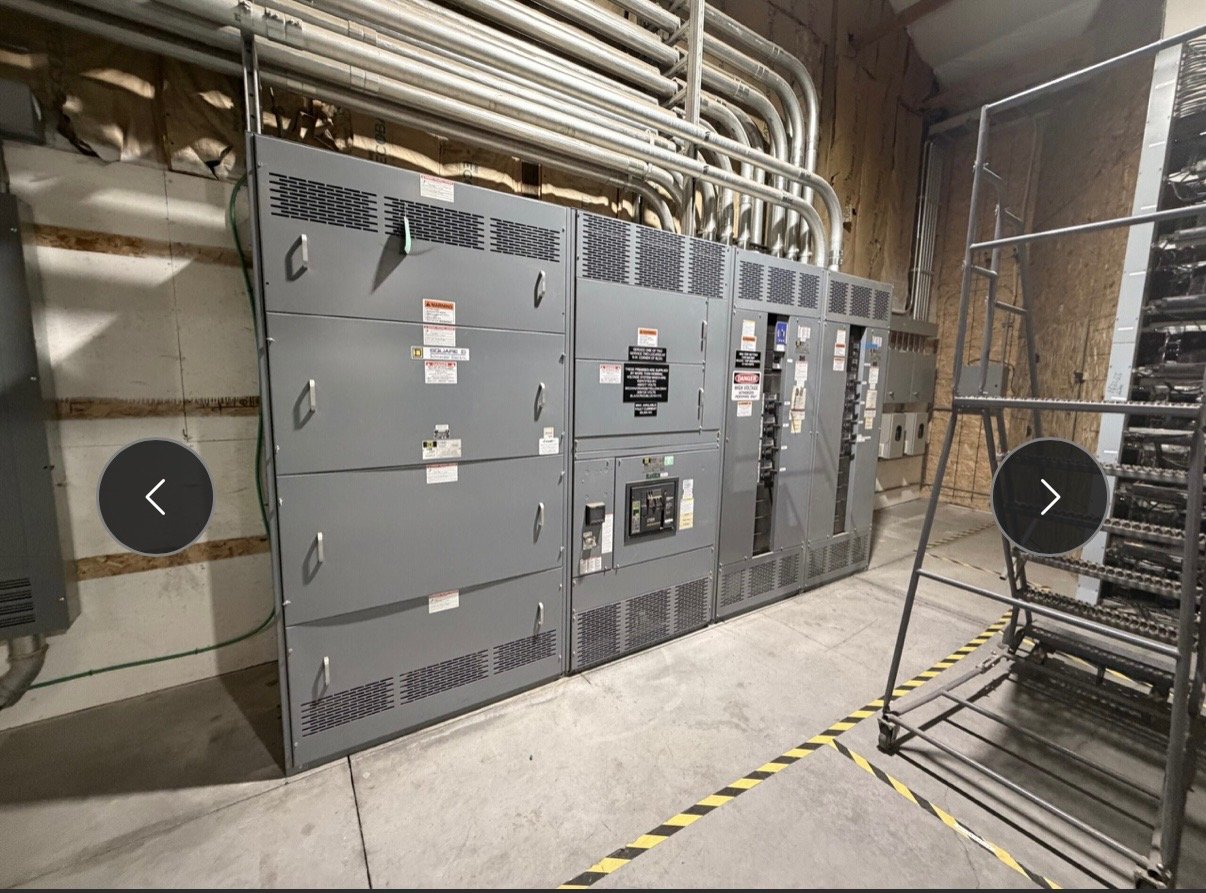
Start with the installed equipment record
Give prospective suppliers the existing equipment nameplate information, manufacturer and model, age if known, and available drawings. Include the one-line diagram, elevations, wiring diagrams, and any prior modifications that affect the lineup. These records help establish what is installed; they do not by themselves confirm that a replacement will connect or operate as intended.
Ask the supplier to identify missing or conflicting information before equipment is quoted as a match. In particular, clarify system voltage, frequency, phase and wire arrangement, bus details, protective-device types, control power, metering, and termination locations. If labels are unreadable or drawings are outdated, arrange for qualified personnel to verify field conditions and document what can be confirmed.
Check electrical and physical interfaces
A replacement must be evaluated against the complete application, not just the cabinet footprint. Compare service and feeder arrangements, bus configuration, neutral and grounding provisions, cable entry and bending space, conduit locations, access clearances, and the direction in which doors or removable sections open. Existing foundations, overhead obstructions, and room access can constrain both the new assembly and the route used to bring it into the building.
For protective and control functions, provide available device schedules and settings information, interlock descriptions, instrument-transformer details, and control schematics. Ask which features can be reproduced, which require redesign, and what engineering decisions remain open. Have the responsible electrical engineer review system duty, coordination, and applicable requirements; a supplier’s quote or dimensional comparison is not a substitute for that review or for approval by the authority having jurisdiction.
Make outage limits part of the scope
Share the facility’s outage window, switching constraints, load-transfer plan, and any operations that must remain available. Explain whether the work is planned as a full replacement, staged changeover, or another engineered approach. These facts help the supplier and project team discuss section boundaries, delivery sequence, temporary arrangements, and installation interfaces without assuming a particular method is feasible.
Ask what must be resolved before the outage is scheduled: approved drawings, confirmed field dimensions, connection details, protection and control decisions, and coordination with the installation contractor. Confirm what equipment will arrive as an assembly and what field connections or adjustments are outside the manufacturing scope. The facility’s qualified electrical personnel and contractors must plan and perform installation, testing, and energization under the project’s approved procedures.
Request traceable source documents
A useful proposal makes the offered configuration reviewable. Ask for a clear equipment description, drawings appropriate to the order stage, component and device schedules, and identification of assumptions, exclusions, and customer-furnished information. For a UL 891 switchboard assembly, specify that scope clearly and request the applicable assembly documentation for review. UL 891 applies to switchboards; it is not a blanket listing for medium- or high-voltage switchgear.
Discuss what records will accompany the completed order, such as final drawings, wiring information, bills of material or component identification, and available test or quality records applicable to the supplied scope. Confirm document format, revision control, and approval milestones. Do not treat a preliminary drawing, component datasheet, or standard reference as proof that the complete proposed assembly satisfies the project’s requirements; the engineer and relevant authority must assess the actual design and documentation.
Compare suppliers on scope and delivery coordination
When evaluating quotes, compare more than price. Check that each supplier has addressed the same electrical configuration, physical interfaces, included devices, documentation, and unresolved assumptions. Ask who is responsible for design inputs, drawing review, change control, and notification if verified site conditions differ from the information used for the quote. A low-cost proposal with unclear exclusions can shift important decisions into the outage period.
For a Georgia project, provide the delivery address, site receiving hours, unloading limits, storage conditions, and required arrival sequence. Confirm the proposed shipping scope and estimated schedule for the specific configuration; lead time and availability depend on the order and are confirmed for that project. Nationwide shipping can support Georgia destinations, but the facility team should coordinate carrier access, receiving capacity, and protected storage with the installer.
Prepare a complete quote request and handoff
For a useful quotation, send the one-line diagram, equipment photos and nameplates, available drawings, required ratings and functions, preferred configuration, known field dimensions, outage constraints, target delivery period, and documentation needs. State what remains unverified and identify the engineer or contractor responsible for technical review. Ask the supplier to return a list of assumptions and open questions alongside the proposed scope so procurement can compare responses on consistent terms.
Before releasing the order, resolve interface questions, document the approved configuration and revisions, and assign responsibility for field verification, installation coordination, and project records. Then align drawing approvals, manufacturing milestones, Georgia delivery, receiving, and outage planning with the facility’s schedule. This disciplined handoff gives the project team a traceable basis for evaluating replacement equipment without assuming compatibility that has not been established.