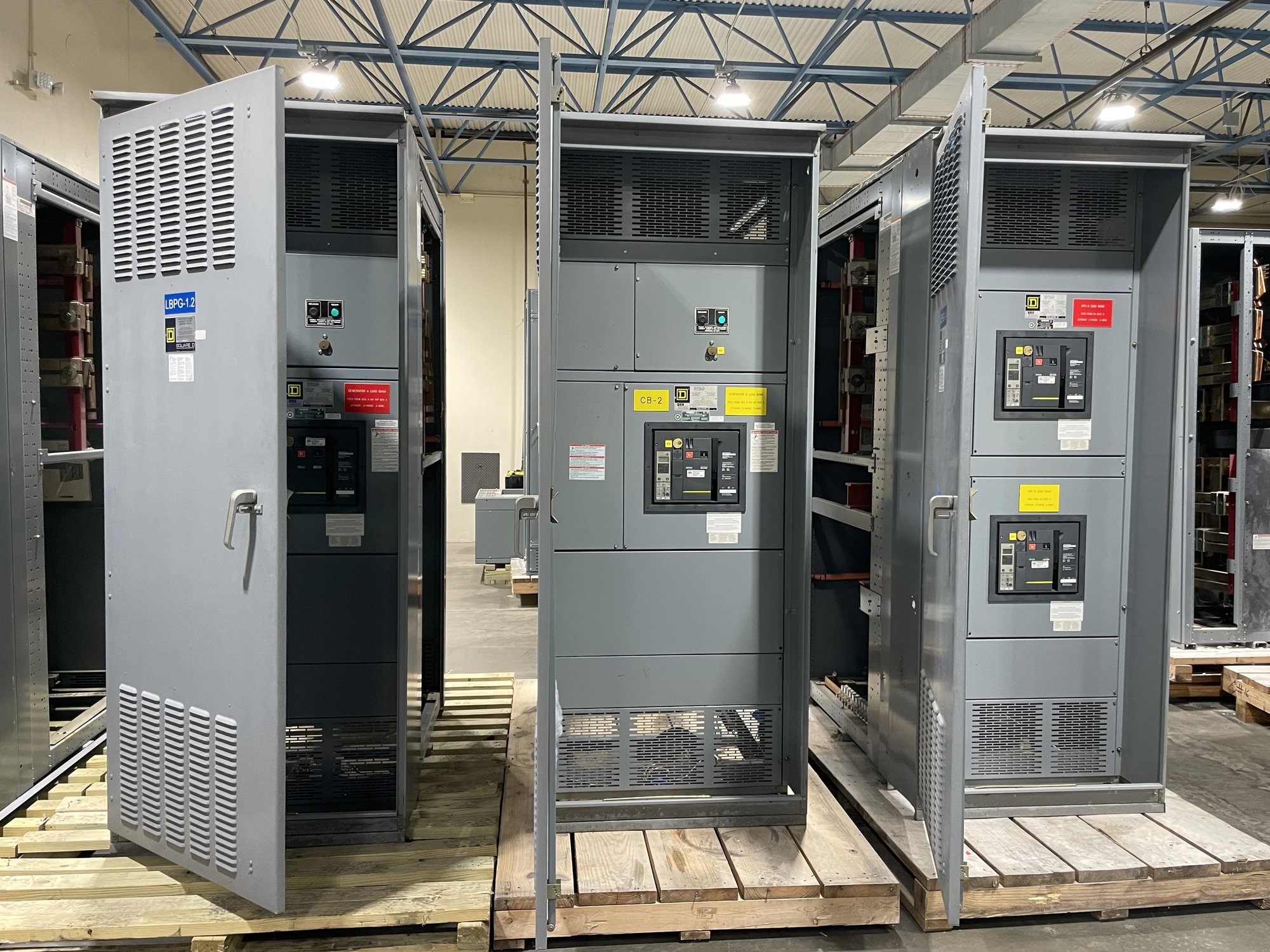
Establish the equipment’s condition
Build the decision on inspection records, maintenance history, operating events, and the condition of components that affect isolation, interruption, and control. Record the equipment manufacturer, model, age if known, nameplate data, drawings, and any evidence of overheating, corrosion, tracking, mechanical wear, or repeated trips. A qualified electrical professional should assess the equipment under appropriate site procedures; appearance alone cannot establish its remaining service life.
Repair may be worth evaluating when the defect is identifiable, the affected parts can be sourced and verified, and the rest of the assembly remains suitable for service. Replacement deserves closer review when deterioration is widespread, critical parts are unavailable, failures recur, or records are too incomplete to support a reliable repair scope. Ask the engineer to separate observed facts from assumptions and identify what further inspection or testing is needed.
Make safety and risk explicit
Compare the hazards associated with continued operation, repair work, and replacement—not just the probability of another failure. Consider the equipment’s interrupting and withstand requirements, protective-device coordination, grounding, enclosure condition, arc-flash study inputs, and the consequences of losing the loads it serves. These matters require qualified engineering review against the actual system and applicable requirements; a repair or replacement choice by itself does not establish safety or code compliance.
Ask what risks remain after a proposed repair, what components would still be original, and how the work affects protection and operating procedures. For replacement, identify the engineering reviews needed for the new assembly, including fault-current and coordination analysis where applicable. Keep operations, electrical engineering, safety, and maintenance involved so the selected scope addresses both the equipment and the way the facility must operate.
Check compatibility before choosing a path
A repair must fit the installed equipment precisely. Confirm part numbers, device types, control voltages, trip-unit or relay details, bus configuration, and the manufacturer’s documentation before treating a component as interchangeable. Changes in loads, available fault current, protective settings, or connected generation may also affect whether the existing design remains appropriate. Have a qualified engineer review proposed substitutions and modifications rather than relying on dimensional similarity.
Replacement shifts the compatibility question to the complete interface with the facility. Gather one-line diagrams, existing and proposed load information, feeder and cable details, available space, access route, environmental conditions, and connection requirements. For a new switchboard assembly, clarify required sections, main and feeder arrangements, metering, controls, and applicable UL 891 scope. UL 891 applies to switchboards; it is not a blanket listing for medium- or high-voltage switchgear.
Compare outage plans, not just work hours
A repair can appear faster if parts and qualified labor are available, but diagnosis, parts confirmation, access, testing, and return-to-service steps all affect the outage. Determine whether work can be staged, whether loads can be transferred, and what operating limits apply while equipment is out of service. Do not assume an outage can be shortened by working on energized equipment; the site’s qualified personnel must establish the permitted work plan.
Replacement typically adds design confirmation, assembly production, delivery, site preparation, installation, testing, and commissioning to the schedule. Existing conditions, shutdown windows, utility coordination, cable changes, and permit or authority review can influence the sequence. Define the required in-service date early, identify decision deadlines, and ask suppliers to confirm current availability and the schedule for the specific configuration. No general lead-time estimate can substitute for order-specific confirmation.
Evaluate lifecycle cost and procurement scope
Compare the full cost of each path over the period the facility expects to operate the system. Include inspection and testing, repair labor and parts, repeat outage exposure, planned maintenance, spare-part strategy, engineering, installation, and potential future modifications. A low initial repair estimate may not represent good value if it leaves known obsolescence or unresolved condition concerns; replacement also brings capital, construction, and transition costs that must be justified.
For a replacement quote, provide equipment type and voltage class, available drawings and photographs, nameplate information, desired lineup and functions, project location in Georgia, delivery access constraints, and target outage or installation window. State which details are verified and which need engineering confirmation. The manufacturer can use this information to define a new, custom-built configuration and confirm scope, availability, and schedule for the order. American-made components can be considered where they meet the specified requirements.
Hand off a decision the project can execute
Document the selected option, supporting condition findings, open technical questions, assumed loads, protection requirements, outage boundaries, and responsible reviewers. If repair is selected, define the parts and work included, testing and acceptance criteria, and any remaining limitations or follow-up actions. If replacement is selected, align the approved drawings, submittals, connection details, site readiness, and commissioning responsibilities before release to production.
To move the comparison forward, assemble the latest one-line diagram, equipment schedule, inspection and maintenance records, photographs, nameplate data, load changes, and outage constraints. Ask the engineer to identify the acceptable technical basis for repair and the minimum replacement scope, then request a quote against the same requirements. For Georgia delivery, share the site address, unloading and access conditions, and requested project sequence so shipping can be coordinated without assuming a delivery date. Confirm the final scope and schedule before committing.