Start with the load, not a default ratio
A neutral conductor carries the residual current from phase conductors in a grounded system. With balanced linear loads, phase currents can largely cancel at the neutral. Real installations may have substantial single-phase loads, changing operating schedules, or uneven phase allocation, so the neutral current can be meaningful even when total load appears moderate. A familiar percentage of phase-conductor size is not a substitute for reviewing the connected and expected load.
For a switchboard specification, identify the system voltage and configuration, the number and type of outgoing circuits, anticipated phase allocation, and how loads operate together. Separate present loads from planned additions, and note which loads are continuous or likely to run concurrently. These details help the engineer establish a defensible neutral duty and help procurement compare proposals on an equivalent basis.
Account for harmonic-producing loads
Electronic power supplies, LED lighting drivers, variable-frequency drives, data-processing equipment, and other nonlinear loads can draw current in a nonsinusoidal pattern. Triplen harmonic components, including third harmonics, can add in the neutral rather than cancel as balanced fundamental-frequency currents do. As a result, a system with well-balanced phase loading may still require careful neutral-current evaluation when nonlinear loads are widespread.
Ask the design team for the basis of its harmonic estimate: load types, quantities, operating conditions, and any available harmonic study or measured data. Do not assume every installation has the same spectrum or that a neutral sized for one building will suit another. If future electronic loads are expected, establish whether that growth is included in the calculation or handled as a defined allowance.
Verify the complete current path
Neutral capacity is not only a wire-size question. The design review should trace the neutral from the source through the switchboard bus, connections, and applicable feeder or branch conductors. Confirm that each part is intended for the calculated duty and that terminal provisions, routing, and conductor material match the project documents. A larger neutral conductor does not resolve a bus or connection limitation elsewhere in the path.
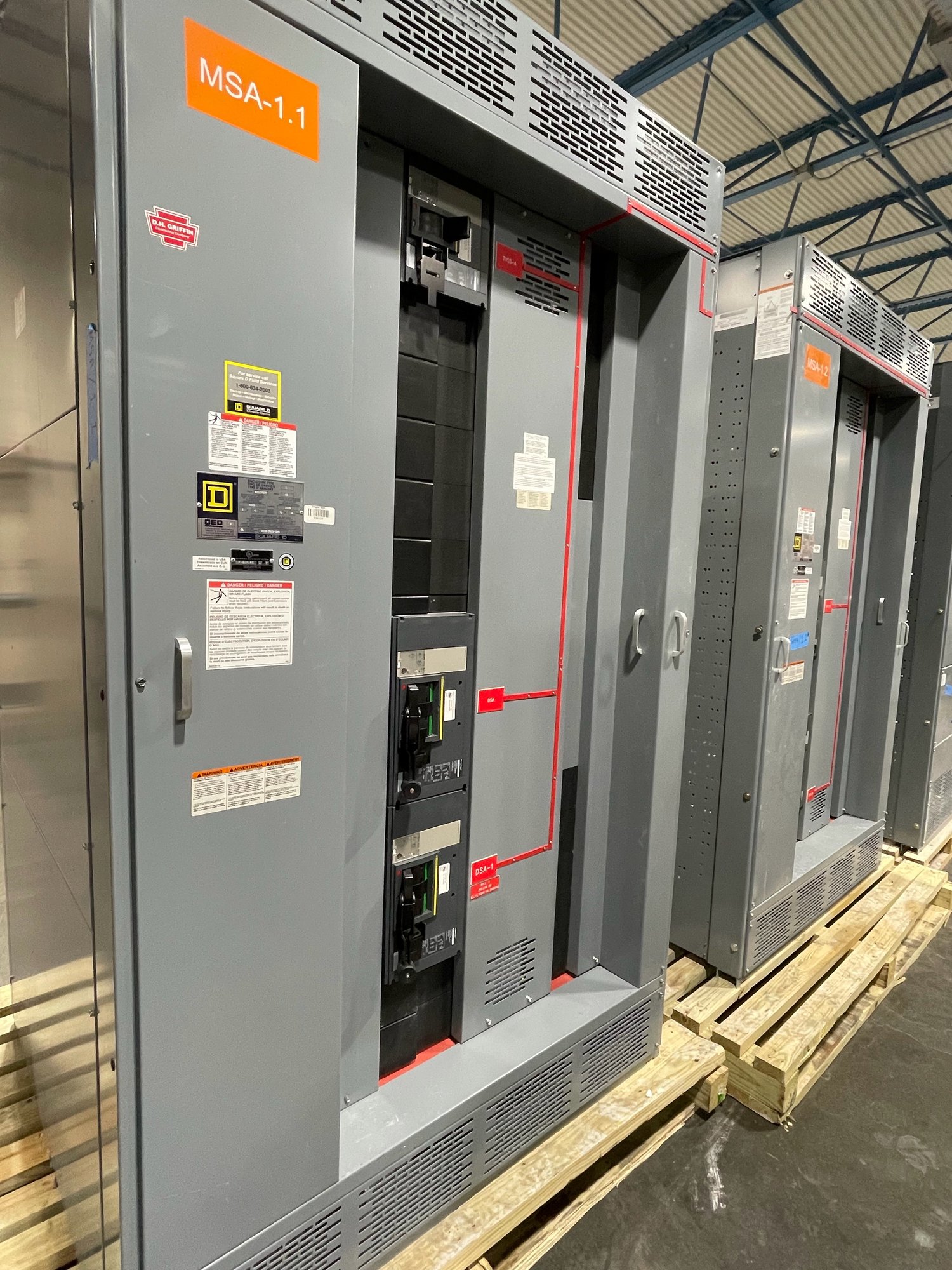
The equipment builder needs unambiguous requirements for neutral bus capacity and arrangement, including whether the neutral is full-size or otherwise specified, where it is provided, and how incoming and outgoing neutrals terminate. Grounding and bonding details also matter: the neutral-to-ground connection belongs at the point established by the system design, not at arbitrary downstream locations. The project engineer should resolve those details before release.
Coordinate calculations and equipment scope
Before equipment is ordered, reconcile the load schedule, one-line diagram, panel or feeder schedules, and switchboard specification. Look for mismatches such as a neutral requirement shown on one document but omitted from another, or a later load revision that changes phase balance or nonlinear-load content. Record the calculation assumptions and identify who is responsible for final system studies and approval.
For a quote, share the applicable drawings and schedules, system configuration, required neutral and bus arrangement, known nonlinear loads, expected additions, and any project-specific construction constraints. State whether neutral-current calculations or harmonic information are available, and flag open engineering decisions rather than treating an unknown as a confirmed rating. We can build new switchgear to the reviewed project requirements; exact scope, availability, and schedule are confirmed for each order.
Carry the requirement through delivery and review
A neutral-sizing decision should remain visible through submittals, approved drawings, fabrication, and field installation. Compare the equipment documents with the engineer-approved one-line and schedules, including neutral bus provisions and termination details. If loads, feeder arrangements, or the system configuration change after approval, route the change for engineering review before relying on the original capacity assumptions.
For Georgia projects, coordinate the required equipment configuration and delivery point with the project schedule and site receiving plan. Nationwide shipping can support Georgia delivery, but transit timing and order availability are confirmed for the specific order. Before requesting pricing, assemble the current load information and the exact neutral requirements; that gives the engineering and purchasing teams a clear basis to resolve capacity, scope, and delivery coordination.