Put people and the site first
Treat smoke, arcing, unusual heat, loud electrical noise, a burning odor, visible damage, or unexpected loss of power as a serious incident. Keep personnel and visitors away from the affected equipment and any area that may be exposed to electrical, fire, or arc-flash hazards. Do not open compartments, approach damaged gear, or attempt a reset to restore service.
Follow the facility’s emergency procedures and contact emergency responders when there is fire, smoke, injury, or an immediate threat. Notify the responsible electrical supervisor and facility leadership. Only personnel authorized under the site’s procedures should coordinate electrical isolation; nobody should assume a breaker position, remote indication, or darkened display proves equipment is de-energized.
Control access and establish isolation
Have qualified electrical personnel determine the boundaries of the incident and identify all possible sources of energy, including normal, alternate, generator, and backfeed sources. Apply the site’s energy-control and lockout/tagout procedures. Isolation, absence-of-voltage verification, and any required grounding must be performed by qualified personnel using appropriate procedures and equipment.
Do not re-energize equipment simply because visible damage is limited or a protective device has been reset. The failure may have affected bus, insulation, connections, protective devices, or adjacent compartments. Keep the affected lineup out of service until qualified assessment establishes the condition and an authorized return-to-service process is completed.
Preserve useful incident evidence
Once the area is controlled, record what happened without disturbing the equipment. Note the date and time, operating conditions, alarms, protective-device indications, affected loads, and sequence of events. Preserve relay or trip-unit event records, building management alerts, and operator logs before routine resets or data retention limits erase them.
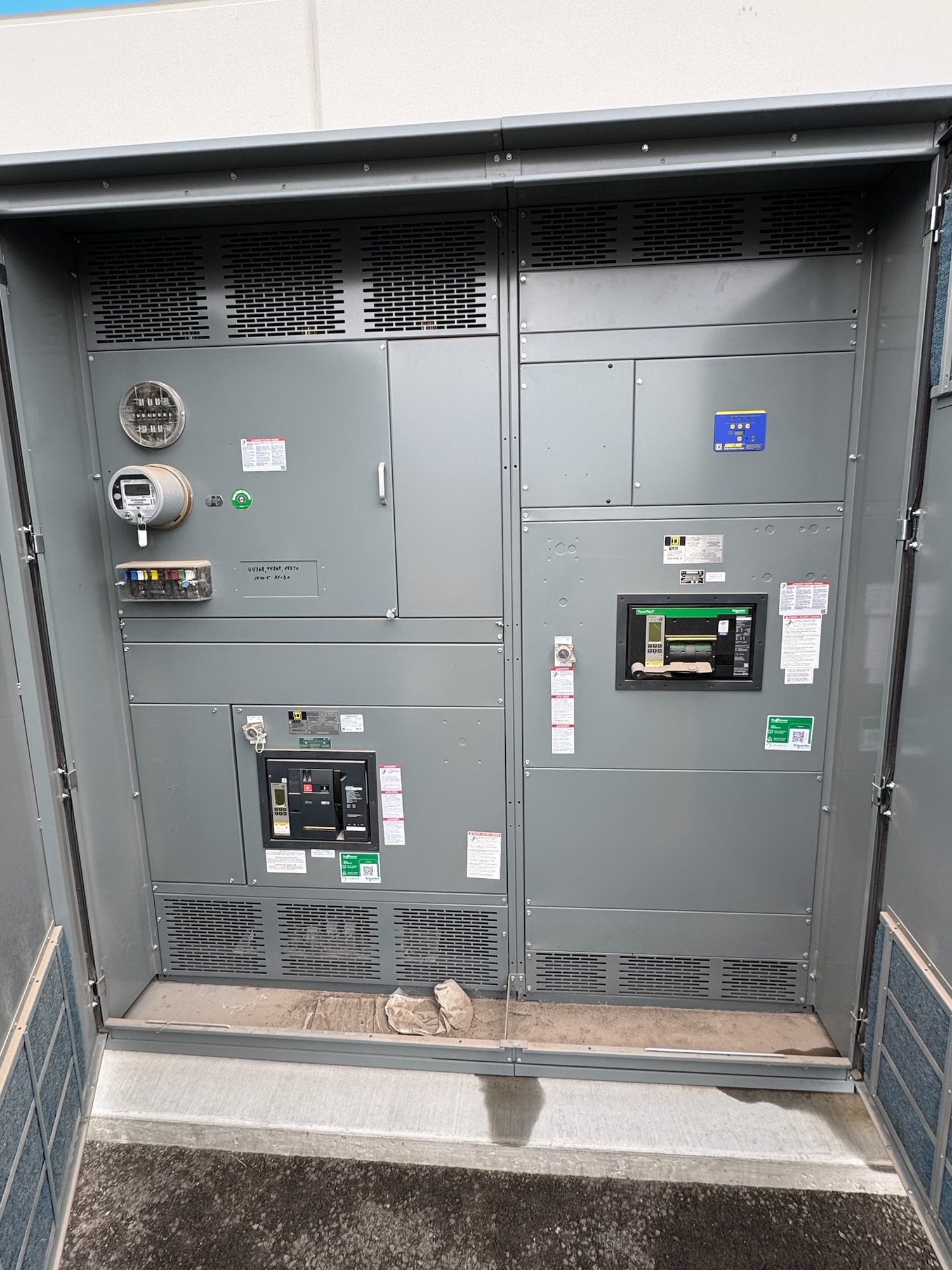
Photographs can help document external conditions, labels, device positions, and visible damage, but take them only from a location approved by the responsible safety and electrical personnel. Record the lineup name, section, circuit identifiers, nameplate information, and any recent switching or maintenance. Do not remove covers, clean residue, retrieve fragments, or make repairs for documentation purposes.
Arrange a qualified technical assessment
A qualified electrical engineer or service professional should assess the failure mechanism, affected components, connected loads, and condition of the surrounding assembly. The review may examine protection settings and coordination, fault records, maintenance history, environmental conditions, and upstream and downstream equipment. The extent of damage and evidence available determine what testing or inspection is appropriate.
The assessment should distinguish equipment that can be evaluated for repair from equipment that warrants replacement, while accounting for the consequences of reusing affected parts. Any replacement design requires review against the system’s actual voltage, available fault current, continuous load, protection scheme, enclosure and installation conditions, and applicable project requirements. Do not assume an existing rating or configuration remains suitable after a system change.
Turn findings into a procurement scope
If the decision is to procure new switchgear, share the incident summary alongside current one-line diagrams, equipment schedules, nameplate photographs, and available drawings. Identify which sections and circuits failed, which loads must return first, what existing equipment will remain, and whether the replacement must connect to a particular upstream source or downstream distribution arrangement.
For a manufacturer quote, clarify the required equipment type and function, system voltage, bus and protective-device requirements, enclosure conditions, incoming and outgoing connections, and any control or metering needs. State whether a UL 891 switchboard assembly is the intended scope; that standard applies to switchboards and does not establish a blanket listing for medium- or high-voltage switchgear. Engineering review must confirm the final scope and applicable requirements.
Coordinate Georgia delivery and handoff
Share the Georgia delivery location, receiving hours, unloading capabilities, access restrictions, and the planned installation sequence when requesting a quote. Explain whether the site needs phased shipments, a particular delivery window, or coordination with other construction work. Exact configuration, availability, and timeline are confirmed for each order; delivery planning should reflect the site’s actual constraints rather than an assumed schedule.
Before procurement is released, align the equipment scope with the responsible engineer and installation contractor. Confirm approved drawings, interface dimensions, cable or bus connections, protection and control requirements, and who will handle installation, testing, and authorization to energize. The practical next step is to send the incident record and available equipment documents with the required configuration and Georgia site constraints so the replacement scope can be reviewed against the project.