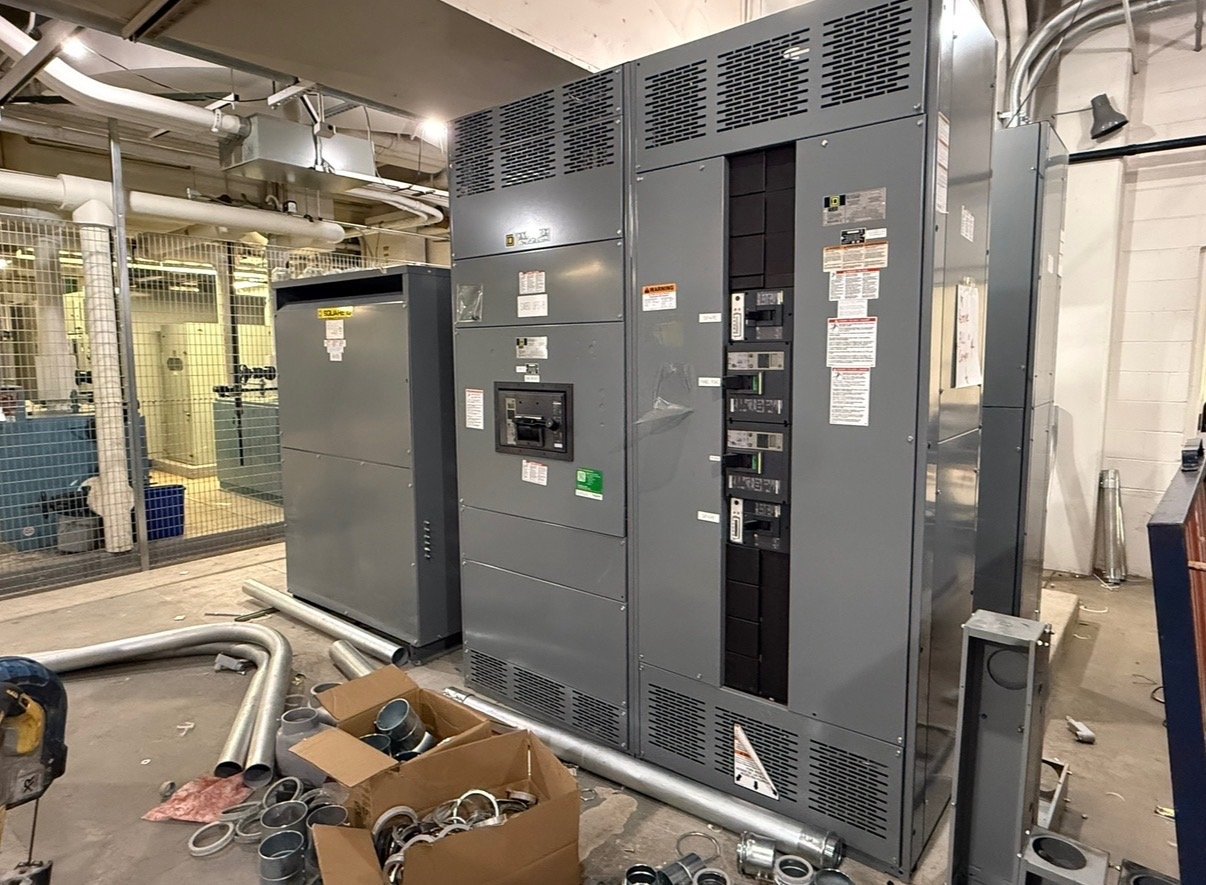
What the bolted frame defines
A bolted frame joins structural members with specified fasteners rather than relying on a continuously welded enclosure frame. In a switchgear assembly, those members support the equipment structure and help establish section geometry. The frame connection is only one part of the design: bus supports, barriers, doors, equipment mounting, grounding provisions, and enclosure details also need to be coordinated for the intended assembly.
Do not assume that a bolted frame makes every lineup modular or field-separable. Some designs use bolted connections for fabrication convenience while shipping larger assembled sections; others divide the structure into transportable modules. The proposed arrangement depends on electrical design, enclosure construction, access, shipping dimensions, handling limits, and the site’s available installation resources.
Define the modular boundary
Ask the manufacturer to identify the planned shipping sections and the specific joints that will be completed in the field. Clarify whether each section arrives with internal equipment and wiring installed, which bus or control connections remain open, and what covers or barriers must be removed for joining. A general note such as “bolted construction” is not enough to establish the installation scope or sequence.
Module boundaries should follow the electrical and mechanical design, not just a preferred truck or doorway dimension. Review lineup arrangement, section weights and dimensions, route from receiving point to equipment location, turning clearance, lifting access, floor openings, and final working space. For a Georgia project, provide the delivery address and receiving constraints early; delivery planning can then be coordinated with the confirmed shipment configuration and project schedule.
Specify joints and interfaces
For procurement, request the structural connection details that affect assembly: member locations, mating surfaces, hole patterns, fastener type and finish, and whether hardware is supplied loose or installed for shipment. The manufacturer should also define the assembly method and any required tightening procedure in the project documentation. Avoid substituting field hardware or modifying holes without approved engineering direction, since changes can affect fit, structural performance, enclosure alignment, or clearances.
Electrical interfaces require equal attention. Identify how section-to-section bus connections, bonding paths, control wiring, and any other interconnections will be furnished and completed. Confirm which components are factory-installed, which are shipped separately, and what inspection or test records accompany the equipment. UL 891 applies to switchboard assemblies; it should not be treated as a blanket listing for medium- or high-voltage switchgear. State the equipment type and requested standard or certification scope explicitly.
Balance factory work and field work
Moving more assembly into the factory can reduce the number of field tasks, but may increase shipping dimensions or complicate handling. Shipping smaller modules can ease access through constrained routes, while adding field joints, alignment steps, and coordination between crews. Compare those tradeoffs against site lifting capability, delivery staging, available labor, and the project’s planned outage or construction sequence. The best split is project-specific, not an automatic benefit of bolted construction.
Set responsibility boundaries in the purchase documents. Name who receives and inspects sections, provides lifting equipment, joins structural members, completes electrical connections, reinstalls covers, and performs required checks. Installation, service, and energization belong to qualified personnel following approved instructions and project procedures. Engineering review and the authority having jurisdiction determine applicable design and installation requirements; a bolted frame by itself does not establish code compliance or suitability for a particular location.
Prepare a complete quote package
To request a useful quote, share the one-line diagram, equipment type, lineup arrangement, required electrical ratings, enclosure and environmental requirements, and any applicable project specifications. Include the desired module dimensions or maximum shipping envelope, site access and receiving limits, available lifting method, target delivery window, and whether field assembly is expected. Note special constraints such as restricted staging, phased construction, or a required factory documentation package.
Ask for a proposed section breakdown, scope matrix, connection details, loose-shipped parts list, and assumptions about factory and field completion. Confirm how revisions will be handled if room dimensions, access, or project sequencing changes. Exact configuration, component availability, and delivery timing are confirmed for each order, so align the quotation with the latest approved project information before release to fabrication.
Coordinate the Georgia handoff
Before shipment, compare the approved drawings with the installation plan and verify the receiving team has the module identification, assembly instructions, connection hardware, and documentation needed for its assigned work. Coordinate delivery timing with site readiness, unloading arrangements, and secure storage. Nationwide shipping can support Georgia projects, but the delivery plan must reflect the confirmed equipment configuration, destination, and receiving conditions rather than an assumed schedule.
For a project using bolted structural sections, make the next step a written scope review: mark the factory-to-field boundary on the lineup drawing, list every structural and electrical interface, and record site access and handling limits in the quote request. That gives engineering, procurement, and the installation team a common basis to evaluate modular fabrication and plan the field handoff before the order is released.