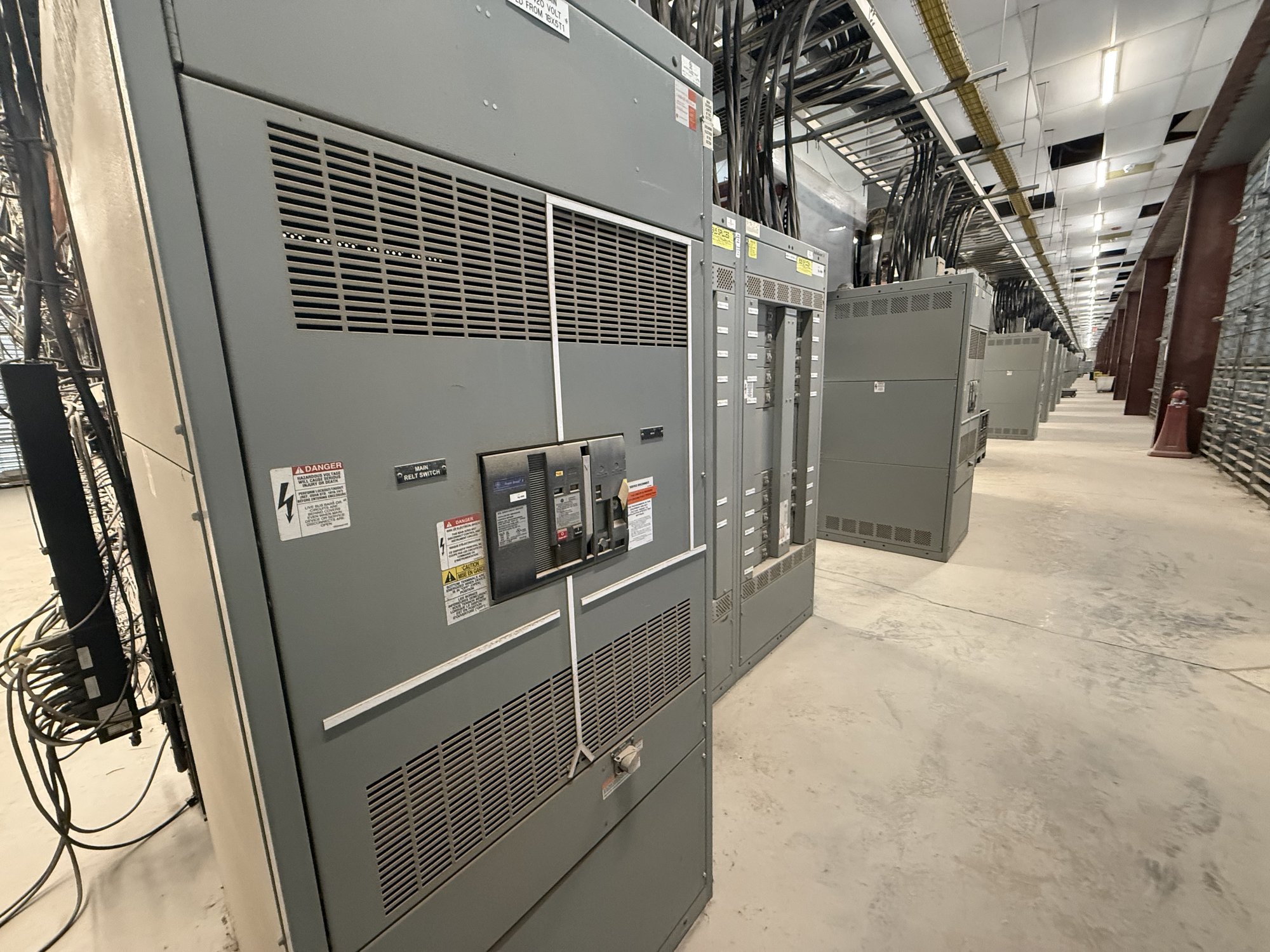
Why elevation changes equipment conditions
As altitude increases, air density and pressure decrease. Air provides part of the insulation between energized conductors and grounded or adjacent parts; under some conditions, reduced air density lowers its dielectric strength. Clearances that are adequate at a reference altitude may therefore require review when equipment will operate substantially higher. The effect depends on the equipment design, voltage, insulation system, and applicable standards, not on elevation alone.
Lower air density also affects heat transfer by convection. Components that dissipate heat, including bus, breakers, and connections, may not shed it as effectively as they would at a lower site. The resulting temperature rise depends on load, enclosure construction, ventilation, ambient temperature, and other design details. Altitude is a design input, not a stand-alone correction factor that can be applied without checking the specific assembly.
Identify the actual installation site
Share the equipment’s operating elevation, not just the project’s city or the location where it will be shipped. A site survey, project specification, or reliable elevation data can establish the value for the installation point. If a facility has equipment rooms at different elevations, identify which room will contain each lineup and note any planned relocation or future expansion that could change the application.
Georgia projects are often at modest elevations, but the state’s varied terrain and the possibility of equipment being installed outside Georgia make assumptions unwise. Confirm the site elevation with the project engineer, and include the installation address or site description, indoor or outdoor location, and expected ambient temperature range. For equipment shipping to Georgia, delivery location and operating elevation are separate facts: the shipping destination does not establish the conditions at the final installation site.
Insulation review is application-specific
Manufacturer review should consider system voltage, grounding arrangement, switching and protective devices, insulation materials, phase-to-phase and phase-to-ground clearances, and the applicable design standards. The engineer should also identify whether the lineup includes features or connected equipment with different insulation requirements. Do not infer that a standard switchboard design, a familiar clearance, or a prior project automatically applies at a higher elevation.
Provide the required nominal and maximum system voltage, frequency, short-circuit and continuous-current requirements, and any specified impulse or dielectric test criteria. These details help the manufacturer assess the complete application rather than altitude in isolation. UL 891 applies to switchboard assemblies; it is not a blanket listing for medium- or high-voltage switchgear, and altitude review does not change that scope. Equipment requirements and acceptance criteria must be confirmed for the actual assembly.
Thermal performance depends on the full lineup
For thermal review, describe expected continuous loading, demand or load profile, enclosure type, room ventilation, cooling provisions, ambient temperature, and nearby heat sources. Include anticipated future loads if they are part of the project basis. A lightly loaded lineup in a ventilated room presents different conditions from a heavily loaded, enclosed installation, even at the same elevation. The manufacturer needs the intended operating conditions to determine what design review or configuration changes may be appropriate.
Procurement teams should avoid treating an altitude note as a substitute for a complete specification. Ask which assumptions the quotation uses and whether the proposed configuration reflects the stated elevation, loading, ambient conditions, and enclosure. If those inputs are unresolved, record them as open items before releasing the order. Any design adjustments, ratings, or limitations must be confirmed for the specific equipment and reviewed by the project’s responsible engineer.
Make the quote and handoff precise
For a quote, provide the site elevation and source, equipment type and voltage, one-line diagram, load and fault requirements, enclosure and installation environment, ambient range, and target delivery location in Georgia. State whether the equipment is a UL 891 switchboard or another switchgear application, and identify project standards or owner specifications that govern review. Ask what additional data the manufacturer needs and which assumptions will appear on the proposal and drawings.
After award, carry the confirmed elevation and environmental assumptions into submittal review, installation documents, and coordination with the electrical engineer and installing contractor. Flag any changes to site, room ventilation, loading, or equipment location before fabrication is released; such changes can affect the original review. Request manufacturer review before finalizing the purchase specification, then verify that the approved documents reflect the actual installation conditions and agreed delivery plan.