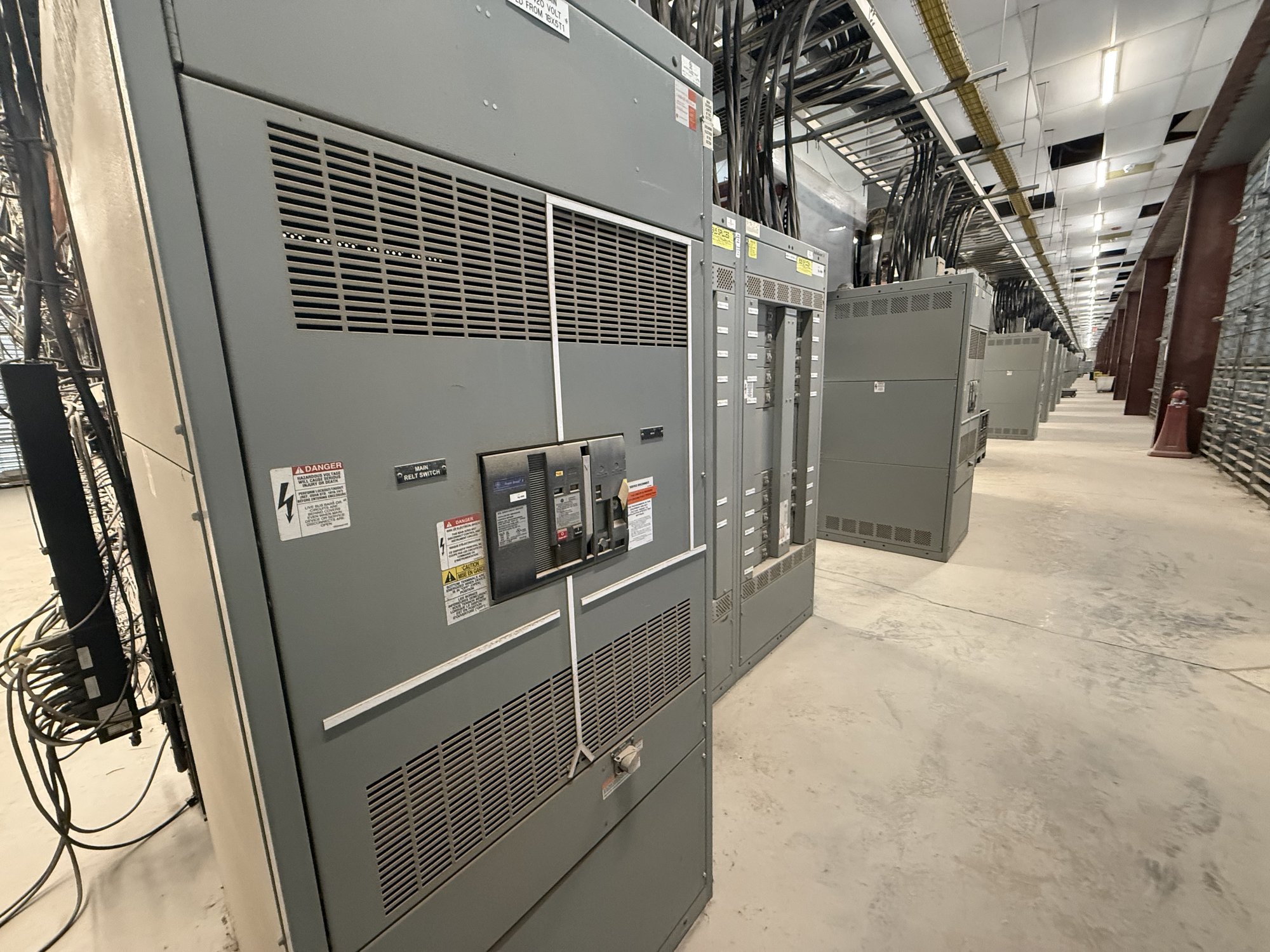
What “plug-in” means in an assembly
In a plug-in arrangement, the breaker connects to stationary bus or a dedicated mounting structure through separable contacts. The breaker can be disengaged from that connection and removed according to the equipment design and its operating instructions. The term describes the electrical and mechanical interface; it does not, by itself, establish that the breaker can be removed while energized or that it has a particular level of isolation.
The mounting method must match the intended breaker family and the switchboard’s engineered construction. Contact geometry, alignment, retention, barriers, and the way the breaker is supported all matter. A plug-in breaker is not simply a standard breaker inserted into any available opening. Confirm the specified equipment design and compatible breaker type before planning replacements or future changes.
How it differs from drawout and fixed mounting
A drawout breaker sits in a cradle or compartment and uses a defined mechanism to move between operating, test, and disconnected positions, where those positions are provided by the design. The racking mechanism controls that movement; it is not interchangeable with manually disengaging a plug-in connection. Procedures and operating capabilities depend on the particular assembly and breaker.
A fixed-mounted breaker is secured and connected as part of the assembly rather than intended for routine removal through a separable plug-in interface or drawout mechanism. Plug-in construction may offer a different maintenance or replacement approach, but it does not automatically provide drawout functions, a visible isolation point, or energized replacement. Compare the actual construction and documented operating sequence, not just the arrangement name.
Questions that shape the specification
Start with the electrical schedule: system voltage, phase and wire configuration, available fault-current information, bus arrangement, breaker frame and trip requirements, and the loads served. Identify which positions need plug-in breakers and whether spaces are spare, populated, or intended for future circuits. These details allow the manufacturer’s engineering review to determine whether the requested arrangement fits the switchboard design.
Also describe the operating environment and work plan. Explain expected access, frequency of breaker changes, maintenance practices, and any space or cable-entry constraints. Ask what the selected construction permits for isolation and removal, what tools or procedures apply, and what barriers or compartment details are included. Do not infer a rating, interchangeability, or maintenance capability from “plug-in”; request the applicable product documentation.
Tradeoffs for operations and procurement
Removable connections can support planned breaker replacement or reconfiguration, but they add interfaces that must be designed, assembled, inspected, and maintained as specified. The arrangement may affect enclosure layout, clearances, bus design, access, and the space available for conductors. A project with frequent changes may value removability; a stable installation may favor another mounting approach. The right choice depends on operating needs and engineered compatibility.
For procurement, compare complete configurations rather than a single breaker line item. Confirm the number and type of positions, breaker details, accessories, neutral and ground provisions where applicable, enclosure requirements, and any requested future provisions. Clarify what is included in the assembly and which field connections or coordination tasks remain with the project team. Final scope, availability, and schedule are confirmed for each order.
Design review and project handoff in Georgia
A clear handoff helps prevent assumptions between the one-line diagram, panel or switchboard schedule, and purchase specification. Send the latest drawings, breaker schedule, known utility or upstream data, physical dimensions, cable-entry preferences, and project milestones. Mark requested plug-in positions explicitly and identify any existing equipment interface that must be verified. Engineering review can then address fit, ratings, construction, and unresolved data before the configuration is finalized.
For a Georgia project, coordinate the intended delivery point, receiving access, unloading responsibility, site readiness, and sequence with the construction or facilities schedule. Nationwide shipping can support projects across the state, while routing and timing depend on the confirmed order and destination. Delivery planning does not replace field verification: the installing contractor and responsible engineers must coordinate the equipment with the site design and applicable authority review.
Prepare a quote request
For a useful quote, share the one-line diagram, load and breaker schedules, system data, requested plug-in positions, enclosure and access requirements, project location, and target milestones. Note whether the request is for a new UL 891 switchboard assembly where applicable; UL 891 applies to switchboards and does not establish a blanket listing for medium- or high-voltage switchgear. Identify open questions rather than assuming a particular construction or rating.
Before release, ask for confirmation of the breaker interface, included positions and accessories, assembly scope, documentation, and order-specific availability and timeline. Have the project’s qualified electrical and engineering personnel review the proposed arrangement, installation requirements, and operating procedures. This gives purchasing a clear basis for comparison and gives the field team a defined configuration to receive, install, and maintain.