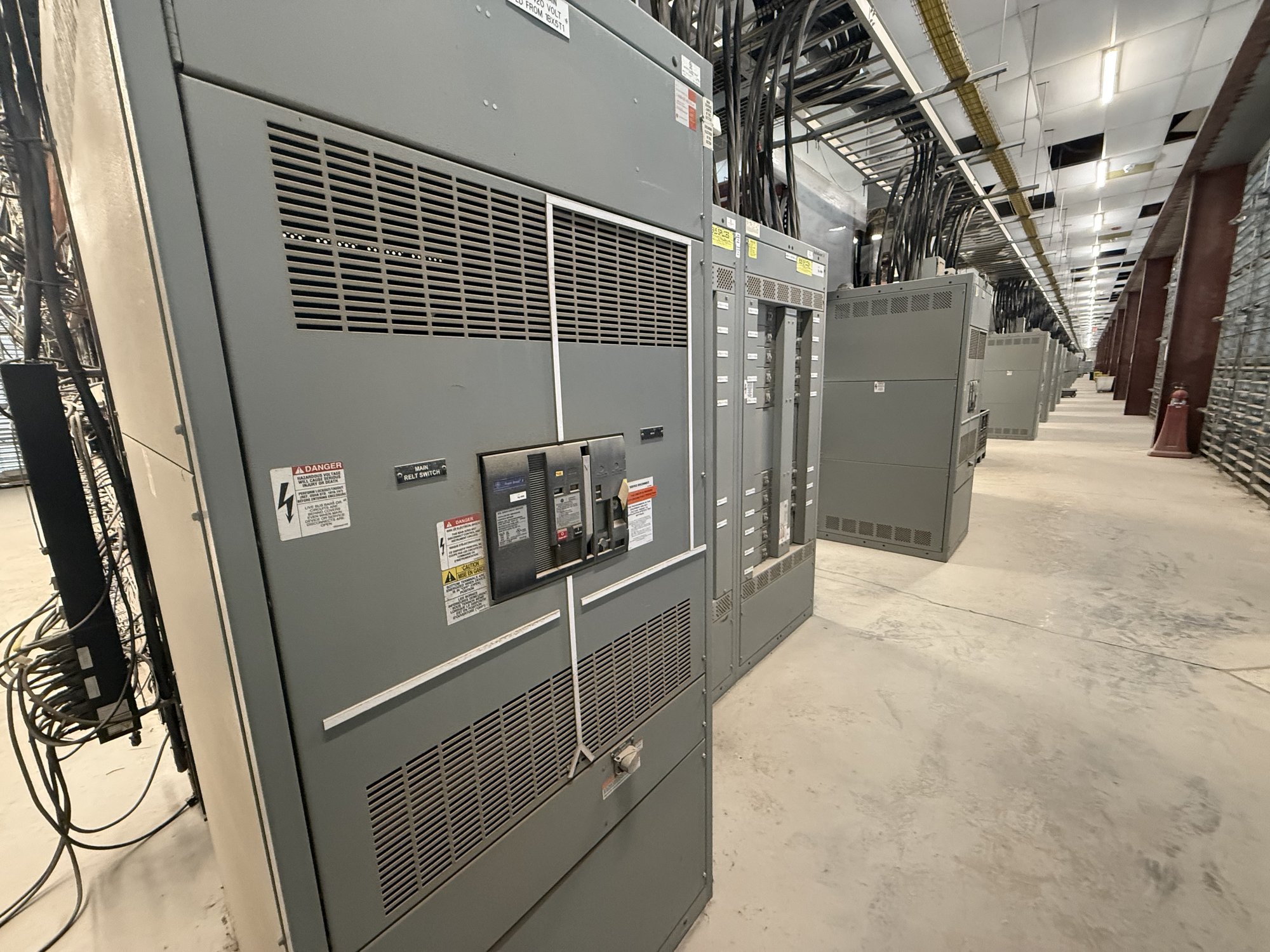
Why nonlinear loads affect the neutral
In a balanced three-phase system with predominantly linear loads, fundamental-frequency phase currents tend to cancel in the neutral. Nonlinear loads draw current in a distorted waveform. Some harmonic components, notably triplen harmonics such as the third, are in phase across the three phases and can add in the neutral rather than cancel. The result can be substantial neutral current even when the phase loads appear reasonably balanced.
This is a load-specific design question, not a reason to increase neutral capacity automatically on every switchboard. A facility with electronic lighting, variable frequency drives, IT equipment, UPS systems, or other rectifier-based loads should identify their types and operating profiles. The mix, quantity, diversity, and anticipated expansion all matter; a general label such as “computer loads” is not enough to calculate neutral demand.
Establish the load basis
Start with the distribution system details: nominal voltage, phase and wire count, frequency, grounding arrangement, and the neutral’s role in the system. Gather connected and calculated loads by panel or feeder, expected demand, phase allocation, and equipment schedules. Where available, request manufacturer data for harmonic current spectra or neutral current, including the operating conditions behind those figures. Distinguish existing measurements from projected loads.
For an existing facility, measurements can help validate assumptions, but one snapshot may not capture peak loading, seasonal operation, or future equipment additions. Record where and when measurements were taken, the load operating at that time, and whether readings are phase currents, neutral current, or harmonic analysis. The engineer of record should reconcile measured conditions with design demand and determine which loads belong in the switchboard calculation.
Calculate capacity from system conditions
The responsible electrical engineer should calculate expected neutral current using the applicable load and harmonic data, phase balance, demand assumptions, and governing project requirements. Where harmonic spectra are available, evaluate relevant orders and their phase relationships; do not estimate neutral current by simply adding all phase amperes or by assuming perfect cancellation. The calculation should state its assumptions and identify the operating case that governs conductor and bus sizing.
Then compare the calculated neutral demand with the proposed neutral bus capacity and applicable design limits, including the effects of enclosure temperature, conductor arrangement, termination constraints, and other project-specific factors. A larger neutral bus may be appropriate, but a multiplier chosen without supporting load information can be either inadequate or needlessly costly. Engineering review must also consider protective devices, feeder conductors, and the complete distribution design; switchboard neutral sizing alone does not resolve every harmonic concern.
Define the requested switchboard configuration
Specify the neutral bus rating or capacity required by the approved design, rather than relying on an undefined request for an “oversized neutral.” Clarify whether the requirement applies to the main bus, particular sections, or feeder arrangements, and provide the relevant one-line diagram, bus ratings, device schedule, and neutral connection details. Identify whether the neutral is full-size or increased relative to the phase bus, using the project’s defined rating basis.
Also confirm the enclosure and section arrangement, incoming and outgoing conductor provisions, grounding and bonding details, and any space or termination limitations that affect fabrication. Indicate whether the neutral requirement applies throughout the assembly or only to identified portions. UL 891 applies to switchboard assemblies; it is not a blanket listing for medium- or high-voltage switchgear. The specified assembly scope and applicable review should be clear in the submittal documents.
Coordinate procurement and Georgia delivery
For a manufacturer quote, share the one-line, load schedule, calculation basis, neutral bus requirement, voltage and system details, main and feeder ratings, enclosure constraints, and required submittal milestones. Note planned additions, harmonic data source, project location in Georgia, receiving conditions, and requested delivery window. These details allow the proposed configuration, material scope, and schedule to be reviewed together; final availability and timing are confirmed for each order.
Resolve design questions before release to fabrication: who approves the neutral calculation, which drawing revision governs, and whether the switchboard interfaces with existing gear or downstream panels. Confirm shipping access, unloading responsibility, site storage, and delivery sequencing with the project team. New assemblies can be configured for project requirements using American-made components, subject to the specific design and availability review. Georgia delivery can be coordinated with the construction schedule, but the project team should align shipment timing with site readiness and installation planning.
Close the design with a clear handoff
A useful handoff includes the engineer-approved neutral calculation, marked one-line, load and harmonic assumptions, bus ratings, connection requirements, and a list of open decisions. Ask the engineer to confirm whether the design case includes future loads and whether any monitoring or mitigation measures are part of the broader system plan. This record gives procurement and the manufacturer a consistent basis for quoting and drawing review.
Before requesting pricing, identify the calculated neutral demand, the design margin or rating basis selected by the engineer, and exactly where increased capacity is required. Include the project schedule and Georgia delivery location so configuration and logistics can be evaluated together. With those inputs, the team can review a new switchboard arrangement against the intended load case rather than relying on a generic upsizing assumption.