Map the loads and operating sequence
Start with a load list that separates continuous process demand from intermittent and starting loads. Crushers, conveyors, pumps, ventilation, dewatering, and material handling can impose different duty patterns; motor starting and simultaneous operation may drive feeder, bus, and protection requirements beyond a simple sum of nameplate currents. Identify which loads are essential to production and which can be sequenced or shed.
Share one-line diagrams, system voltage, available fault-current information, source and transformer details, and planned expansion loads for engineering review. Explain whether the site has multiple sources, ties, standby generation, or transfer schemes, and how operators intend to use them. These facts help define the switchgear scope without assuming a particular mine topology or equipment rating.
Define the mine environment
Describe the actual installation location for each assembly: surface plant, enclosed process building, outdoor pad, or another area with different exposure. Specify expected ambient temperature range, altitude if relevant, humidity, condensation, water exposure, dust type and accumulation, corrosive agents, and ventilation. Fine mineral dust and conductive contamination can affect insulation, cooling, maintenance intervals, and enclosure selection; general labels such as “industrial” do not provide enough detail.
Also identify vibration from nearby machinery, shock or movement during transport, washdown practices, and any hazardous-area classification established by qualified site personnel. The required enclosure and construction depend on the exposure and applicable project requirements. Do not assume an enclosure rating or hazardous-location suitability from the application name; have the responsible engineer and authority review the conditions and chosen equipment.
Coordinate protection and operational safety
Provide the protection study basis, relay or trip-unit preferences, grounding method, arc-flash study inputs, and coordination requirements when available. Fault-current levels and upstream and downstream device data are necessary to evaluate selective coordination and protective settings. Clarify metering, alarms, communications, remote operation, and interlocks, including which signals need to exchange with plant controls.
Plan for safe access, isolation, switching procedures, and maintenance by qualified personnel. Working clearances, access routes, door swing, cable entry, lifting provisions, and equipment placement should be reviewed against the building and site layout. Any proposed design, rating, or protective setting requires engineering review and applicable authority approval; equipment selection alone does not establish a safe or code-compliant installation.
Choose a buildable assembly scope
Decide whether the project requires a UL 891 switchboard assembly, another low-voltage arrangement, or equipment for a different voltage class. UL 891 applies to switchboards and should not be treated as a blanket listing for medium- or high-voltage switchgear. Confirm the intended equipment category, system conditions, and required documentation with the project engineer before procurement.
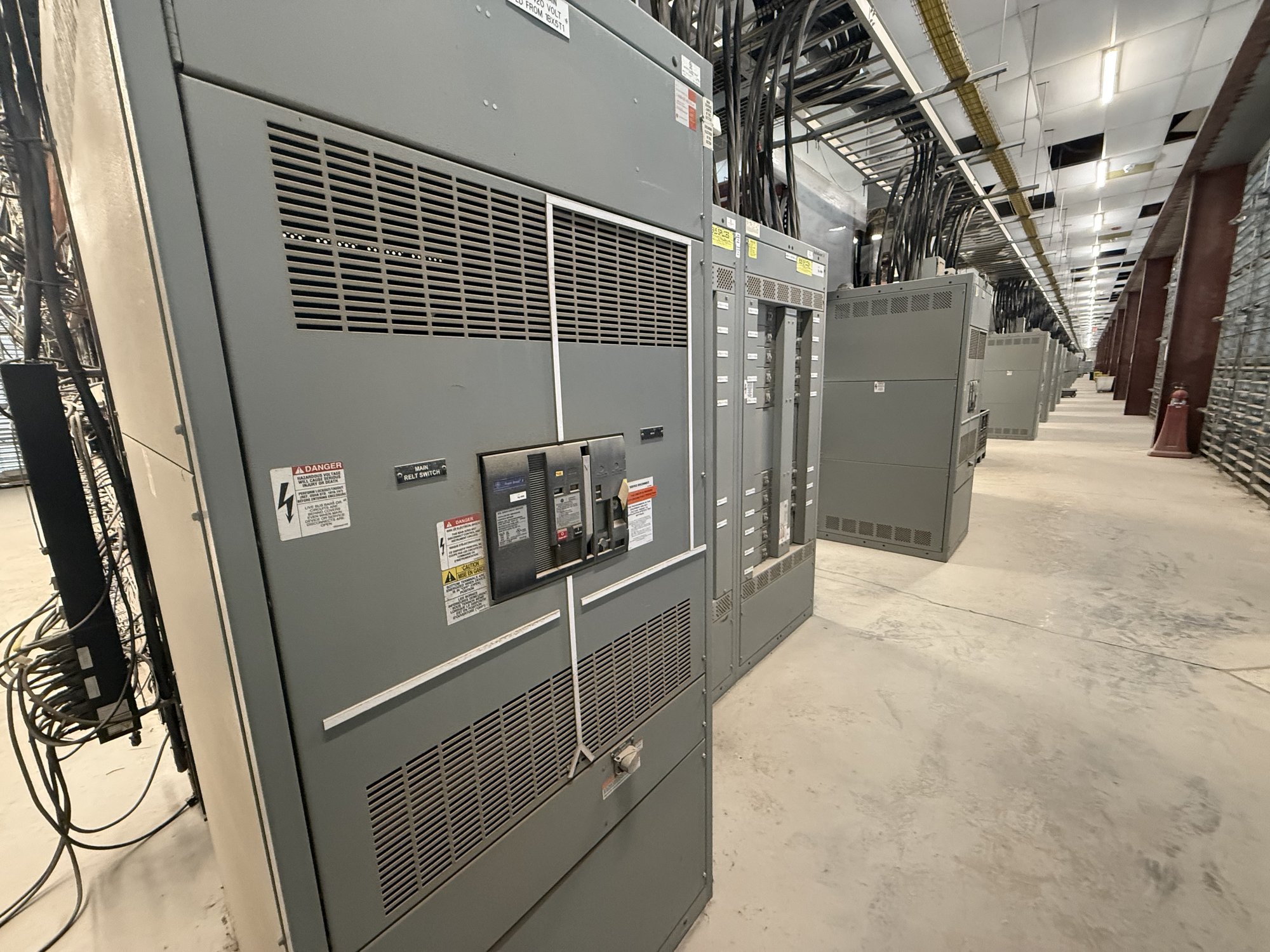
Resolve section lineup, breaker and feeder counts, spare capacity, bus arrangements, metering, control power, cable termination space, and top or bottom entry early. Custom-built configurations can reflect a mine’s one-line and physical constraints, but each feature must be confirmed for the specific order. Identify interfaces and exclusions, such as field cabling, control-system work, foundations, and commissioning, so the equipment package aligns with the overall contract.
Plan procurement and Georgia delivery
For a useful quote, provide the one-line diagram, load schedule, fault-current and protection data, environmental conditions, required standards or specifications, preferred lineup dimensions, and target project milestones. Include the delivery site in Georgia, receiving hours, access restrictions, unloading capability, storage conditions, and whether the route has size or weight limitations. Confirm the required scope and availability for the order rather than relying on assumed stock or a generic lead time.
Delivery planning should connect manufacturing release to site readiness. Coordinate approved drawings, connection points, foundation and anchorage information, shipping configuration, and document requirements with the electrical contractor and site team. Georgia shipment arrangements can be planned around the project’s receiving constraints, with exact scope and timing confirmed for each order. Before release, have the responsible engineer check that the final documents match the mine’s operating and environmental requirements.
Make the handoff useful in the field
A mine-site package is easier to install and maintain when the handoff includes approved drawings, equipment schedules, connection details, identification conventions, and available operation and maintenance documentation. Confirm who will review submittals, resolve field-interface questions, and accept the equipment. Align delivery sequence with construction access and protected storage so an assembly does not arrive before the site can receive and preserve it.
Before requesting pricing, assemble the site conditions, electrical data, operating sequence, preferred equipment scope, and Georgia delivery constraints in one coordinated package. Flag unresolved items rather than filling gaps with assumptions. This gives engineering and procurement a practical basis to confirm configuration, availability, and schedule, and gives the field team a clearer path from shipment to installation review.