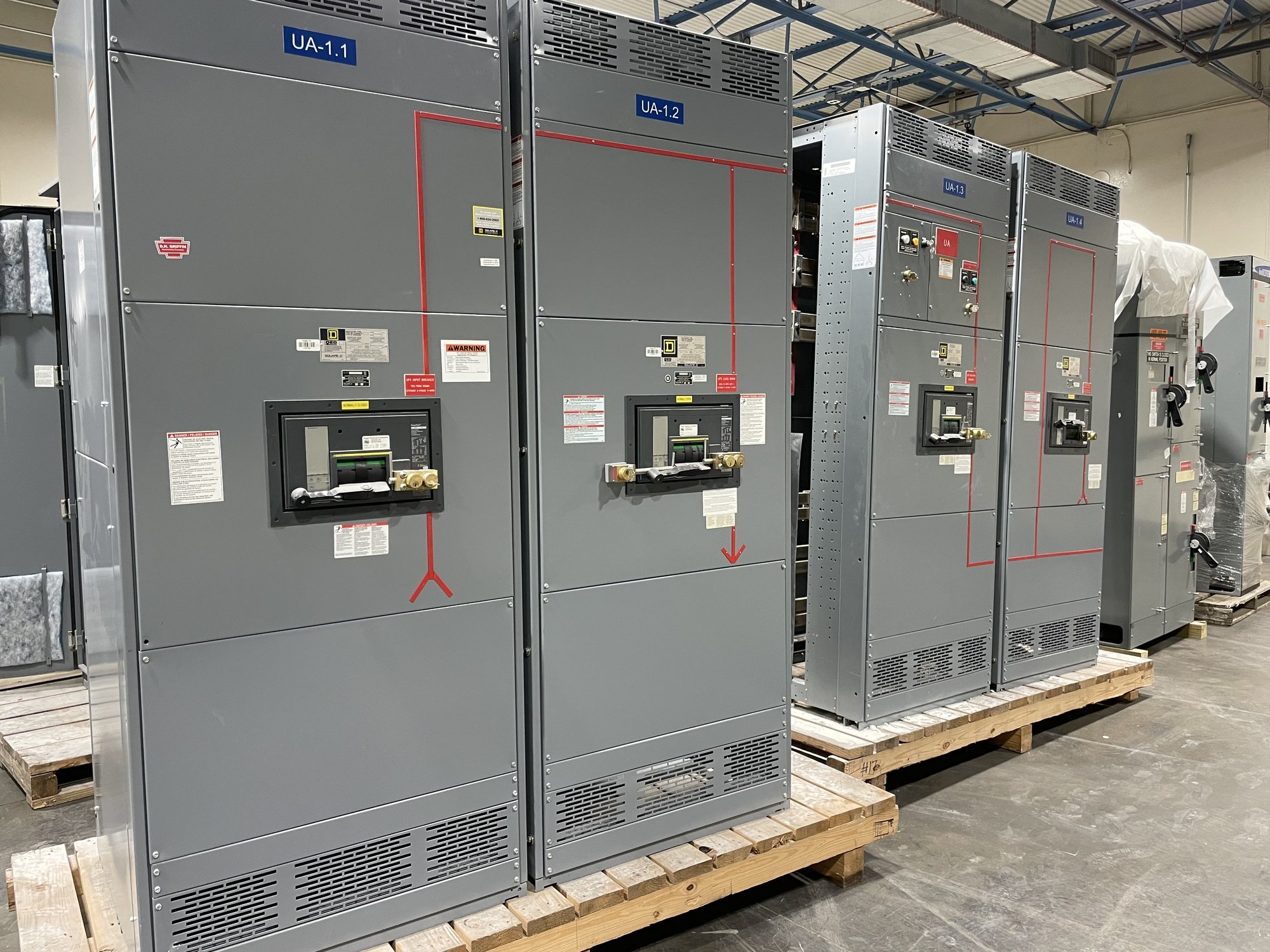
Start with the production layout
A useful equipment scope begins with how power reaches each production area. Identify the utility or upstream source, existing service equipment, major distribution points, and the lines, process equipment or building systems the new assembly must serve. Include current one-line diagrams and site drawings when available, and mark proposed tie-ins or equipment replacements. These details help distinguish a new distribution section from a broader service upgrade.
For each production line or load group, share available electrical data such as voltage, phase, frequency, load information and starting characteristics. Note loads that operate together, process equipment with variable demand, and essential systems that cannot be interrupted casually. Actual ratings and arrangement depend on engineering review of the source, connected loads, fault-current information and site conditions; assumptions should be identified rather than treated as confirmed design values.
Coordinate distribution with operations
Manufacturing schedules shape the practical design and installation plan. Tell the project team whether a shutdown window is available, whether production must continue in adjacent areas, and how the proposed equipment will connect to existing distribution. Identify the intended outage boundaries and any temporary operating arrangements under consideration. Qualified electrical and engineering personnel must determine switching, installation and energization procedures for the specific facility.
Ask how the proposed lineup supports the intended division of production loads and what interfaces are needed for plant monitoring or control. Clarify feeder destinations, cable entry preferences, room access and whether future circuits need to be accommodated now. Requirements vary by site, and control, metering or communications provisions should be stated explicitly so the equipment scope reflects the plant’s actual needs rather than an assumed standard arrangement.
Make room for future additions
Expansion planning is most useful when it names likely additions, not just a general desire for spare capacity. Describe anticipated production lines, process changes or building extensions, their expected connection points and any known timing. If load estimates are preliminary, label them as such. Engineering can then evaluate whether the design should include provisions for future distribution and what limits or dependencies need to be resolved before those provisions are specified.
Physical constraints can determine whether an expansion-ready lineup is practical. Provide room dimensions, access routes, door and aisle clearances, ceiling constraints, environmental conditions and any restrictions on moving equipment into the electrical room. Include photographs or dimensioned layouts when available. Verify site measurements and applicable working-space requirements with the project’s qualified design team and authorities; a planned future section still needs a feasible installation and connection path.
Resolve specifications before release
For a quotation, share the project location in Columbus, requested equipment type, one-line diagram, available source and load data, preliminary ratings, feeder schedule and desired delivery window. Include the quantity and scope of assemblies, whether demolition or replacement affects the interface, and the name or role of the party responsible for design decisions. State open questions clearly so they can be separated from established requirements during review.
UL 891 applies to switchboard assemblies; it is not a blanket listing for medium- or high-voltage switchgear. Identify the equipment category and any required standards or specifications in the procurement documents, then confirm the applicable scope during technical review. We build new equipment in the United States using American-made components as specified for the order. Exact configuration, component availability and schedule are confirmed for each project.
Plan the handoff to the Columbus site
Procurement and engineering should agree on submittal review, drawing approval, required documentation, delivery access and who will receive the equipment. Confirm the shipping address, site contact, unloading capability, receiving hours and any restrictions on truck access or staging. Georgia delivery can be coordinated around the project’s receiving plan, but routing, shipment timing and handling requirements must be confirmed for the specific order rather than assumed.
Before release, reconcile approved drawings with the current one-line, feeder destinations, room layout and procurement specification. Assign owners for unresolved ratings, interfaces, protective-device requirements and delivery logistics. This gives the manufacturer a clearer basis for building the requested configuration and helps the facility team plan its next steps with qualified engineering and electrical contractors. Send the available documents, note what remains preliminary, and request a scope review tied to the Columbus site and production schedule.