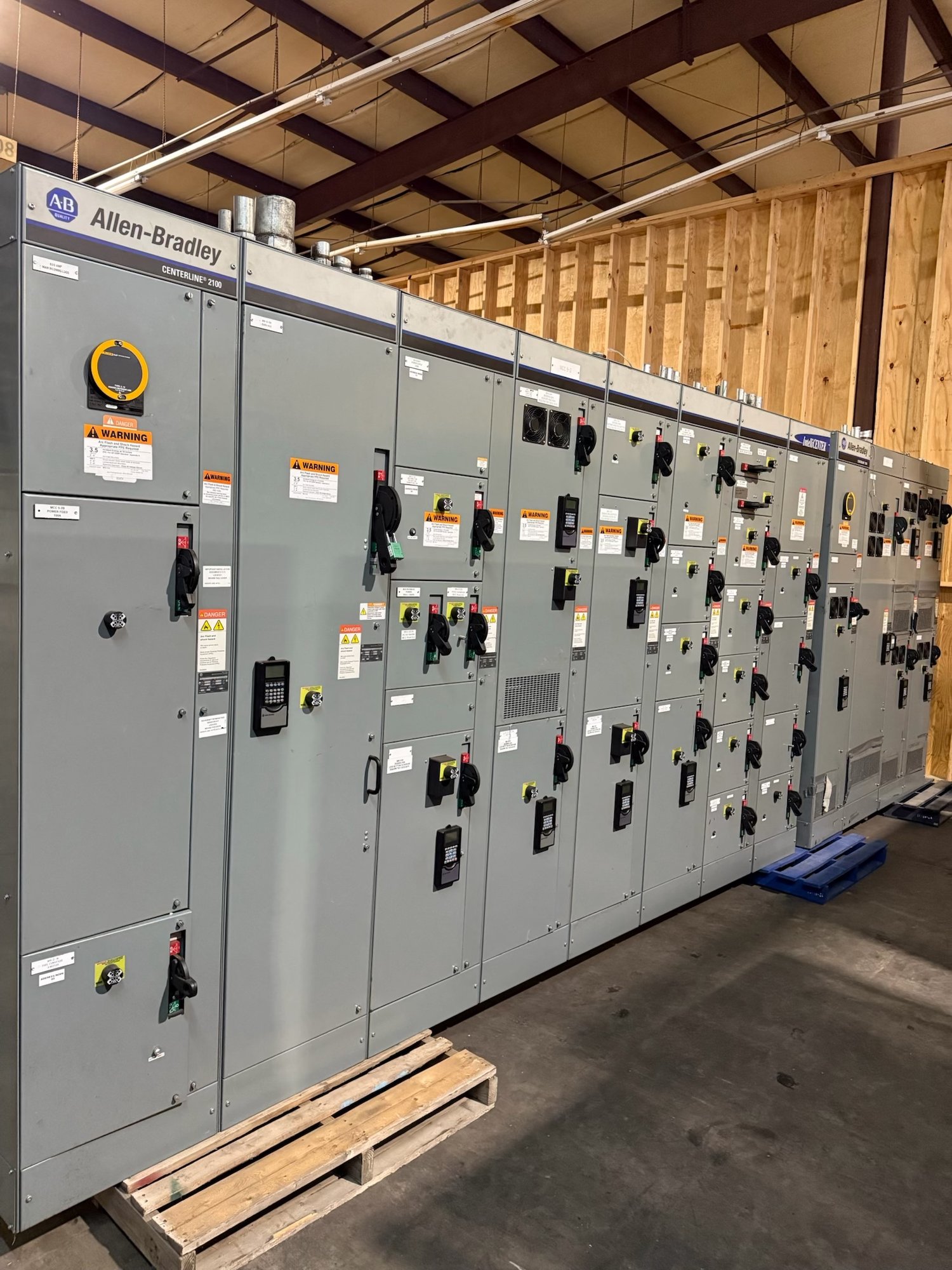
Start with the operating load
A logistics facility can combine conveyor systems, sortation, dock equipment, lighting, HVAC, battery charging and office loads. Their demands may vary by shift, startup sequence and seasonal operating plan. For a Savannah project, identify which loads run continuously, which start together, and which are expected to grow as warehouse capacity or automation changes. A connected-load list is useful, but demand assumptions and operating schedules help explain how the distribution system must function.
Ask the electrical engineer to clarify the service characteristics, available fault-current information, grounding arrangement and intended distribution points before equipment is specified. These inputs affect switchgear and switchboard configuration, protective-device selection and coordination with upstream and downstream equipment. We confirm the required scope and available configuration for each order; the project engineer and authority having jurisdiction determine design acceptance and applicable requirements.
Account for material handling
Conveyors, automated storage systems, lifts and other motor-driven equipment can create operating patterns that differ from a conventional warehouse. Share motor and drive schedules, starting methods, control-panel locations, and any known regeneration or harmonic considerations. Where multiple lines may start or recover at once, the engineer can evaluate the resulting demand and protection requirements rather than relying on a general facility load estimate.
Document the distribution boundaries between the main equipment, local motor-control or automation panels, and vendor-furnished machinery. Confirm who provides feeder protection, disconnects, control power and interface wiring, and which party supplies final connection details. Clear boundaries reduce scope gaps during procurement and help the installation team coordinate equipment sections with the facility’s actual material-handling layout.
Match equipment to the building plan
Warehouse floor plans and electrical rooms impose practical limits on equipment dimensions, access, working space, cable entry and section placement. Provide room drawings, door and corridor dimensions, floor or housekeeping-pad details, and the planned route from delivery point to installation location. Confirm whether conductors enter from above or below and whether the layout must accommodate future feeder additions or a staged buildout.
Environmental conditions also matter. Share whether equipment will be indoors or exposed to weather, dust, moisture, washdown, temperature variation or other site conditions, along with the intended enclosure location. Do not assume a standard arrangement fits every Savannah facility. The equipment configuration and any applicable ratings must be established against the project documents and reviewed by the responsible electrical engineer.
Coordinate protection and continuity
A distribution plan should consider how a fault or maintenance task affects warehouse operations. Provide the one-line diagram, available fault-current study, coordination requirements and any arc-flash study information available for the project. These documents support review of protective-device functions and relationships across the system. Final settings, studies and equipment suitability require qualified engineering review; they should not be inferred from a general equipment description.
Discuss which loads need to remain available during maintenance or a planned outage, and whether the design uses separate distribution paths, tie equipment or other continuity measures. The answer depends on the facility’s operating strategy and electrical design, not simply on the switchgear lineup. For UL 891 switchboard assemblies, confirm the specified assembly scope; UL 891 applies to switchboards and does not establish a blanket listing for medium- or high-voltage switchgear.
Prepare a complete procurement package
A useful quote request includes the project location in Savannah, one-line diagram, load schedule, service data, fault-current information, equipment ratings and preferred lineup arrangement. Add feeder quantities and sizes, breaker or switch requirements, metering and control needs, enclosure conditions, approved drawings or specifications, and the required delivery window. Identify any owner, engineer or utility review milestones that could affect drawing approval or release for manufacture.
State what is furnished by others and note whether the purchase covers a complete assembly, defined sections or a particular part of the distribution system. Include the anticipated installation sequence, receiving constraints and any restrictions on truck access, unloading or on-site storage. Exact scope, availability and timeline are confirmed for each order, so provide the current project schedule rather than assuming a standard lead time.
Plan Georgia delivery and handoff
Equipment built in the United States can be shipped for projects in Savannah, with delivery planning coordinated to the order’s confirmed scope and schedule. Before release, align the ship-to address, receiving hours, unloading responsibility, staging area and preferred delivery sequence. If the project has multiple buildings or phased warehouse turnover, identify which lineup sections belong to each phase and when the site can accept them.
For a practical project handoff, send the latest electrical drawings and specifications together with the facility load and logistics details, then identify the engineer responsible for technical review and the procurement contact managing release and delivery. Confirm open questions about equipment boundaries, room dimensions, operating priorities and schedule before finalizing the order. That information gives the team a concrete basis to develop and verify a switchgear package for the Savannah facility.