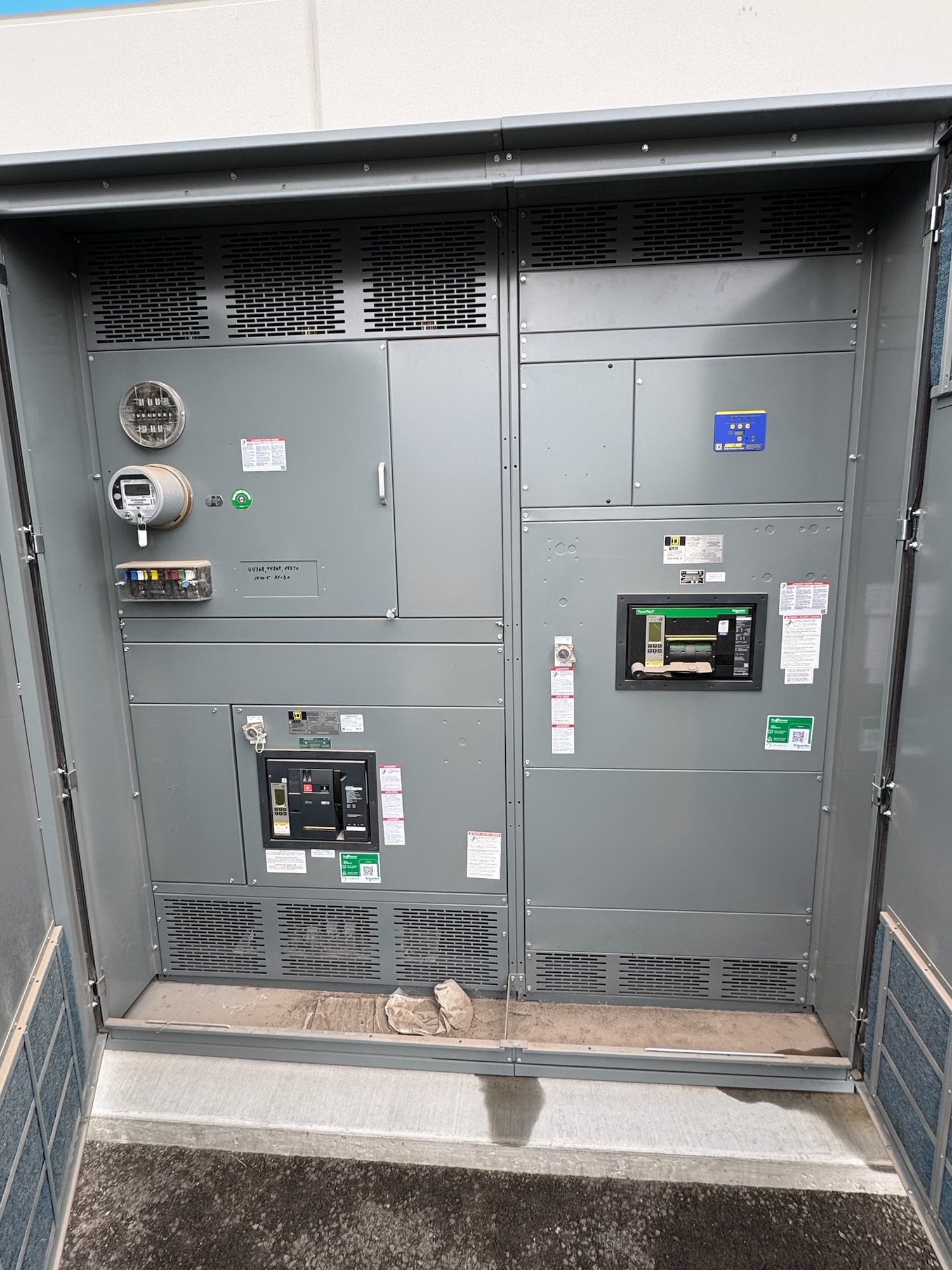
Start with the motor and driven load
A motor’s horsepower alone does not establish its starting requirements. Gather the nameplate voltage, full-load current, locked-rotor current or code letter, service factor, insulation and temperature limits, and manufacturer guidance on permitted starts per hour. Also identify the driven load, such as a loaded conveyor, pump, compressor, or fan, and note whether it starts against pressure or with a light load.
Starting torque and acceleration time matter alongside current. A method that limits current too aggressively may not bring a high-inertia load up to speed, while repeated long starts can heat the motor and affect its service life. Confirm the required acceleration profile, expected starts and stops, and any restart sequence after a power interruption before choosing the motor control and switchboard arrangement.
Compare the starting methods
Across-the-line starting applies full voltage to the motor and is often the simplest control approach, but its inrush can be several times running current. Whether that is workable depends on the source impedance, feeder length, other connected loads, and acceptable voltage dip. Review the motor manufacturer’s data and the system study rather than relying on a general rule based on motor size.
Reduced-voltage starters, including autotransformer and wye-delta arrangements, lower motor terminal voltage during starting and can reduce the current drawn from the source, but they also reduce starting torque. A soft starter controls voltage through acceleration; a variable-frequency drive controls frequency and voltage and can provide speed control in operation. Compare load torque, bypass or operating needs, harmonics, heat, and control requirements, not just initial current.
Trace voltage drop through the system
The motor start affects more than the motor terminals. A voltage dip can cause contactors to drop out, controls to reset, lighting to flicker, or other motors to slow. The size and duration of that dip depend on the utility source, transformer impedance and capacity, conductors, feeder length, starting current, and how other loads operate at the same time.
Ask the electrical engineer to evaluate the starting case at relevant buses, including the motor terminals and sensitive loads. The review may compare a single start with simultaneous or sequential starts, normal and alternate sources, and utility conditions identified for the project. A starter choice should follow that analysis; changing the motor method can shift requirements for transformer capacity, feeder size, generator selection, and controls.
Coordinate protection and upstream equipment
Motor overload protection must address the motor’s operating current and thermal limits, while short-circuit and ground-fault protection must be coordinated with the available fault current and the selected starter. Starting current and acceleration time affect how protective devices are selected and set. A setting that tolerates a normal start must still be reviewed for fault protection and coordination by the project’s qualified electrical professionals.
Provide the proposed starter type, motor data, protective-device information, system voltage, available fault-current data, and relevant coordination or arc-flash study assumptions when switchboard requirements are developed. Identify whether the source includes a generator, transfer equipment, or other large motors. Those details help establish the incoming and feeder arrangement, bus requirements, and space or interface needs without assuming a rating or configuration before engineering review.
Specify the assembly and controls
For a new UL 891 switchboard assembly, clarify which motor-control components are part of the supplied scope and which are furnished separately. Share the one-line diagram, control schematic or sequence, starter and drive requirements, feeder count, metering needs, enclosure conditions, and cable-entry preferences. UL 891 applies to switchboard assemblies; it should not be treated as a blanket listing for medium- or high-voltage switchgear.
Ask how the proposed layout accommodates starter heat, ventilation, cable bending space, maintenance access, and separation of power and control wiring. For a drive, discuss input protection, bypass needs, harmonic considerations, and any specified motor-cable or output-filter requirements with the responsible engineer. Final component selection and ratings depend on the approved design, application data, and applicable authority review.
Prepare the order and Georgia delivery
For a quote, send the motor nameplate and load details, starting method under consideration, electrical drawings, source and fault-current information, project schedule, installation location, and required submittal milestones. Include known constraints such as room dimensions, environmental conditions, access route, shipping limits, and whether the switchboard must connect to existing equipment. Mark open engineering questions so they can be resolved before release.
We build new switchboard configurations in the United States using American-made components where specified, with scope, availability, and schedule confirmed for each order. Nationwide shipping can support projects across Georgia; coordinate the delivery address, site access, unloading responsibility, and required arrival window during procurement. Before releasing the order, align the motor-starting study, one-line, protection requirements, controls, and equipment interfaces so the supplied assembly matches the approved project documents.