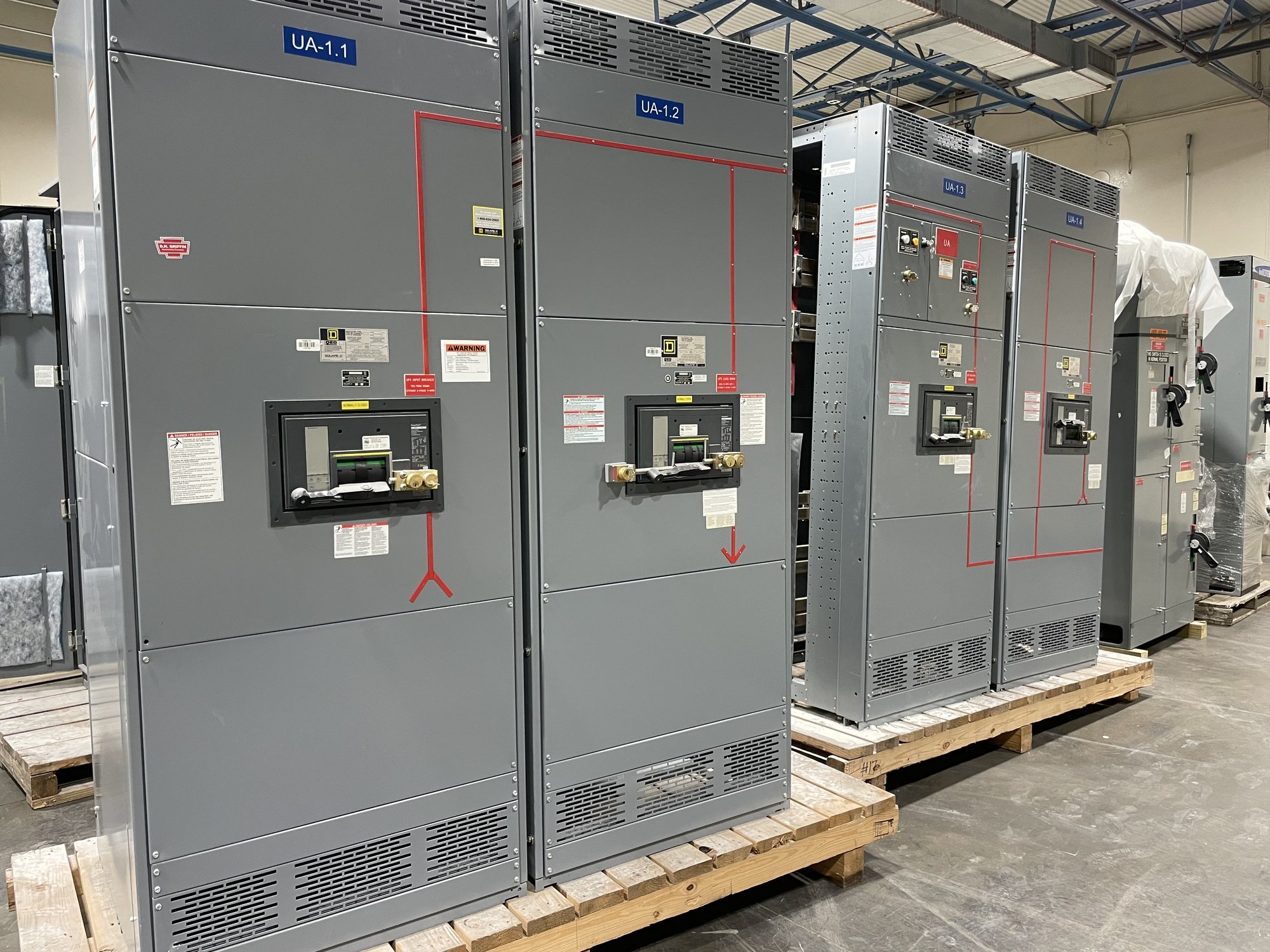
Choose insulation for the actual arrangement
Insulated bus can help separate conductors and reduce the chance of accidental contact during authorized work, but its role depends on the complete assembly. Options may include insulated bars, sleeves or other coverings selected for the conductor shape, joint design and enclosure layout. Specify the intended insulation approach rather than assuming that every bus section or connection receives the same treatment.
Share the equipment type, system voltage, bus current, phase arrangement and whether the run is main, vertical or branch bus. Note transitions, taps, splices and connections to breakers or other devices. Those details affect where insulation can be applied, how joints are assembled and what portions need to remain visible or accessible for inspection.
Treat clearances as a design requirement
Insulating material does not replace required electrical spacing. Phase-to-phase and phase-to-ground clearances depend on the equipment design and applicable engineering requirements; barriers, supports, enclosure dimensions and conductor movement also influence the arrangement. A covering that fits in one section may crowd a connection or obstruct a barrier elsewhere.
Provide available enclosure dimensions and any fixed interfaces, such as incoming cable locations, duct connections or adjacent sections. Identify unusual routing constraints and the intended cable entry direction. The manufacturer’s engineering review can then coordinate the bus path and insulation details with the assembly layout. Final design and application remain subject to qualified engineering review and the authority having jurisdiction.
Protect insulation integrity at joints
Bus joints deserve particular attention because insulation may be interrupted, shaped or reinstalled around bolted connections. The specification should identify which joints are insulated, how joint areas are accessed for assembly and inspection, and whether removable covers or barriers are needed. Avoid assuming that a continuous-looking sleeve means every interface is covered or that a covered joint can be inspected without disassembly.
Ask how the proposed arrangement addresses edges, bends, hardware and transitions between bus sections. Manufacturing and field handling can affect coverings, so the handoff should make clear which components arrive insulated, which interfaces require field work and what instructions govern that work. Any damaged or displaced insulation should be evaluated by qualified personnel before equipment is put into service.
Keep inspection and maintenance access usable
Access needs should be considered alongside insulation, not after the bus layout is fixed. Inspection may require visibility of connections, room for approved tools, or removable panels that do not disturb adjacent conductors. Overly enclosed arrangements can make condition checks difficult, while access openings must still preserve the intended barriers and clearances.
Describe the inspection tasks expected over the equipment life and identify sections that facilities staff will need to reach. Include preferences for removable covers, viewing access and separation from cable compartments where applicable. The final arrangement should give qualified personnel a defined way to inspect and maintain the equipment under the manufacturer’s procedures and the facility’s safety practices.
Resolve procurement details before release
For a useful quote, send the one-line diagram, equipment schedule, available drawings and known interface dimensions, along with voltage, current and bus material or finish requirements if specified. Identify indoor or outdoor application, environmental conditions, entry points, section sequence and any project standards governing insulation or barriers. Mark assumptions and open decisions so the engineering review can distinguish requirements from preferences.
Confirm whether the request is for a UL 891 switchboard assembly or another switchgear type; UL 891 applies to switchboards and does not establish a blanket listing for medium- or high-voltage equipment. Provide the required documentation, review milestones and target delivery window. Scope, component availability and schedule are confirmed for each order, so unresolved design inputs can affect both configuration and timing.
Coordinate the Georgia project handoff
Georgia delivery planning works best when the equipment arrangement is tied to the site’s receiving and installation sequence. Share the project location, delivery constraints, unloading plan, access limitations and required arrival window. These details help coordinate shipment planning with the switchboard section sizes and the contractor’s installation schedule; shipping dates and arrangements are confirmed for the specific order.
Before approving drawings, verify bus routes, insulation coverage, clearances, access panels and connection interfaces against the project documents. Assign responsibility for field connections and inspection, and resolve any changes before release rather than relying on assumptions at the jobsite. Send the equipment type, electrical data, drawings, access needs and Georgia delivery requirements together to establish a clear basis for the custom-built arrangement.