Start with clinical and continuity priorities
A healthcare facility’s electrical plan depends on what must remain available during a utility interruption, maintenance shutdown or equipment fault. The design team should identify critical clinical functions, life-safety systems, essential mechanical loads and other designated circuits, then establish how each is supplied and transferred. The switchgear scope should reflect that documented distribution strategy rather than assume one arrangement fits every hospital, outpatient center or specialty clinic.
For a Johns Creek project, share the facility type, new-construction or renovation status, project phase and the distribution one-line diagram when available. Clarify whether the equipment serves normal power, emergency distribution, or a defined portion of both. We can use those inputs to develop a proposed equipment configuration; the facility’s engineer and authorities having jurisdiction determine design criteria, required approvals and installation requirements.
Define the equipment boundary and ratings
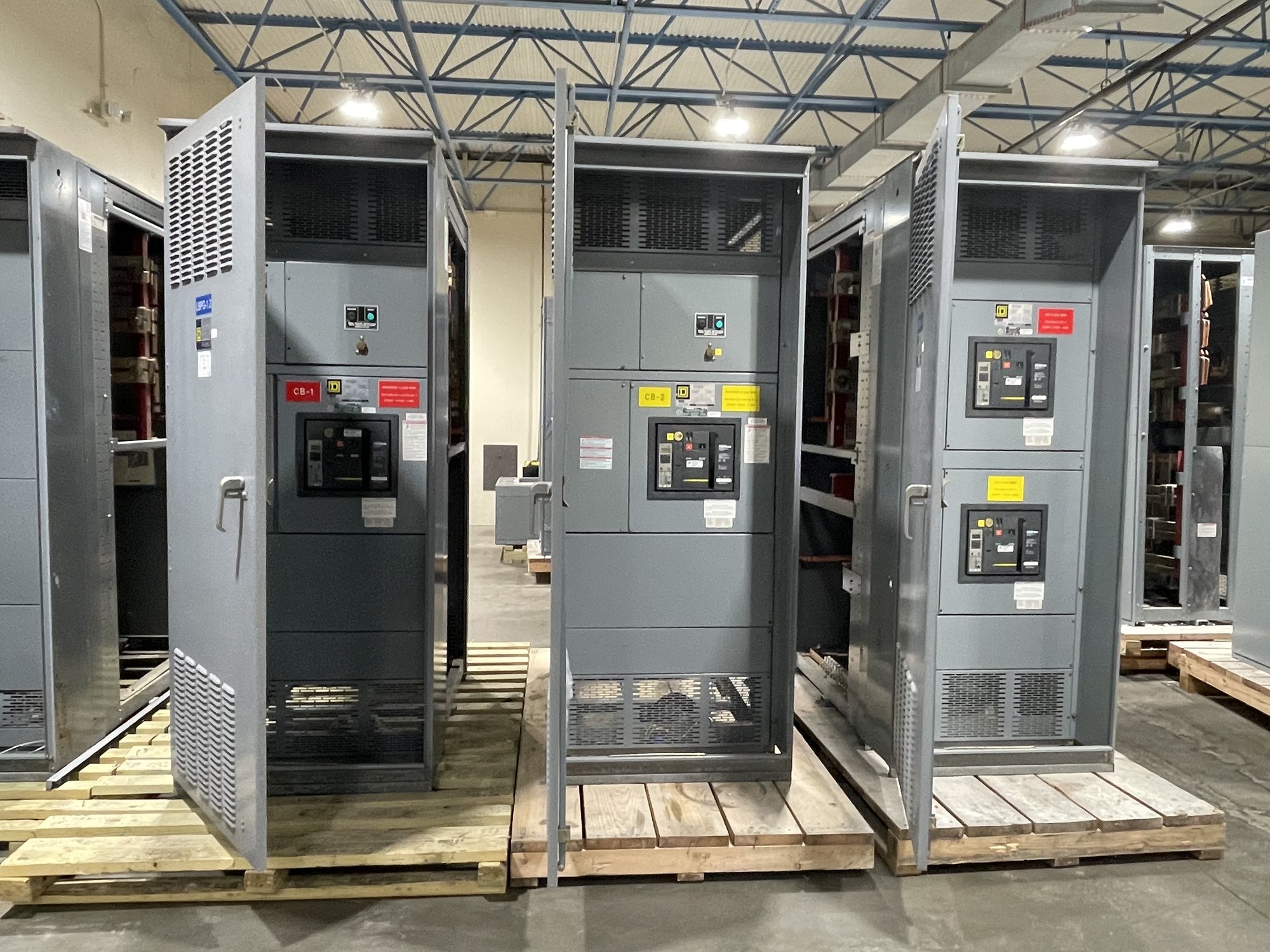
A quote needs a clear boundary: incoming source, bus arrangement, feeder count, protective devices, metering, control features and the connections to downstream distribution. Provide the system voltage, phase and frequency, available fault-current information, grounding method, required ampacity and specified interrupting or withstand ratings. If any data is preliminary, identify it as such so the team can resolve it before the final equipment scope is released.
UL 891 applies to switchboard assemblies; it is not a blanket listing for medium- or high-voltage switchgear. Identify the equipment type and applicable project specifications for each lineup, including any separately specified medium-voltage equipment. Final ratings, construction details and certification scope depend on the ordered design and must be confirmed for the specific assembly; engineering review and authority review remain part of the project.
Coordinate emergency power interfaces
Continuity planning often involves generators, transfer equipment, utility service and multiple distribution sections. State which components are furnished under this switchgear scope and which are by others. Include source and load connections, transfer-switch locations, control and status signals, interlocking requirements, generator operating assumptions and any sequencing needs. A clear responsibility matrix reduces the risk of missing interface details between electrical packages.
The design team should also explain how essential loads are grouped and how the facility intends to manage outages, testing and maintenance. Do not assume that a particular transfer arrangement, source count or bus configuration is appropriate without project engineering. Provide available one-lines, control narratives and equipment schedules so proposed sections and connections can be checked against the intended continuity strategy.
Account for the Johns Creek site
Existing healthcare buildings can impose constraints that are absent from a new-build plan. Share the electrical-room location, access route, door and corridor dimensions, floor loading information, available working space and any limits on section size or lineup configuration. Note whether equipment must fit around active clinical operations, existing conduits or structural elements. These details support practical configuration and delivery planning without presuming site conditions.
For Georgia delivery, provide the Johns Creek project address, receiving contact role, unloading capabilities, requested delivery window and any site access or staging rules. Confirm whether the site can accept a complete lineup or needs coordinated sections, subject to the design and shipping plan. Delivery timing, availability and final shipping arrangements are confirmed for each order; the project team should align them with construction sequencing and the facility’s access plan.
Make procurement decisions with the schedule in view
Procurement can move forward more cleanly when the specification distinguishes mandatory requirements from preferences. Identify approved equipment types, required drawings and submittals, device and accessory schedules, finish or enclosure conditions, labeling conventions and any owner standards. Flag open engineering decisions, pending utility information and long-lead interfaces. We build with American-made components and can discuss custom configurations; exact component availability and production timing are confirmed against the requested scope.
Ask what information is needed to complete the quotation, when the proposed configuration can be reviewed, and what changes would affect scope or schedule. Compare offers on equivalent boundaries, ratings, included devices, documentation and delivery assumptions, not just a lineup description. For a phased renovation, state the sequence and operational limits so procurement decisions support the facility plan without implying that equipment alone guarantees continuity.
Prepare a useful quote package and handoff
For a quote, send the current one-line, specifications, panel or feeder schedules, system data, equipment-room drawings and known interface requirements. Add the project milestone dates, ship-to details, receiving restrictions and the name or role responsible for technical decisions. List unresolved items plainly, including fault-current values, source details or final feeder counts. This lets the proposed scope identify assumptions and information still needed for confirmation.
Before release, have the engineer of record review the equipment arrangement, ratings, coordination requirements and interfaces, and resolve comments with the project team. Confirm the approved submittal, final scope, delivery plan and site readiness before installation. Start with the Johns Creek facility’s continuity priorities and available project documents; that focused package gives us a sound basis to configure new equipment and confirm the order’s scope and schedule.