Start with the facility’s power priorities
Before specifying equipment, identify which loads must remain supported during a planned transfer or outage. Depending on the facility, these may include life-safety systems, essential clinical areas, imaging, laboratories, pharmacy refrigeration, communications, and building systems that support patient care. The facility’s engineers determine applicable classifications and required power arrangements; equipment selection should follow those documented requirements rather than assumptions based on building type.
Share one-line diagrams, available load information, source and tie arrangements, and the intended role of the new assembly. Note whether the project is a replacement, capacity change, or addition to an existing lineup. This context helps establish the required sections, bus arrangement, protective devices, metering, control interfaces, and physical constraints for a quote and engineering review.
Coordinate the outage before setting the scope
A healthcare outage window is a project constraint, not a detail to resolve after equipment is ordered. Facilities and project teams should identify approved shutdown periods, seasonal or clinical restrictions, temporary-power plans, switching responsibilities, and the sequence for removing and connecting equipment. The manufacturer can build to an agreed scope, but facility personnel and qualified electrical contractors must plan and execute the site work and energization.
Clarify what work occurs before the outage, what must be completed within it, and which tests or inspections are prerequisites for returning systems to service. Confirm the installation location, access route, equipment dimensions, working clearances, and any removal limitations. These details inform section layout and shipping planning and can expose conflicts early, when the team still has options to adjust the project scope.
Specify the assembly and interfaces
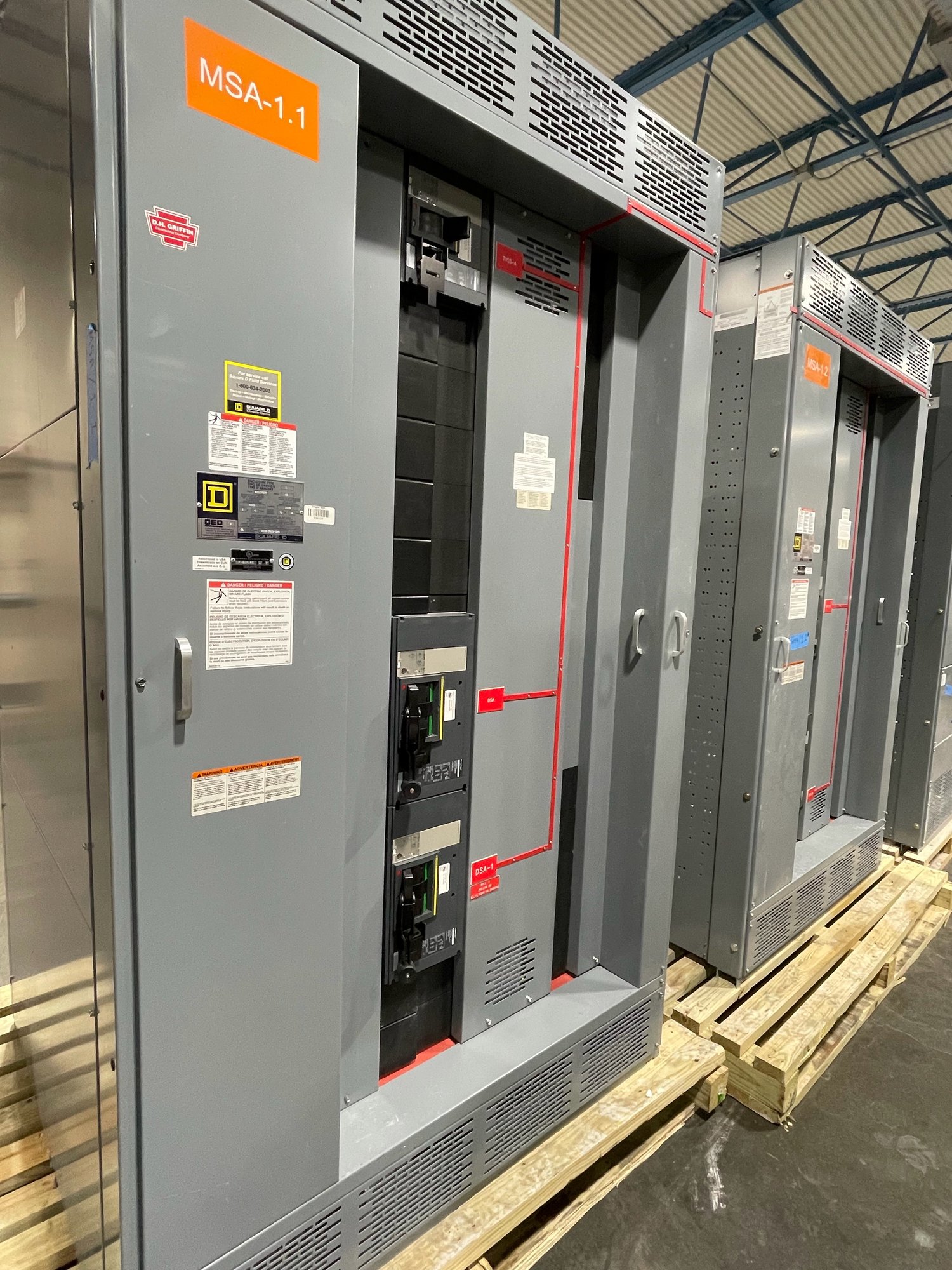
For a UL 891 switchboard assembly, the project team should confirm the intended system voltage, phase and wire configuration, service or distribution function, bus requirements, incoming and outgoing devices, and available fault-current information. Include required trip functions, metering, control power, communications, and connections to generators, transfer equipment, or other systems where applicable. UL 891 applies to switchboards; it should not be treated as a blanket listing for medium- or high-voltage switchgear.
Existing conditions can govern what is buildable and how the equipment connects. Provide the latest drawings and identify known conductor entry, conduit, grounding, neutral, room, and environmental constraints. The design, ratings, protection, and interfaces require review by the responsible engineers and the authority having jurisdiction. We confirm the proposed configuration and applicable scope for each order rather than assuming a standard lineup will fit every healthcare project.
Make procurement decisions with project facts
A useful quote request includes the project location in Gainesville, requested equipment type, drawings, written specifications, target delivery date, required submittals, and the current design status. Identify long-lead or owner-furnished components, preferred manufacturers only where they are specified, and any approved alternatives process. State the purchasing entity and who will review technical deviations so commercial and engineering questions can be routed efficiently.
Discuss domestic component preferences, custom section arrangements, and schedule priorities together. American-made components and short lead times are important options, but availability and timing depend on the actual configuration, components, and order scope. Share the date equipment is needed at the site—not only the installation date—and ask for the current order-specific schedule and assumptions before committing the outage plan.
Plan Georgia delivery and the handoff
Delivery to Gainesville is coordinated around the project’s confirmed destination, equipment configuration, and shipping requirements. Provide the receiving address, site access limitations, unloading capability, delivery hours, staging plan, and whether the equipment must arrive in a particular sequence. If the facility has restricted access or limited indoor staging, raise that early so packaging, shipment arrangement, and receiving responsibilities can be reviewed against the project plan.
Before release, align the approved drawings, equipment scope, shipping details, and required documentation among the manufacturer, engineer, contractor, and facility team. Establish who checks the shipment, resolves discrepancies, and holds the latest installation and test documents. Exact scope, availability, and delivery timing are confirmed individually; a Georgia destination alone does not establish a guaranteed schedule or on-site service arrangement.
Move from quote to an executable plan
For a focused review, assemble the one-line diagram, specifications, load and fault-current data, room and access information, outage constraints, requested submittals, and delivery needs. Flag unresolved design decisions rather than filling gaps with assumptions. The team can then clarify equipment boundaries, identify information still needed, and confirm the configuration and schedule basis for the proposed order.
Next, have the facility’s engineer and project lead verify the critical-load strategy and outage sequence, then submit the current documents and target dates for order-specific review. Resolve technical questions and delivery responsibilities before procurement approval. That disciplined handoff gives a Gainesville healthcare project a clearer path from switchboard specification through shipment and coordinated site installation.