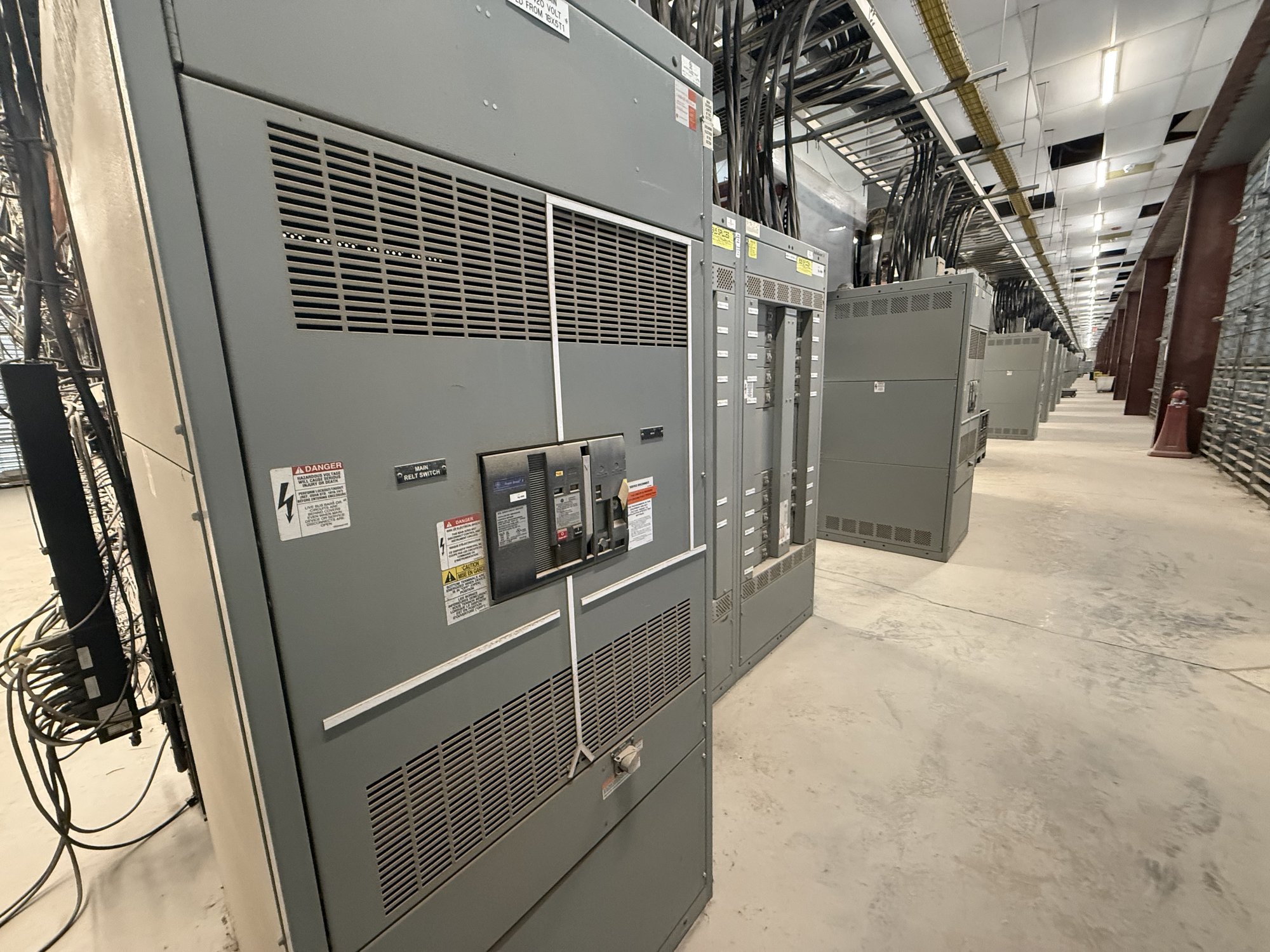
Map the complete power path
Start with a one-line diagram that follows power from the service entrance or on-site source through main distribution, transformers where used, downstream switchboards or panelboards, and finally the branch circuits feeding racks or power distribution units. Identify voltage levels, source configurations, protective devices, and the equipment included in each package. This makes scope gaps visible before procurement and helps suppliers quote assemblies that fit the actual electrical architecture.
Data halls may use different arrangements for utility, generator, UPS, and bypass paths. Show which source feeds each bus and where transfer or isolation occurs, rather than relying on labels such as A-side and B-side alone. Clarify whether the requested equipment includes only main switchboards or also tie sections, feeder sections, metering provisions, and downstream distribution. Final layouts and ratings require project engineering and review by the authority having jurisdiction.
Specify redundancy by operating state
Redundancy is useful only when the intended operating states are explicit. State whether the facility uses independent A and B paths, a shared spare source, a normally open tie, or another arrangement. Identify which loads must remain energized during a source outage, equipment isolation, or maintenance event. These choices affect bus segmentation, breaker placement, interlocks, controls, and the physical separation needed between paths.
Ask the engineering team to document normal and alternate configurations, including permitted tie positions and any load-transfer sequence. A switchboard cannot establish end-to-end redundancy by itself; upstream sources, downstream equipment, controls, and connected loads all contribute. Confirm whether parallel operation is intended, prohibited, or subject to specific controls. Provide these requirements with the quote request so the proposed sections and operating features can be evaluated against the one-line.
Design for maintainability and access
Plan how technicians will inspect, test, isolate, and replace components without disrupting more of the data hall than necessary. Consider access to breaker compartments, cable terminations, control wiring, and metering, along with working space and equipment removal paths. Room dimensions, door swings, overhead services, cable entry direction, and floor loading can constrain lineup arrangement and should be resolved before drawings are released.
Define which sections need to be isolated independently and how personnel will verify the equipment state under the facility’s procedures. Include desired provisions such as drawout devices, spare compartments, test access, or control-power arrangements only when they match the design and operating plan. Maintainability also depends on labeling, documentation, and coordination with facility procedures; equipment features alone do not establish a safe work method.
Resolve ratings, protection, and interfaces
A useful specification identifies system voltage, phase and wire configuration, continuous current, available fault current, and required interrupting or withstand ratings for each point in the distribution path. Provide the latest short-circuit and coordination studies or the information needed for the responsible engineer to complete them. Specify protective-device functions, trip settings where established, metering needs, and any communications or alarm interfaces without assuming that one configuration suits every hall.
For low-voltage switchboard assemblies, UL 891 may be relevant to the specified product scope; it is a switchboard standard, not a blanket listing for medium- or high-voltage switchgear. Confirm the applicable standards and required documentation for every assembly with the project engineer and authority having jurisdiction. Changes in source capacity, transformer impedance, feeder length, or protective devices can affect design decisions, so align equipment specifications with current project data.
Coordinate procurement and Georgia delivery
For a focused quotation, share the one-line diagram, equipment schedule, project voltage and fault-current data, desired source and tie arrangement, and the scope split between switchgear, switchboards, transformers, UPS equipment, and downstream distribution. Add enclosure and room constraints, cable entry preferences, metering or communications requirements, drawing submittal expectations, and the required delivery window. Identify open engineering decisions rather than presenting assumptions as settled requirements.
New switchgear and UL 891 switchboard assemblies can be configured around the approved project requirements, with American-made components and nationwide shipping available subject to the specific order. For Georgia projects, coordinate the delivery destination, site access, receiving hours, unloading responsibility, and sequencing with the general contractor or facility team. Exact configuration, component availability, and schedule are confirmed for each order; allow time for engineering review and approval before release to production.
Make the handoff operational
Before releasing equipment for fabrication, reconcile approved drawings with the one-line, feeder schedule, room layout, and interface points. Confirm lineup dimensions, section order, bus and cable access, control connections, and field termination responsibilities. Establish how drawing revisions will be handled and which party owns coordination with adjacent equipment. These checks reduce late changes that can affect installation planning or the intended separation of redundant paths.
At turnover, the project team should receive the final equipment documentation, approved drawings, device information, and any agreed inspection or test records for incorporation into facility procedures. The owner’s engineers, qualified installation personnel, and commissioning team can then verify that the delivered configuration matches the approved design and planned operating states. To begin a quote, send the current one-line, equipment schedule, room constraints, redundancy narrative, and Georgia delivery requirements.